
Understanding Balanced Budgets: Definition & Importance
A balanced budget is a budgetOperating BudgetAn operating budget consists of revenues and expenses over a period of time, typically a quarter or a year, which a company uses to plan its operations. Download the Free Excel Template. The monthly budgeting template has a column for each month and totals to be the full year annual figures (i.e., a financial plan) in which revenues are equal to expenditures, such that there is no budget deficit or surplus. Although the concept of a balanced budget applies to any organization that generates operating revenues and incurs operating expenses, it is most commonly applied to government budgets.
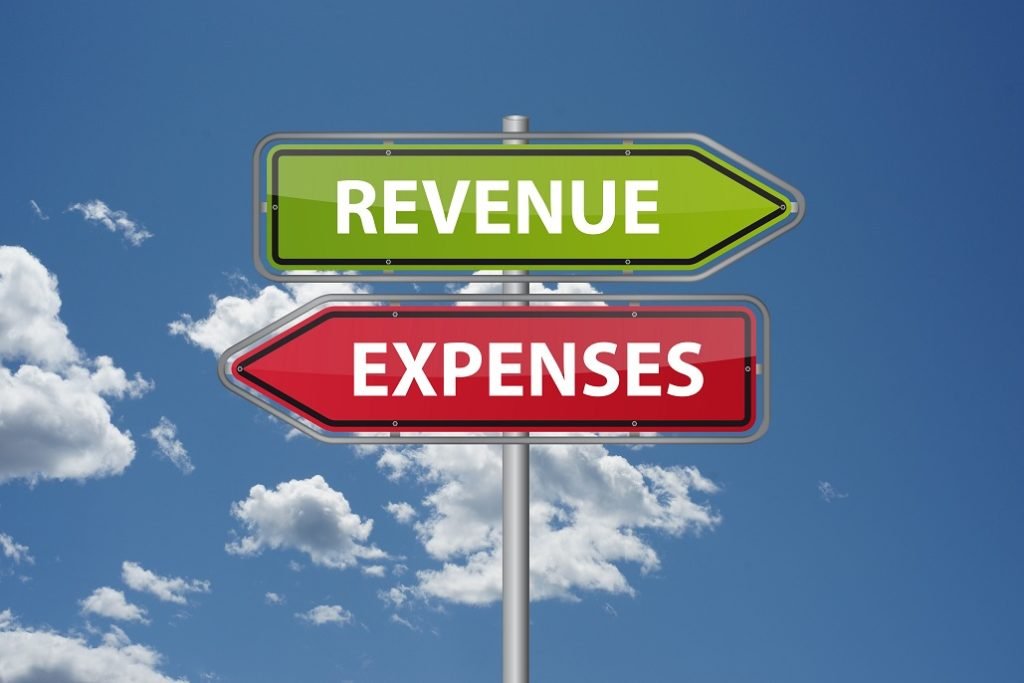
Although the term balanced budget points towards a breakeven between surpluses and deficits, it can also be a budget that posts a surplus but not a deficit. Therefore, revenues may be greater than expenses in a balanced budget, but not vice versa.
Components of a Balanced Budget
1. Revenues
For corporations and non-governmental organizations, revenues come from the sale of goods and/or services. For governments, the majority of revenues come from income taxes, corporate taxesCorporate vs Personal Income TaxIn this article, we will discuss corporate vs personal income tax. Corporate tax is an expense of a business (cash outflow) levied by the government, social insurance taxes, and consumption taxes.
2. Expenses
For corporations and non-governmental organizations, expenses include the amount that is spent on daily operations and factors of production, including rentRent ExpenseRent expense refers to the total cost of using rental property for each reporting period. It is typically among the largest expenses that and wages. For governments, expenses include spending on infrastructure, defense, healthcare, pension, subsidies, and other factors that contribute to the health of the overall economy.
Practical Examples
It is uncommon to come across balanced budgets where revenues and expenses are equal due to the volatility of the factors that contribute to a surplus and/or a deficit. For example, Canada reported revenues of $332.2 billion and expenses worth $346.2 billion, ending the year 2017 with a budget deficit of $14 billion.
On the other hand, countries like Germany, Switzerland, and South Korea posted a budget surplus, which could be considered a balanced budget.
It is also important to note that such a type of budget can be produced annually, biennially, and cyclically.
- An annual balanced budget balances the budget for the financial year that it covers.
- A biennial balanced budget allows the budget to fluctuate over two years. A surplus in one and a deficit in the other of the same amount will produce a biennially balanced budget.
- Cyclically balanced budgets account for economic conditions. They are usually in deficit when the economy is going through a downturn and in surplus during economic booms.
Importance
Planning a balanced budget helps governments to avoid excessive spending and allows them to focus funds on areas and services that require them the most. Furthermore, achieving a budget surplus can provide funds for emergencies, e.g., if the government wishes to increase spending during a recession without having to borrow.
Balancing the budget also allows governments to save on the interest rate charges that accrue on large loans from lenders (i.e., other countries and/or organizations like the International Monetary Fund (IMF) and the World Bank) and to have control over policies during times of distress.
Applications: Budget Variance Analysis
A budget variance analysis compares the actual budget outcomes to the baseline figures that are projected in the budget.
- When actual figures are better (i.e., revenues higher and/or expenses lower) than what is planned, the budget variance is called favorable variance.
- When actual figures are worse (i.e., revenues lower and/or expenses higher) than what is planned, the budget variance is called negative variance.
For corporations, a balanced budget often contributes to a favorable outcome from the budget variance analysis.
Related Readings
CFI is the official provider of the global Commercial Banking & Credit Analyst (CBCA)™Program Page - CBCAGet CFI's CBCA™ certification and become a Commercial Banking & Credit Analyst. Enroll and advance your career with our certification programs and courses. certification program, designed to help anyone become a world-class financial analyst. To keep advancing your career, the additional resources below will be useful:
- Accounting EquationAccounting EquationThe accounting equation is a basic principle of accounting and a fundamental element of the balance sheet. Assets = Liabilities +
- Philosophy of AccountingPhilosophy of AccountingThe philosophy of accounting encompasses the general rules, concepts, and ideas surrounding the preparation and auditing of the accounts and
- Budget VarianceBudget VarianceBudget variance deals with a company’s accounting discrepancies. The term is most often used in conjunction with a negative scenario. An example is when a company fails to accurately budget for their expenses – either for a given project or for total quarterly or annual expenses.
- Budgeting SoftwareBudgeting SoftwareBudgeting software is any computer program that helps an individual or business design, manage, monitor and alter their budget. Examples of
-
Balanced Funds: A Comprehensive Guide to Diversified Investing
A balanced fund, also known as a hybrid fund, is characterized by diversification among two or more asset classesAsset ClassAn asset class is a group of similar investment vehicles. They are typically
-

Budget Deficit Explained: Causes, Effects & Solutions
If you pay attention to politics, work for a company, or are around accountants often, you’ve probably heard of a budget deficit. While the way people talk about budget deficits make them
finance
- Program Budget: Definition, Importance & Creation
- Understanding Budget Constraints: A Comprehensive Guide
- Advertising Budget: Definition, Planning & Best Practices
- Balanced Scorecard: A Comprehensive Guide to Strategic Performance
- Budgeting Explained: A Comprehensive Guide for Individuals & Businesses
- Understanding Budget Deficits: Causes, Effects & Solutions
- Budget Variance Explained: Causes, Types & Analysis
- Negotiated Budgeting: A Collaborative Approach to Financial Planning
- Project Budget: Definition, Template & Cost Estimation
-
 Participative Budgeting: Definition, Benefits & Implementation
Participative budgeting is a budgeting process in which the people who are in the lower levels of management are involved in the budget preparation process. Unlike the imposed budgetingImposed Budgeti...
-
 Top-Down Budgeting: Definition, Advantages & Disadvantages
Top-down budgeting refers to a budgeting method where senior managementCorporate StructureCorporate structure refers to the organization of different departments or business units within a company. De...