
Brazilian Real (BRL): Currency Overview & Key Facts
The Brazilian Real is the official currency of the Federative Republic of Brazil and is represented by the ISO code BRL. Brazil is the biggest country in South America and is one of the BRIC (Brazil, Russia, India, China) nations – a group of countries that market analysts view as key emerging market economiesEmerging Market EconomyAn emerging market economy refers to a country that is in the process of developing its economy to become more advanced. It generates low to. The term “real” means both “royal” and “real” in Portuguese, the official language of Brazil.
The Republic of Brazil holds several distinctions, including being the largest country in the world with Portuguese as its main language and being the most highly populated nation where Roman Catholicism is the majority religion (65% of the population is Catholic and 87% is Christian.)
Summary
- The Brazilian Real is the official currency of the Federative Republic of Brazil, the largest country in South America.
- Brazil is considered one of the strongest emerging market economies in the world.
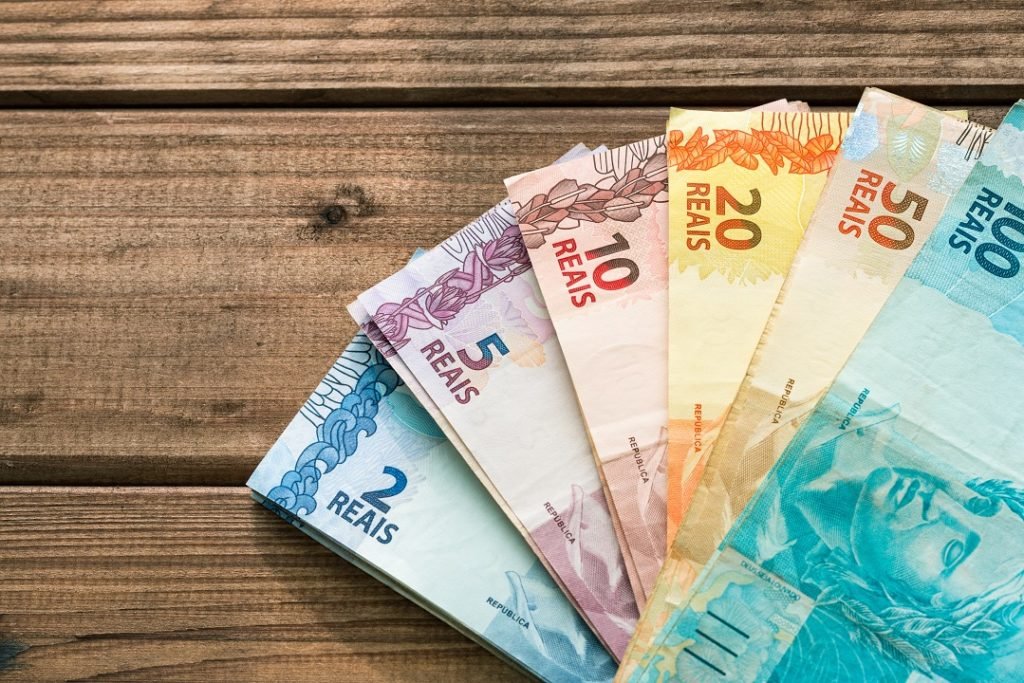
- Brazilian banknotes are printed in denominations of 2 reals, 5 reals, 10 reals, 20 reals, 50 reals, 100 reals, and 200 reals. Brazilian coins are minted in denominations of 5 centavos, 10 centavos, 25 centavos, 50 centavos, and 1 Brazilian real.
Breaking Down the Brazilian Real
The Brazilian real was first introduced in 1994, replacing the country’s previous currency, the cruzeiro real, as part of a broad economic plan aimed at stabilizing Brazil’s economy. Its initial exchange rate with the US dollarUnited States Dollar (USD)The United States Dollar refers to the national currency of the U.S and is represented by the ISO code USD and is often abbreviated as US$. was 1:1, and shortly after its introduction, the real traded at a rate as high as 1.20 USD for 1 real. Brazil pegged its currency to the US dollar and tightly controlled its foreign exchange rate up until 1999.
The real is designated as R$, and it is subdivided into 100 centavos. The real’s foreign exchange symbol is BRL. As of late 2020, USD/BRL trades at 5.10 Brazilian reals to 1 US dollar. It is a historically low exchange rate for the real and is believed to be partially due to the severe impact of the COVID-19 pandemic on Brazil’s economy.
Brazilian coins are minted in denominations of 5 centavos, 10 centavos, 25 centavos, 50 centavos, and 1 Brazilian real. Up until 2005, a 1 centavo coin was also produced. Many 1 centavo coins are still in circulation and, although no longer minted, are still recognized as legal tender in Brazil.
In addition to the current series of regular Brazilian coins – the Southern Cross series that began production in 1998 – Brazil minted a 1 real commemorative coin in 2016 to mark the occasion of Rio de Janeiro hosting the Summer Olympic Games. (The Southern Cross, or Crux, is a major constellation, frequently used for navigation for hundreds of years, in the Southern Hemisphere.)
Brazilian banknotes are printed and issued by the Central Bank of Brazil in denominations of 2 reals, 5 reals, 10 reals, 20 reals, 50 reals, 100 reals, and 200 reals. The current series of banknotes began production in 2010 and introduced several new security features designed to combat counterfeiting. The 200 real note was not produced until 2020. Brazilian banknotes differ in size, as well as in color and design, in order to make them more easily identifiable for people with impaired vision.
A commemorative 10 real note was issued in the year 2000 to mark the 500th anniversary of Portuguese explorers arriving in Brazil.
The Brazilian Economy
As previously noted, the economy of Brazil is considered among the strongest of emerging market economies. It is due primarily to the country being rich in natural resources, spawning a large, diverse economy that attracts large amounts of foreign investment. Foreign direct investmentForeign Direct Investment (FDI)Foreign direct investment (FDI) is an investment from a party in one country into a business or corporation in another country with the intention of establishing a lasting interest. Lasting interest differentiates FDI from foreign portfolio investments, where investors passively hold securities from a foreign country. in Brazil is estimated at over $200 billion, and many major multinational companies engage in joint venture projects with Brazilian companies.
Key industries in Brazil include mining, energy, lumber, and a vast array of agricultural products. It provides approximately one-third of the world’s total coffee supply, ranking as the world’s largest coffee producer for more than a century. It is also a major producer and exporter of soybeans, cotton, sugar cane, tobacco, bananas, and oranges.
Other major export products include aircraft, textiles, electronics, and iron ore. As Brazil transitions to being a more developed economy, healthcare and other services sectors become increasingly important segments of the country’s economy.
One drag on Brazil’s economy is widespread political corruption, which exists on local and federal levels.
Learn More
CFI offers the Commercial Banking & Credit Analyst (CBCA)™Program Page - CBCAGet CFI's CBCA™ certification and become a Commercial Banking & Credit Analyst. Enroll and advance your career with our certification programs and courses. certification program for those looking to take their careers to the next level. To keep learning and advancing your career, the following resources will be helpful:
- Australian Dollar (AUD)Australian Dollar (AUD)The Australian dollar refers to Australia’s official currency and is abbreviated as AUD. It is also the official currency of several regions,
- Currency RiskCurrency RiskCurrency risk, or exchange rate risk, refers to the exposure faced by investors or companies that operate across different countries, in regard to unpredictable gains or losses due to changes in the value of one currency in relation to another currency.
- Exchange RateExchange RateAn exchange rate is the rate at which one currency can be exchanged for another between nations or economic zones. It is used to determine the
- Multinational Company (MNC)Multinational Corporation (MNC)A multinational corporation is a company that operates in its home country, as well as in other countries around the world. It maintains a
-

Tone at the Top: Defining Leadership & Ethical Corporate Culture
Tone at the top, commonly referred to in auditing, is used to define a company’s management and board of director’s leadershipLeadership TraitsLeadership traits refer to personal qualities
-

Understanding the Yield Curve: Definition & Significance
The Yield Curve is a graphicalTypes of GraphsTop 10 types of graphs for data presentation you must use - examples, tips, formatting, how to use them for effective communication and in presentations. r
finance
- Bitcoin Value: Exploring Minimal Value & Investment Risks
- Current Ratio: Definition, Calculation & Financial Health
- Understanding Forward Rates: A Comprehensive Guide
- Hope Credit: Understanding Your Post-Secondary Education Tax Credit
- Libra Cryptocurrency: A Comprehensive Overview
- Modigliani-Miller Theorem: Understanding Capital Structure & Firm Value
- NAREIT: Understanding Real Estate Investment Trusts (REITs)
- Brazil's Sovereign Wealth Fund: Purpose, Objectives & History
- The Pink Tax: Understanding Gender-Based Price Discrimination
-
 Understanding the Retention Ratio: Reinvesting for Growth
The retention ratio (also known as the net income retention ratio) is the ratio of a company’s retained income to its net incomeNet IncomeNet Income is a key line item, not only in the income st...
-
 Sharpe Ratio: Calculate & Interpret Investment Performance
Named after American economist, William Sharpe, the Sharpe Ratio (or Sharpe Index or Modified Sharpe Ratio) is commonly used to gauge the performance of an investment by adjusting for its risk.The hig...