
Understanding the Retention Ratio: Reinvesting for Growth
The retention ratio (also known as the net income retention ratio) is the ratio of a company’s retained income to its net incomeNet IncomeNet Income is a key line item, not only in the income statement, but in all three core financial statements. While it is arrived at through. The retention ratio measures the percentage of a company’s profits that are reinvested into the company in some way, rather than being paid out to investors as dividendsDividendA dividend is a share of profits and retained earnings that a company pays out to its shareholders. When a company generates a profit and accumulates retained earnings, those earnings can be either reinvested in the business or paid out to shareholders as a dividend..

Retention Ratio Formula
There is a simple formula for calculating the retention ratio: divide a company’s retained income by its net income. The formula below shows the steps involved:

Net income can be found at the bottom of a business’ income statement, and the dividend figure can either be found in the shareholder’s equityStockholders EquityStockholders Equity (also known as Shareholders Equity) is an account on a company's balance sheet that consists of share capital plus section of the balance sheet or in the financing section of the cash flow statement.
The ratio can also be calculated on a per-share basis, using the following formula:

Retention Ratio Example
Alice owns a software business that focuses on web design. She’s been in business for three years and wants to calculate her business’ retention ratio. In year 1, Alice’s recorded a net income of $1,000 and did not pay any dividends. In year 2, Alice posted a net income of $5,000 and paid out $500 in dividends. In year 3, Alice reported a net income of $15,000 and paid out a total of $1,000 in dividends.
Using the formula above, we can calculate the retention ratio for each period:
- Year 1: (1,000 – 0) / 1,000 = 100%
- Year 2: (5,000 – 500) / 5,000 = 90%
- Year 3: (15,000 – 4,000) / 15,000 = 73%
In the example above, we can see that the retention ratio for Alice’s business is going down each year. This is because net income is rising each year and dividends are rising by a proportionally larger amount, leading to a downward trend in the ratio.
The change may be indicative of the business’ lack of focus on growth as it chooses to give out its earnings to shareholders rather than reinvest them into the business. To understand whether that is a good thing or a bad thing, we should compare the figure to the ratio of Alice’s competitors in the industry.
Interpreting the Retention Ratio
A high retention ratio may not always be indicative of financial health. To better understand the retention ratio, we must first understand the company that we are calculating the ratio for.
Smaller, newer companies will typically report higher retention ratios. Smaller businesses tend to prioritize business development and investments in research and development (R&D)Research and Development (R&D)Research and Development (R&D) is a process by which a company obtains new knowledge and uses it to improve existing products and introduce, which can be a reason why they are more likely to retain their earnings rather than distribute them as dividends. A startup business may also be experiencing slow sales in the early stages of business, which would mean that there is less income to distribute to shareholders, thus resulting in a higher retention ratio.
Larger, more mature companies will usually post lower retention ratios, as they are already quite profitable and do not need to invest as heavily in R&D. Thus, such companies may opt to pay investors consistent dividends in preference to retaining more earnings.
Final Word
As with any financial ratio, there is not much meaning behind a single or standalone number. In order to draw meaningful insights, analysts consider the ratio in relation to the ratios of similar companies operating in the same industry. This makes it easier to compare one company to another in terms of their earnings retention.
Ratios can also be looked at over a period of time in order to observe trends and year-over-year changes in the metric. This enables analysts to evaluate changes in the company’s performance over a given time interval.
Additional Resources
We hope you have enjoyed CFI’s explanation of the Retention Ratio. CFI is the official provider of the global Financial Modeling & Valuation Analyst (FMVA)™Become a Certified Financial Modeling & Valuation Analyst (FMVA)®CFI's Financial Modeling and Valuation Analyst (FMVA)® certification will help you gain the confidence you need in your finance career. Enroll today! certification program, designed to help anyone become a world-class financial analyst. To keep advancing your career, the additional CFI resources below will be useful:
- Cash Flow StatementCash Flow StatementA cash flow Statement contains information on how much cash a company generated and used during a given period.
- Earnings Per Share (EPS)Earnings Per Share (EPS)Earnings per share (EPS) is a key metric used to determine the common shareholder's portion of the company’s profit. EPS measures each common share's profit
- Forecasting Balance Sheet Line ItemsForecasting Balance Sheet Items in a Financial ModelThis article aims to provide readers with an easy to follow, step-by-step guide to forecasting balance sheet items on financial model.
- Forecasting Income Statement Line ItemsProjecting Income Statement Line ItemsWe discuss the different methods of projecting income statement line items. Projecting income statement line items begins with sales revenue, then cost
-

Calmar Ratio: Measuring Risk-Adjusted Investment Performance
The Calmar ratio is a formula that measures the performance of an investment fund – such as a hedge fundHedge FundA hedge fund, an alternative investment vehicle, is a partnership where investor
-

Portfolio Turnover Ratio: Definition, Calculation & Significance
The portfolio turnover ratio is the rate of which assets in a fund are bought and sold by the portfolio managers. In other words, the portfolio turnover ratio refers to the percentage change of the as
finance
- Acid-Test Ratio: Understanding Your Company's Short-Term Liquidity
- Advertising to Sales Ratio: Measuring Ad Effectiveness & ROI
- Understanding the CAPE Ratio: A Guide to Cyclically Adjusted P/E
- Current Ratio: Definition, Calculation & Financial Health
- Debt-to-Assets Ratio: Definition, Calculation & Risk Assessment
- Operating Ratio: Definition, Calculation & Importance
- Quick Ratio: Understanding Your Business's Short-Term Liquidity
- Reserve Ratio Explained: Understanding Bank Reserves
- Sharpe Ratio: Calculate & Interpret Investment Performance
-
![Shareholder Equity Ratio: Definition & Calculation | [Your Company Name]](https://www.etffin.com/article/uploadfiles/202110/2021100815180064_S.png) Shareholder Equity Ratio: Definition & Calculation | [Your Company Name]
Shareholder Equity Ratio: Definition & Calculation | [Your Company Name]The shareholder equity ratio is a ratio that shows the amount of a company’s assets that have been financed using the owner’s equity instead of debt. It shows the portion of shareholders&r...
-
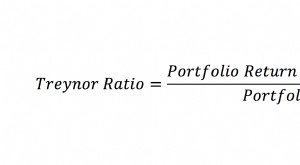 Treynor Ratio: Understanding Risk-Adjusted Portfolio Performance
The Treynor Ratio is a portfolio performance measure that adjusts for systematic riskSystematic RiskSystematic risk is that part of the total risk that is caused by factors beyond the control of a spe...