
Understanding Carry Benefits: Maximizing Investment Returns
Carry benefits is the term used to describe a situation where the benefits gained from holding an asset – such as interest payments or dividendsDividendA dividend is a share of profits and retained earnings that a company pays out to its shareholders. When a company generates a profit and accumulates retained earnings, those earnings can be either reinvested in the business or paid out to shareholders as a dividend. – exceed the costs associated with holding on to the asset, such as storage or financing costs. It is the exact opposite of cost of carry, which is when the costs of holding an asset outweigh the benefits gained from holding the asset.
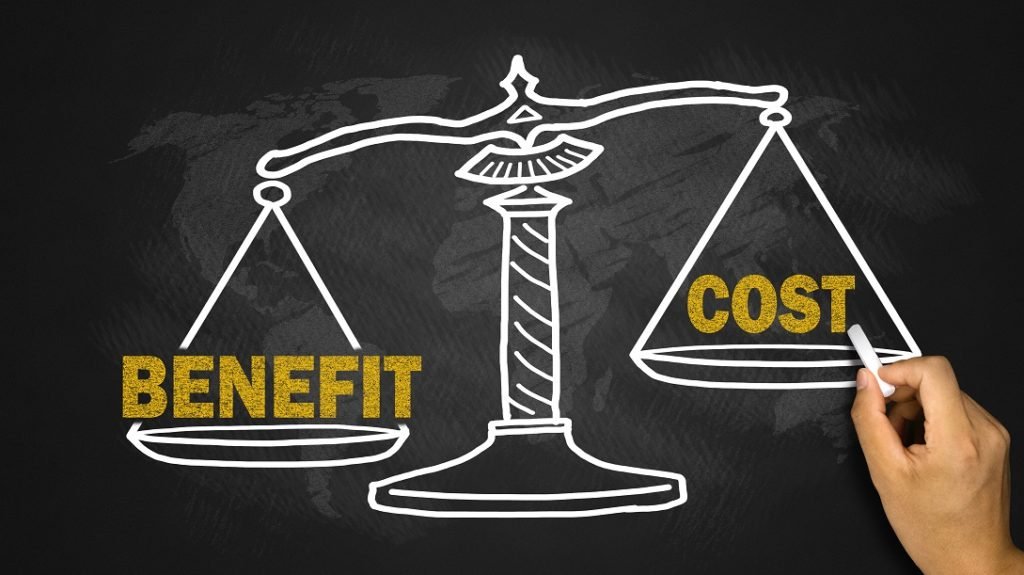
Benefits of Holding an Asset
1. Avoid investment mistakes
Holding on to an asset (especially for an extended period of time) allows investors to ride out any temporary periods of decline in the asset’s value. When an investor stays invested in a stock, it goes through periods of ups and downs, but if they invest in a stock that is traditionally known as a high growth asset, it helps to balance out any investments that hit hard times and go into a downward trend. Therefore, holding on to a high growth investment will let you correct some, if not all, of your past investment mistakes.
2. Dividend payouts
Some investors buy and sell stock in the stock market to earn a profit, also known as a capital gainCapital GainA capital gain is an increase in the value of an asset or investment resulting from the price appreciation of the asset or investment. In other words, the gain occurs when the current or sale price of an asset or investment exceeds its purchase price., while other investors buy stock and hold it to take advantage of dividend payments. Companies such as Microsoft and Apple are known to provide high dividend payments historically.
If the stock performs well over time, it can be an incredibly lucrative and stable source of income for the investor. In some instances, the investor is given the option to purchase additional shares in the stock instead of receiving a dividend payment.
3. A high return on investment
As with all investments, the main reasons for holding on to any financial asset is for the return on investment (ROI)Return on Investment (ROI)Return on Investment (ROI) is a performance measure used to evaluate the returns of an investment or compare efficiency of different investments.. Stocks, in particular, have been known to provide investors with a high ROI when they are performing well in the market. This is in contrast to securities such as government bonds, which are safe investments but only produce about half the return that stocks do.
As mentioned earlier, holding on to a stock for an extended period of time will let the investor ride out periods of low performance and eventually earn a high return on investment.
4. Lower taxes
Many people invest their money in stock and other financial assets because the amount of taxes paid on the investments in the long term is much lower than the tax paid on the income. Any profits or capital gains earned on the stocks are subject to taxes, but they can be capped after holding the stock for a period of longer than one year. However, if you sell the stock within a year, the level of tax imposed on the sale is equal to the income tax.
Costs of Holding Stock
1. Capital costs
When an owner purchase inventory for their business, a lot of liquid cash is tied up in the inventory, which cannot be recouped until the inventory is sold. The cost of holding the inventory is the capital cost, and it includes both the financing costs (money spent) and the opportunity cost, which is what could’ve been done with the money had the inventory not been purchased.
2. Storage space
In addition to the cost of purchasing inventoryInventoryInventory is a current asset account found on the balance sheet, consisting of all raw materials, work-in-progress, and finished goods that a, the owner also needs a place to store the goods until customers purchase them. Storage costs can include a variety of things – from the electricity required to the manpower (wages for the workers) needed to transport the goods from the warehouse to the store as required. Alternatively, when the stock runs out, the company could incur additional expenses as a result of the shortage.
3. Risk of becoming obsolete
There is a risk that the inventory held by the business can become obsolete or outdated. This can arise from changes in consumer tastes, new developments in technology, or a competitor producing the same good at a lower price.
Related Readings
CFI is the official provider of the global Financial Modeling & Valuation Analyst (FMVA)™Become a Certified Financial Modeling & Valuation Analyst (FMVA)®CFI's Financial Modeling and Valuation Analyst (FMVA)® certification will help you gain the confidence you need in your finance career. Enroll today! certification program, designed to help anyone become a world-class financial analyst. To keep advancing your career, the additional CFI resources below will be useful:
- Depreciation MethodsDepreciation MethodsThe most common types of depreciation methods include straight-line, double declining balance, units of production, and sum of years digits.
- Dividend Reinvestment Plan (DRIP)Dividend Reinvestment Plan (DRIP)A dividend reinvestment plan (DRIP or DRP) is a plan offered by a company to shareholders that it allows them to automatically reinvest their
- FCFF vs FCFE vs DividendsFCFF vs FCFE vs DividendsAll three types of cash flow – FCFF vs FCFE vs Dividends – can be used to determine the intrinsic value of equity, and ultimately, a firm’s intrinsic stock price. The primary difference in the valuation methods lies in how the cash flows are discounted.
- Fixed and Variable CostsFixed and Variable CostsCost is something that can be classified in several ways depending on its nature. One of the most popular methods is classification according
-

Understanding the Benefits of Public Housing Programs
Public housing is just one form of assistance for impoverished populations in America. Depending on the program in the particular locale, the rent for this type of housing may be subsidized or deeply
-

Voluntary Retirement: Benefits, Packages & Considerations
A voluntary retirement is one that you take before you reach the normal or mandatory retirement age. Your company may offer you an early retirement package if it is experiencing financial difficulties
finance
- Understanding Domestic Stocks: A Guide for Investors
- Dual-Class Stock Structures: Understanding Voting Rights & Dividends
- Understanding Analyst Recommendations: Investment Insights & Advice
- Bonds vs. Stocks: A Comprehensive Guide for Investors
- Understanding Stock Promoters: How They Influence Investment
- Value Stocks Explained: Investing in Undervalued Companies
- Understanding Lease Classifications: Operating vs. Capital Leases
- Understanding Stock Warrants: A Comprehensive Guide
- Stock Options Explained: A Beginner's Guide to Understanding Equity Contracts
-
 Walmart Benefits: Convenience, Low Prices & Services | Official Walmart
What Are the Benefits of Walmart? Sam Walton opened the first Walmart in Rogers, Arkansas in 1962. Since then, Walmart has become the largest retail operation in the world while offering bene...
-
Understanding Common Stock: Features, Benefits & Risks
Stock markets like the Nasdaq and the New York Stock Exchange give investors the opportunity to buy common stock for any listed company. Buying common stock allows an individual to take a small stake ...