
Understanding Lease Classifications: Operating vs. Capital Leases
Lease classifications include operating leases and capital leases. A lease is a type of transaction undertaken by a company to have the right to use an asset. In a direct purchase, a company will simply purchase the asset from another party. In a lease, however, the company will pay the other party an agreed-upon sum of money for the use of the asset – similar to rent payments.
The company purchasing the right to use the asset is known as the lessee. The party offering the asset for lease and receiving the lease payments is known as the lessor. Leases generate an interest expenseInterest ExpenseInterest expense arises out of a company that finances through debt or capital leases. Interest is found in the income statement, but can also in certain situations.
There are two basic categories of lease classification: the operating lease and the capital, or finance, lease.
What is an Operating Lease?
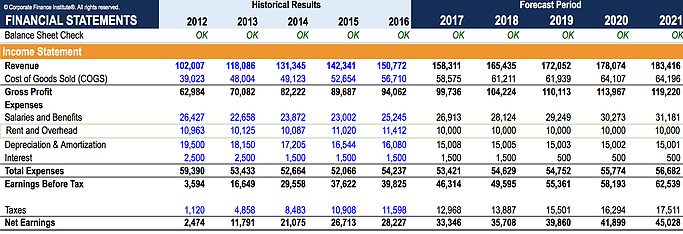
In an operating lease, the lessee receives the right to use the asset but does not record the asset or the lease payment liability on its balance sheet. Thus, the operating lease is considered to be “off balance sheet financing”. Instead, the lessee will record lease payments as rental expense in its income statementIncome StatementThe Income Statement is one of a company's core financial statements that shows their profit and loss over a period of time. The profit or, either under cost of goods sold or under SG&A.SG&ASG&A includes all non-production expenses incurred by a company in any given period. It includes expenses such as rent, advertising, marketing
What is a Capital or Finance Lease?
In a capital lease, the lessee receives the right to use the asset and substantially receives all the benefits and risks of owning that asset. This transfer of risk and benefits occurs when certain criteria are met. A lease is deemed a capital lease if the following criteria are met:
- The lease duration is 75% or more of the asset’s useful life
- The net present value (NPV)Net Present Value (NPV)Net Present Value (NPV) is the value of all future cash flows (positive and negative) over the entire life of an investment discounted to the present. of lease payments is 90% or more of the asset’s fair value
- There is a direct term or clause in the lease stating transfer of title – or –
- There is a term in the lease that enables the lessee, at the end of the lease, to purchase the asset at a discounted price (also known as a bargain purchase option, or BPO).
As opposed to the operating lease, a lessee with a capital lease records the asset and the corresponding lease liability on its balance sheetBalance SheetThe balance sheet is one of the three fundamental financial statements. The financial statements are key to both financial modeling and accounting.. The asset will be classified as plant, property, and equipment. The lease liability is classified as a form of debt.
The capital lessee will also depreciate the asset over time. If the lessee and lessor have agreed on a guaranteed residual value, then the lessee will depreciate the asset over time to this residual value.
Any non-cash financing for this lease is disclosed in the footnotes of the company’s financial statementsThree Financial StatementsThe three financial statements are the income statement, the balance sheet, and the statement of cash flows. These three core statements are.
Significance of the Lease Classifications
Because of the nature of each lease classification, there can be an impact on profit and debt capacity. Since operating leases are “off balance sheet”, the company’s capital structure does not change due to an operating lease. In contrast, a capital lease may make a company more debt-heavy, thereby impacting its debt capacity.Debt ScheduleA debt schedule lays out all of the debt a business has in a schedule based on its maturity and interest rate. In financial modeling, interest expense flows
To learn more, launch our free accounting courses!
More Resources
Thank you for reading CFI’s guide to lease classifications. To further advance your financial education, see the following CFI resources:
- Debt-to-Equity RatioDebt to Equity RatioThe Debt to Equity Ratio is a leverage ratio that calculates the value of total debt and financial liabilities against the total shareholder’s equity.
- Investment MethodsInvestment MethodsThis guide and overview of investment methods outlines they main ways investors try to make money and manage risk in capital markets. An investment is any asset or instrument purchased with the intention of selling it for a price higher than the purchase price at some future point in time (capital gains), or with the hope that the asset will directly bring in income (such as rental income or dividends).
- Three Statement Model3 Statement ModelA 3 statement model links the income statement, balance sheet, and cash flow statement into one dynamically connected financial model. Examples, guide
- Return On EquityReturn on Equity (ROE)Return on Equity (ROE) is a measure of a company’s profitability that takes a company’s annual return (net income) divided by the value of its total shareholders' equity (i.e. 12%). ROE combines the income statement and the balance sheet as the net income or profit is compared to the shareholders’ equity.
-

Historical Cost Accounting: Definition & Importance
In accounting, the historical cost of an asset refers to its purchase price or its original monetary value. Based on the historical cost principle, the transactions of a business tend to be recorded a
-
Impaired Assets: Definition, Recognition, and Accounting Standards
An impaired asset is an accounting term that describes an asset with a recoverable value or fair market valueFair Market ValueThe fair market value (of a good or service being exchanged) refers to the
Accounting
- Tenant Rights Without a Lease: Understanding Your Legal Protections
- Understanding Carry Benefits: Maximizing Investment Returns
- Understanding Analyst Recommendations: Investment Insights & Advice
- Understanding Accounting Policies: A Guide for Businesses
- Understanding Accounting Ratios: A Comprehensive Guide
- Understanding Administrative Expenses: A Comprehensive Guide
- Understanding Leases: Types, Classifications, and Key Concepts
- Operating Lease Explained: Benefits & How They Work
- Understanding Stranded Assets: Risks and Impacts
-
 Understanding Financial Statements: A Comprehensive Guide
Financial statements are the records of a company’s financial condition and activities during a period of time. Financial statements show the financial performance and strength of a companyCorpo...
-
 Headline Earnings: Understanding Core Business Performance
Headline earnings are a restatement of a company’s profit that removes the effect of one-time charges, write-downs, cost-cutting, and other extraordinary items like tax liabilities. Another way ...