
Dividends vs. Share Buybacks: Which is Better for Investors?
ShareholdersShareholderA shareholder can be a person, company, or organization that holds stock(s) in a given company. A shareholder must own a minimum of one share in a company’s stock or mutual fund to make them a partial owner. invest in publicly traded companies for capital appreciation and income. There are two main ways in which a company returns profits to its shareholders – Cash Dividends and Share BuybacksShare RepurchaseA share repurchase refers to when the management of a public company decides to buy back company shares that were previously sold to the public. A company may decide to repurchase its sharesto send a market signal that its stock price is likely to increase, to inflate financial metrics denominated by the number of shares outstanding (e.g., earnings per share or EPS), or simply because it wants to increase its own equity stake in the company.. The reasons that drive the strategic decision on dividendDividendA dividend is a share of profits and retained earnings that a company pays out to its shareholders. When a company generates a profit and accumulates retained earnings, those earnings can be either reinvested in the business or paid out to shareholders as a dividend. vs share buyback differ from company to company and are based on several factors such as the company’s current stock price, its long-term vision, tax structure applicable to the company and its shareholders, the message the company wants to give the stakeholdersStakeholderIn business, a stakeholder is any individual, group, or party that has an interest in an organization and the outcomes of its actions. Common examples, investment opportunities, etc.

Before we analyze the decision-making process, let’s review the basics of both these terms:
DividendsDividendA dividend is a share of profits and retained earnings that a company pays out to its shareholders. When a company generates a profit and accumulates retained earnings, those earnings can be either reinvested in the business or paid out to shareholders as a dividend.
Dividends are distributed as part of the company’s after-tax profit. Cash-rich companies pay dividends to keep the shareholders’ interest in its stock and it is a common method of returning surplus cash to investors. This is also important for investors looking for regular cash flowsCash FlowCash Flow (CF) is the increase or decrease in the amount of money a business, institution, or individual has. In finance, the term is used to describe the amount of cash (currency) that is generated or consumed in a given time period. There are many types of CF, especially those who are dependent on them. Dividends received by shareholders are taxed differently and, hence, become important from a tax planning point of view.
Share buybackShare RepurchaseA share repurchase refers to when the management of a public company decides to buy back company shares that were previously sold to the public. A company may decide to repurchase its sharesto send a market signal that its stock price is likely to increase, to inflate financial metrics denominated by the number of shares outstanding (e.g., earnings per share or EPS), or simply because it wants to increase its own equity stake in the company.
A share buyback is a process in which the company purchases its own shares from its shareholders and, thus, reduces the total number of shares outstandingDiluted Shares OutstandingFully diluted shares outstanding is the total number of shares a company would have if all dilute securities were exercised and converted into shares. in the company. The buyback price that is offered to shareholders is generally at a premium to the current market price, which incentivizes them to take part in the process. This process is especially useful when management feels that the company’s share price is undervalued UndervaluedAn undervalued asset is any investment that can be purchased for less than its intrinsic value. For example, if a company shows an intrinsic value of $11and wants to push the price upward. Buybacks also allow the company to transfer surplus cash sitting idle on the balance sheet to its shareholders.
Companies formulate a strategy on Dividend vs Share Buyback, as it involves certain statutory requirements, restrictions on the issuance of new shares for a certain period, the requirement to maintain a certain debt-to-equity ratio, sources of funding, etc.
Why Cash Dividend?
The cash dividend provides a regular stream of cash for investors. It allows the shareholder to remain invested in the company and still receive regular cash flows. Cash dividend can be a big incentive for investors who rely heavily on their investments to meet their living expensesExpensesAn expense is a type of expenditure that flows through the income statement and is deducted from revenue to arrive at net income. Due to the, especially retired investors who may not have another source of incomeIncomeIncome refers to the money that is earned by an individual for providing a service or as an exchange for providing a product. The income earned by an individual is used to fund their day-to-day expenditures, as well as fund investments. Some of the most common types of income include salaries, revenue from self-employment, commissions, and bonuses..
Since the size of a dividend payout is smaller, compared to a buyback, it allows the company to maintain a conservative capitalization structure every quarter rather than just hold large piles of cashCashIn finance and accounting, cash refers to money (currency) that is readily available for use. It may be kept in physical form, digital form,.
Source: Compustat
Why buyback?
Buybacks are clearly a more tax-efficient way to return capitalCapitalCapital is anything that increases one’s ability to generate value. It can be used to increase value across a wide range of categories, such as financial, social, physical, intellectual, etc. In business and economics, the two most common types of capital are financial and human. to shareholders because the investorAccredited InvestorAn accredited investor refers to an individual or institutional investor who has met certain requirements set by the U.S. Securities and Exchange Commission (SEC). Accredited investors are allowed to purchase securities that are not available to other investors and that have not been registered with any regulatory authority. doesn’t incur any additional tax on the buyback sale process. TaxDirect TaxesDirect taxes are one type of taxes an individual pays that are paid straight or directly to the government, such as income tax, poll tax, land tax, and is only applicable on the actual sale of shares, whereas dividends attract tax in the range of 15% to 20%. In some countries, dividend payments also attract a Dividend Distribution Tax (DDT), which means for every $1.00 paid to shareholders, the company must pay $1.20 or $1.30 depending on the DDT rate. This process favors the concept of buybacks more than cash dividends.
Advantages of buybacks
- It prevents a decline in the value of a stock by reducing the supply of the stock
- With the reduction in outstanding shares, the Earnings Per Share (EPS) of the company improves. This is a good indication of the company’s profitability and may boost its share price in the long run.
The example below shows the impact on EPS if a company buys back 20% of its shares, i.e., reduction of shares from 100,000 to 80,000:
Pre-Buyback Post-Buyback Profit available to shareholders$1,000,000$1,000,000No. of Shares100,00080,000Earnings Per Share$10.00$12.50
- It is used as a strategyStrategyCorporate and business strategy guides. Read all CFI articles and resources on business and corporate strategy, important concepts for financial analysts to incorporate in their financial modeling and analysis. First mover advantage, Porter's 5 Forces, SWOT, competitive advantage, bargaining power of suppliers by management to show its confidence in the company and to send a message that the stock is undervalued. For example, if a stock is trading at $120 and the company announces a buyback at $150, it will instantly create value for its shareholders and price will tend to move upward.
- It helps the company use excess cash lying idle from a lack of opportunities. Idle cash earns no additional income for the company. This is true for companies such as Apple that hold excess cash.
- If promoters don’t take part in the buyback process, it increases the holdings of the promoters and thus, prevents a potential takeover by rivals. It also provides the management/company with greater control and improves the decision-making process, as there are fewer shares owned by the public. For example, to address issues related to decision-making, Google created two classes of shares, one with voting rights and another without voting rights.
- Dividends return cash to all shareholders while a share buyback returns cash to self-selected shareholders only. So when a company pays a dividend, everyone receives cash according to the proportion of their shareholding whether they need cash or not. However, in case of a share buyback, investors decide whether they want to take part in the process or not. This also gives them the option of changing their shareholding pattern.
- A higher EPS would lower the P/E ratio, which is looked at positively in the stock market. Thus, a higher EPS coupled with a lower P/E ratio and higher ROA should have an overall positive impact on the stock price.
- The buyback also provides liquidityLiquidityIn financial markets, liquidity refers to how quickly an investment can be sold without negatively impacting its price. The more liquid an investment is, the more quickly it can be sold (and vice versa), and the easier it is to sell it for fair value. All else being equal, more liquid assets trade at a premium and illiquid assets trade at a discount. opportunities for a thinly traded stock.
Disadvantages of buybacks
- It may indicate that the company doesn’t have any profitable opportunities to invest in, which may send a bad signal to long term investors looking for capital appreciation.
- It may also give a negative signal about the company’s confidence in itself and promoters may decide to sell their stake.
- The buyback process is time-consuming and requires disclosures to stock exchanges and approvals from regulatory bodies. It also involves hiring investment bankers, which becomes an expensive affair for the company.
Case study
Accenture, a leading IT company, returns 100% + of its annual net income to its shareholders using both ways of returning capital, i.e., a combination of dividend payments and buybacks, with the company preferring buybacks to dividends in a ratio of around 65% to 35% over last 3-4 years. This is a great case of dividend vs share buyback.
Below is the snapshot of the company’s return of cash to its shareholders in the last 5 years:
Amount in USD M FY12 FY13 FY14 FY15 FY16 Dividends Paid ($)9511,1221,2551,3531,438Share Buyback ($)2,0992,5442,5592,4532,605Total Capital Returned ($)3,0503,6663,8143,8064,043
Source: Company Reports
Accenture’s FY16 ROE stands at ~47%, but had the company followed a conservative capital structure or paid dividends rather than doing a buyback, its ROE would have been ~13.4% weighed down by its huge pile of cash.
The buyback wins
The above discussion on dividend vs share buyback presents an interesting platform for deciding the optimum capital structure and its impact on stock prices, valuations, etc. However, it seems reasonable to conclude that, notwithstanding a few concerns and exceptional cases, a buyback is a win-win situation for both companies and shareholders.
The buyback process, however, is a bit tedious and expensive as it involves several filings and approvals from stock exchanges. The company and the shareholders stand to gain in equal weight from a buyback offer, making it an attractive option for both of them.
Having discussed the above, it should be kept in mind that buybacks should not be undertaken for any ulterior motive or to send wrong signals and create confusion in the minds of stakeholders in this era of corporate governance.
Applications in financial modeling
In financial modelingWhat is Financial ModelingFinancial modeling is performed in Excel to forecast a company's financial performance. Overview of what is financial modeling, how & why to build a model., it’s important to factor in decisions around paying a dividend vs share buyback. There are various types of modelsTypes of Financial ModelsThe most common types of financial models include: 3 statement model, DCF model, M&A model, LBO model, budget model. Discover the top 10 types where this decision may apply, including:
- 3 statement model3 Statement ModelA 3 statement model links the income statement, balance sheet, and cash flow statement into one dynamically connected financial model. Examples, guide
- Discounted Cash Flow (DCF) modelDCF Model Training Free GuideA DCF model is a specific type of financial model used to value a business. The model is simply a forecast of a company’s unlevered free cash flow
- M&A modelHow To Build A Merger ModelA merger model is the analysis of two companies combining to form a single business entity and the associated impact on financials.
- LBO modelLBO ModelAn LBO model is built in Excel to evaluate a leveraged buyout (LBO) transaction, the acquisition of a company funded using a significant amount of debt.
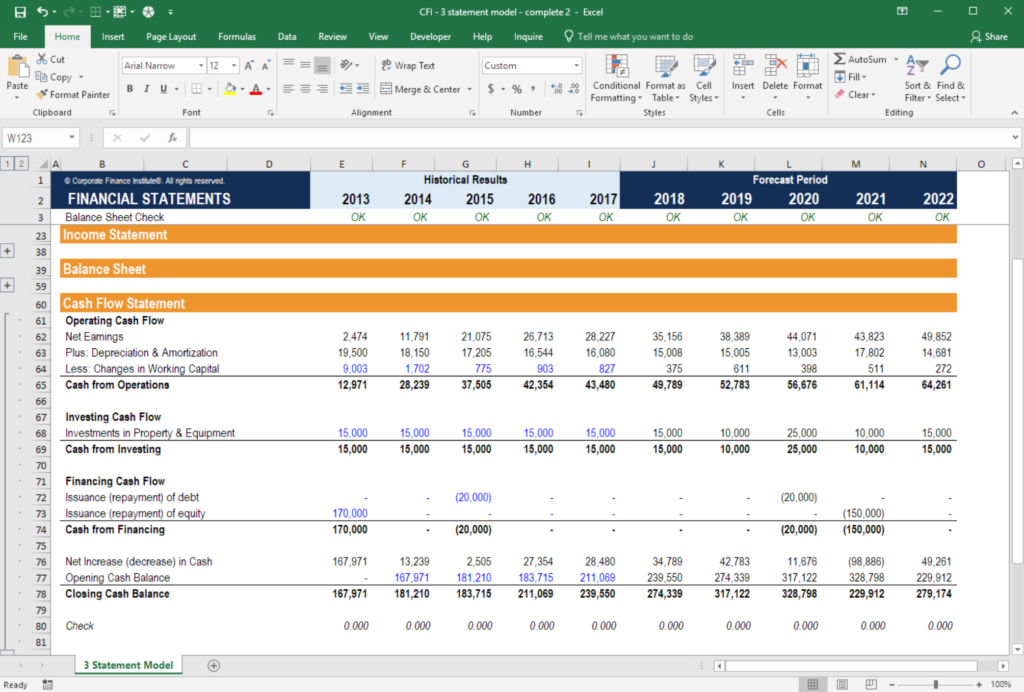
In the assumptions section of the model, make an area for quarterly/annual dividends as well as the value of shares to be repurchased. The dividends will flow out of retained earnings but the shares outstanding will remain the same. A buyback will reduce the share capital account and reduce the number of shares outstanding in the model.
Learn more in CFI’s financial modeling courses!
Additional resources
This has been a guide to the dividend vs share buyback debate. To keep learning and expanding your knowledge, check out these additional CFI resources to advance your career:
- Corporate finance decisionsCorporate Finance OverviewCorporate finance deals with the capital structure of a corporation, including its funding and the actions that management takes to increase the value of
- Mergers and acquisitionsMergers Acquisitions M&A ProcessThis guide takes you through all the steps in the M&A process. Learn how mergers and acquisitions and deals are completed. In this guide, we'll outline the acquisition process from start to finish, the various types of acquirers (strategic vs. financial buys), the importance of synergies, and transaction costs
- DCF financial modeling guideDCF Model Training Free GuideA DCF model is a specific type of financial model used to value a business. The model is simply a forecast of a company’s unlevered free cash flow
- Financial modeling best practicesFree Financial Modeling GuideThis financial modeling guide covers Excel tips and best practices on assumptions, drivers, forecasting, linking the three statements, DCF analysis, more
-

Skin in the Game: Understanding Risk & Accountability
“Skin in the Game” is a phrase popularized by world-famous investor Warren Buffet signifying a condition in which high-ranking insiders buy the stocks of the company they are a part of usi
-

Navigating Career Transitions & Financial Adjustments: A Personal Story
As many of you know, my husband had a career crisis that left him unemployed for several months last summer. It was scary, but we learned a lot from the experience — including the fact th
finance
- Dividend Irrelevance Theory: Understanding Its Implications
- Understanding Dividend Per Share (DPS): A Comprehensive Guide
- Understanding Dividend Yield: A Key Metric for Investors
- Understanding Liquidating Dividends: A Comprehensive Guide
- Modigliani-Miller Theorem: Understanding Capital Structure & Firm Value
- Solvency Explained: Understanding Long-Term Debt and Financial Stability
- Understanding Stable Dividend Policies: A Comprehensive Guide
- Dividend Stocks: A Reliable Investment in Uncertain Times
- Identifying Profitable Dividend Stocks: A Beginner's Guide
-
 Share Repurchase: Definition, Benefits & How It Works
A share repurchase refers to the management of a public companyPrivate vs Public CompanyThe main difference between a private vs public company is that the shares of a public company are traded on a s...
-
 Shareholder Yield: A Comprehensive Guide to Returns for Investors
Shareholder yield refers to how much money shareholders receive from a company that is in the form of cash dividendsDividendA dividend is a share of profits and retained earnings that a company pays o...