
Drawing Account Explained: Understanding Owner Withdrawals
A drawing account is a financial account that essentially records owners’ drawings, i.e., the assets, mainly including money, that are withdrawn from a business by its owner(s) for their personal use.

Summary
- A drawing account is a financial account that essentially records owners’ drawings, i.e., the assets, mainly including money, that are withdrawn from a business by its owner(s) for their personal use.
- Drawing accounts are generally associated with unincorporated business organizations, such as sole proprietorships and partnerships.
- Withdrawal of any asset from the business that ultimately reduces the total owner’s equity or the total capital of the business is a drawing and is recorded in the drawings account.
What Constitutes a “Drawing” from the Business?
The definition of the drawing account includes assets, and not just money/cash, because money or cash or funds is a type of asset. It is a current assetCurrent AssetsCurrent assets are all assets that a company expects to convert to cash within one year. They are commonly used to measure the liquidity of a of the company and is one of the many assets that can be withdrawn from the business by the owner(s) for their personal use.
Hence, even assets such as equipment or unsold products from the closing inventory, etc. that are withdrawn from the business for the owner’s personal use is a part of drawings.
More generally speaking, any withdrawal from the business that ultimately reduces the total owner’s equity or the total capital of the business is a drawing and is recorded in the drawings account.
Usage of Drawing Accounts
Drawing accounts are generally associated with unincorporated business organizations, such as sole proprietorships and partnerships. It is because drawing accounts separate the usage of money and assets of the business from business use to personal use.
It is essentially required in some organizations because the owner and the business are not separate entities when it comes to organizations like sole proprietorships and partnerships.
On the other hand, with incorporated businesses such as companies and multinational corporations, the business and the owner are separate entities, and hence, a drawing account is not required to separate the usage of money and assets because the distinction is already available.
Features of a Drawing Account
1. Helps track capital used for personal use
The drawings account is helpful in tracking the total amount of capital withdrawn from the business for personal use. It helps in keeping a check on the owner’s withdrawals and helps maintain the overall total capital balance of the company.
2. Not a continuing/permanent account
The drawings account is not a continuing or permanent record in the sense that, at the end of the financial yearFiscal Year (FY)A fiscal year (FY) is a 12-month or 52-week period of time used by governments and businesses for accounting purposes to formulate annual, it is balanced out in the general ledger with a credit, and the balance is transferred to the total capital or owner’s equity side of the balance sheet with a debit.
It is only used again in the next year to track the withdrawals from the business of that year, if any. Hence, it is not a continuing or permanent account, but rather a temporary one.
3. Not an expense account
While the drawing account is a debit account and shows a reduction in the total money available in the business, it is not an expense account – it is not an expense incurred by the business. Rather, it is simply a reduction in the total equity of the business for personal use.
If the drawings account were to be an expense account, it would be recorded in the profit and loss (P&L)Profit and Loss Statement (P&L)A profit and loss statement (P&L), or income statement or statement of operations, is a financial report that provides a summary of a account of the business instead of the balance sheet.
Accounting Entry for a Withdrawal
The typical accounting entry for the drawings account is a debit to the drawing account and a credit to the cash account (or whatever asset is being withdrawn). It is a reflection of the deduction of the capital from the total equity in the business.
Representation on the Balance Sheet
The drawing account is represented on a balance sheet as a contra-equity account, and is shown as a reduction on the equity side of the balance sheet to represent a deduction of total equity/total capital from the business.
Related Readings
CFI is the official provider of the global Commercial Banking & Credit Analyst (CBCA)™Program Page - CBCAGet CFI's CBCA™ certification and become a Commercial Banking & Credit Analyst. Enroll and advance your career with our certification programs and courses. certification program, designed to help anyone become a world-class financial analyst. To keep advancing your career, the additional resources below will be useful:
- DraweeDraweeCommon in bill or check transactions, a drawee can be described as the entity or person upon whom a bill or check is drawn. The drawee is the
- Journal Entries GuideJournal Entries GuideJournal Entries are the building blocks of accounting, from reporting to auditing journal entries (which consist of Debits and Credits)
- Projecting Balance Sheet Line ItemsProjecting Balance Sheet Line ItemsProjecting balance sheet line items involves analyzing working capital, PP&E, debt share capital and net income. This guide breaks down how to calculate
- Capital FlowsCapital FlowsCapital flows are transactions involving financial assets between international entities. Potential financial assets to be included could be
-

Understanding Business Entities: Types & Legal Structures
An entity is an organization created by one or more individuals to carry out the functions of a business, and that maintains a separate legal existence for tax purposesAccounting For Income TaxesIncom
-
Savings Accounts: A Beginner's Guide to Safe & Simple Savings
What is a savings account?A savings account is a basic type of financial product that allows you to deposit your money and typically earn a modest amount of interest. These accounts are federally ins
finance
- Understanding Account Balances: A Comprehensive Guide
- Understanding Account Numbers: Your Key to Financial Records
- Understanding Account Statements: A Comprehensive Guide
- Understanding Appropriation Accounts: Distribution of Funds & Profits
- Business Banking: Services, Accounts & Loans Explained
- Understanding Checking Accounts: A Comprehensive Guide
- Understanding Deposits: Bank Accounts & Security Funds | [Your Brand/Company Name]
- Understanding Dormant Accounts: Definition, Implications, and State Regulations
- Opening a Business Bank Account: Requirements & Benefits
-
 Business Plan: Definition, Importance & Funding Options
A business plan is a document that contains the operational and financial plan of a business, and details how its objectives will be achieved. It serves as a road map for the business and can be used ...
-
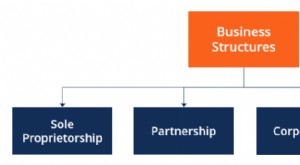 Understanding Business Structures: A Comprehensive Guide
Business structure refers to the legal structure of an organization that is recognized in a given jurisdiction. An organization’s legal structure is a key determinant of the activities that it c...