
Understanding Economic Value of Equity (EVE): A Comprehensive Guide
The economic value of equity (EVE) is a long-term economic measure/indicator of net cash flow. The EVE is calculated by taking into account the present value of all asset cash flows and subtracting the present value of all liability cash flows. In other words, it is the net present value (NPV)Net Present Value (NPV)Net Present Value (NPV) is the value of all future cash flows (positive and negative) over the entire life of an investment discounted to the present. of a bank or a financial institution.

Summary
- The economic value of equity (EVE) is a long-term economic measure/indicator of net cash flow.
- The EVE is calculated by taking into account the present value of all asset cash flows and subtracting the present value of all liability cash flows.
- The purpose of EVE is to help bankers manage their assets and liabilities by monitoring long-term interest rate risk. It helps determine the net present value of a bank or a financial institution.
Purpose of Economic Value of Equity
The purpose of the economic value of equity (EVE) indicator is to help bankers better manage their assets and liabilities by monitoring the long term. It helps determine the net present value of a bank or a financial institution. In addition to that, it is used to assess risk exposure – specifically, interest rate riskInterest Rate RiskInterest rate risk is the probability of a decline in the value of an asset resulting from unexpected fluctuations in interest rates. Interest rate risk is mostly associated with fixed-income assets (e.g., bonds) rather than with equity investments..
What is Asset Liability Management?
Asset liability management refers to the process of managing the assets of an organization in terms of its cash flow in order to reduce the company’s potential risk of loss from a payment default of a liability. The manager’s sole purpose is to ensure the ready availability of assets to pay off liabilities as and when the due dates approach.
EVE Formula
The formula for the economic value of equity (EVE) is as follows:
∆Economic Value = ∆Present Value of Assets – ∆Present Value of Liabilities
The Relationship between Assets, Liabilities, and Interest Rates
EVE demonstrates a direct relationship between interest rates and present values of liabilities. It implies that with an increase in the present value of a liability, the interest rates also show an increase.
Conversely, the EVE demonstrates an inverse relationship between interest rates and present values of assets. It implies that with an increase in the present value of an asset, the interest rates show a decline.
Importance of Economic Value of Equity
The economic value of equity is an important economic measure for several reasons. Some include:
1. A measure of actual risk
The economic value of equity is a measure of the actual risk level as a going concern. It is further helpful overall in the world of finance and economics as interest rates serve as a benchmark for finance and investment activities.
2. Importance in the banking world
EVE is a very important measure in the banking world. It is used to evaluate the degree of influence of the interest rate risk that the bank is exposed to. It is because the assets and liabilities of a bank are directly linked to the prevailing interest rate.
3. Long-term measure
The economic value of equity is an accurate long-term economic measure. It is helpful in data forecasting in the long term and helps make informed business decisions.
4. Sheds light on future financial capacity
Since the EVE is a long-term measure, it sheds light on a bank or a financial institution’s financial capacity in the long term and helps determine how equipped an organization is to deal with fluctuations in interest rates in the long-term economy.
5. Helps take proactive measures
Since the long-term information on fluctuations in interest rate is available to organizations, it helps in proactively taking up risk mitigation measuresRisk ManagementRisk management encompasses the identification, analysis, and response to risk factors that form part of the life of a business. It is usually done with to deal with any anticipated negative effects of interest rate fluctuations.
Net Interest Income (NII)
The net interest income (NII) is the short-term alternative to the economic value of equity (EVE). While EVE measures the interest rate risk in the long term, the NII measures the influence of interest rate risks in the short term.
The following formula is used to calculate NII:
Net Interest Income (NII) = Interest Revenues – Interest Expenses
Regulations
The U.S. Federal Reserve makes it mandatory to carry out regular analysis of the economic value of equity (EVE). In addition to that, the Basel Committee on Banking Supervision advises a stress test of plus/minus 2% on all interest rates. The 2% stress test is an internationally accepted standard for interest rate risk determination.
Related Readings
CFI is the official provider of the global Commercial Banking & Credit Analyst (CBCA)™Program Page - CBCAGet CFI's CBCA™ certification and become a Commercial Banking & Credit Analyst. Enroll and advance your career with our certification programs and courses. certification program, designed to help anyone become a world-class financial analyst. To keep advancing your career, the additional resources below will be useful:
- Bank Stress TestBank Stress TestA bank stress test is a simulation or analysis conducted to analyze how a bank will be impacted under adverse market conditions.
- Cash ReservesCash ReservesCash reserves are funds that companies set aside for use in emergency situations. The cash that is saved is used to cover costs or expenses that are unplanned or unexpected. In most cases, the reserves are specifically for short-term needs. One benefit of cash reserves is that the company can avoid credit card debt or the need to take on additional loan debt.
- Economic IndicatorsEconomic IndicatorsAn economic indicator is a metric used to assess, measure, and evaluate the overall state of health of the macroeconomy. Economic indicators
- Probability of DefaultProbability of DefaultProbability of Default (PD) is the probability of a borrower defaulting on loan repayments and is used to calculate the expected loss from an investment.
-

Understanding Bond Face Value: Definition & Importance
What Is the Face Value of a Bond? Bonds are debt instruments issued by governments and corporations. The three key components of a bond are interest rate, maturity and face value. The face va
-
![Yield to Maturity (YTM): Definition & Calculation | [Your Brand/Website Name]](https://www.etffin.com/article/uploadfiles/202110/2021100815185913_S.jpeg)
Yield to Maturity (YTM): Definition & Calculation | [Your Brand/Website Name]
Yield to Maturity (YTM) – otherwise referred to as redemption or book yieldYieldYield is defined as an income-only return on investment (it excludes capital gains) calculated by taking dividends
finance
- Understanding Economic Value of Equity (EVE) in Banking
- Compound Interest Formula: Calculate & Understand Growth
- Debt-to-Equity Ratio: Definition, Calculation & Importance
- Understanding Equity: A Comprehensive Guide for Investors
- Nominal Interest Rate Explained: Definition & Implications
- Shareholder Equity Ratio: Definition & Calculation | [Your Company Name]
- Swap Rate Explained: Understanding Fixed Exchange Rates in Derivatives
- Equity Explained: Definition, Calculation & Examples
- Understanding the Policy Interest Rate: Its Impact on the Economy
-
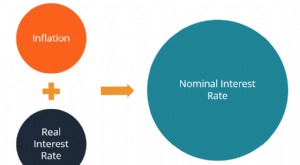 Fisher Equation Explained: Understanding Inflation & Interest Rates
The Fisher equation is a concept in economics that describes the relationship between nominal and real interest rates under the effect of inflationInflationInflation is an economic concept that refers...
-
 Interest Rate Parity (IRP): Understanding the Relationship
The interest rate parity (IRP) is a theory regarding the relationship between the spot exchange rateSpot PriceThe spot price is the current market price of a security, currency, or commodity avai...