
Understanding Economic Moats: A Guide to Sustainable Competitive Advantage
The term “economic moat” refers to a long-term competitive advantageCompetitive AdvantageA competitive advantage is an attribute that enables a company to outperform its competitors. It allows a company to achieve superior margins that a company holds that protects its position in the marketplace. The term is inspired by the moat that surrounded medieval castles to protect the valuables within from invaders. A company with a strong moat possesses a competitive advantage that is both strong and sustainable.

Investors such as Warren Buffet state that buying businesses is like buying castles. Buffett emphasizes the importance of buying businesses with deep moats, as they are protected from competitors and can, therefore, maintain strong profits.
Why is an Economic Moat Important to Investors?
Two things that investors generally care about are the magnitude of return in excess of the cost of capitalCost of CapitalCost of capital is the minimum rate of return that a business must earn before generating value. Before a business can turn a profit, it must at least generate sufficient income to cover the cost of funding its operation. and how long the company can be expected to continue to generate large returns. To begin generating large profits, a company must first achieve a competitive advantage. The advantage can come from any of a number of things – lower production costs, patents, high switching costs – any one of which can be especially helpful in differentiating a company from its competitors and in retaining its customer base.
To sustain profits and be considered a moat, the competitive advantage must be durable. Thus, it can provide value for investors.
Summary
- An economic moat is a durable competitive advantage that enables a company to be profitable long-term.
- A company with a moat is desirable to investors.
- Economic moats include complexity of the product, high switching costs, and brand value.
How to Create an Economic Moat?
Economic moats can be created in one of three ways, as follows:
1. Production advantages
A company achieves production advantages when it is able to provide a service at a lower cost than that of its competitors.
Features of companies with production advantages include:
- Complexity: Processes that are unique and difficult to imitate are good moats, as they tend to be durable. For example, the formula for the Coca-Cola syrup that creates the signature taste of the cola soft drink is difficult to copy. The complexity of the product ensures that other soft drink brands will not be able to replicate the product and take away customers.
- Protection: A company’s products can be protected through patentsPatentsPatents are documents that grant ownership of intellectual property – the idea of, or concept for, something – to an individual, group, or company. A patent, copyrights, trademarks, or operating rights. Patents help a company protect a product that they spent R&DResearch and Development (R&D)Research and Development (R&D) is a process by which a company obtains new knowledge and uses it to improve existing products and introduce funds on, so that they can keep advantages achieved through innovation. Copyrights and trademarks offer the same advantages to companies. For example, Mickey Mouse, which is copyrighted and trademarked by Disney, has been bringing in profit through merchandising of shirts, hats, and jewelry for many years.
2. Consumer advantages
A company achieves consumer advantages when it is able to provide a greater benefit to consumers than its competitors do.
Features of companies with consumer advantages include:
- Habit and horizontal differentiation: When customers prefer a product to other competing products, there is horizontal differentiation. An example is cigarette brands. Most cigarette smokers have a habit of purchasing the same brand. A company that is able to create loyal customers is able to maintain profits long term and, therefore, has a moat.
- Switching costs: Switching costs are costs that a customer has to bear if they want to switch to another product or service. As the switching costs increases, the customer becomes more locked in with a company. Switching costs can also come in the form of loyalty points or the inconvenience of switching. For example, while there are no fees associated with the process of switching banks, it is simply inconvenient for a person to set up new accounts and portfolios. The inconvenience associated with the process ties a customer to their original bank.
- Network effectNetwork EffectThe Network Effect is a phenomenon where present users of a product or service benefit in some way when the product or service is adopted by additional users. This effect is created by many users when value is added to their use of the product. The largest and best-known example of a network effect is the Internet.: The network effect occurs when the value for the company and existing customers increases as more people use a service or product. It creates a moat since the company becomes more valuable and competitive over time. Examples of companies with networking effects include Visa, MasterCard, Microsoft, and Facebook. The Facebook app by itself does not have much value. However, as more people join Facebook, members enjoy the benefit of being able to connect with more people. As the Facebook network grows larger, there is more incentive for people to join the site.
3. Brand value
Brand value is the idea that a company is able to generate more revenue or charge a premium price because of brand recognition. This is based on the fact that customers believe there is a correlation between well-known brands and quality products. Brand value is especially important for companies that have commodified products.
For example, coffee is a commodified product, so, for coffee shops to attract customers, they need to differentiate themselves through their brand. Starbucks is a company that has capitalized on the brand value its name holds.
The company’s brand is based on convenience, good customer service, and innovative drinks. By developing the brand value over the last decade, Starbucks is now the “go-to” place for coffee and is able to charge a premium for their drinks, which is a strong moat.
Additional Resources
CFI is the official provider of the Financial Modeling and Valuation Analyst (FMVA)®Become a Certified Financial Modeling & Valuation Analyst (FMVA)®CFI's Financial Modeling and Valuation Analyst (FMVA)® certification will help you gain the confidence you need in your finance career. Enroll today! certification program, designed to transform anyone into a world-class financial analyst.
To keep learning and developing your knowledge of financial analysis, we highly recommend the additional CFI resources below
:
- Guide to Value InvestingStock Investing: A Guide to Value InvestingSince the publication of "The Intelligent Investor" by Ben Graham, what is commonly known as "value investing" has become one of the most widely respected and widely followed methods of stock picking.
- Valuation InfographicValuation InfographicOver the years, we've spent a lot of time thinking about and working on business valuation across a broad range of transactions. This valuation infographic
- Rising StarRising StarA Rising Star is a business or a company that is relatively new to the debt capital markets, with little or no history of debt repayment, which makes it difficult to assess its creditworthiness. Despite the lack of history, the company's performance is strong enough to attract a certain group of investors.
- Financial Analysis Fundamentals Course
-
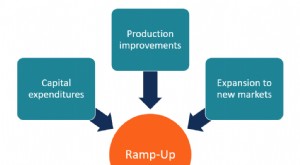
Ramp-Up: Definition, Benefits & How to Achieve It
In business, ramp-up is a term that describes a significant increase in the output of a company’s products or services. Essentially, ramp-up implies bringing the company’s capacity utiliza
-

Streamlining Processes: Definition, Benefits & Techniques
Streamlining refers to the improvement of the efficiency of a certain process within an organization. It can be done by automationExcel vs Automation in Financial ModelingBefore we discuss Excel vs au
finance
- Acquirer Definition: Understanding Corporate Acquisitions
- Understanding Clawbacks: Protecting Stakeholders from Failed Performance
- Decoupling: Understanding Its Meaning and Applications
- Understanding Financial Gearing: Debt & Leverage Explained
- Leverage in Finance: Strategies, Types & Risks
- Parent Company Explained: Definition, Control & Examples
- Understanding Stocks: A Beginner's Guide to Share Ownership
- Understanding Net-Net: A Financial Health Indicator
- Identifying Attractive Investments: Key Factors & Metrics
-
 Kaizen: Understanding Continuous Improvement for Business
Kaizen is a Japanese word (改善) that means “improvement” or “to improve.” When applied to the world of business, kaizen refers to every action, operation, or rule ...
-
 Outsourcing: A Comprehensive Guide to Benefits & Strategy
Outsourcing is a strategic decisionCorporate StrategyCorporate Strategy focuses on how to manage resources, risk and return across a firm, as opposed to looking at competitive advantages in business s...