
Financial Intermediaries: A Comprehensive Guide
A financial intermediary refers to an institution that acts as a middleman between two parties in order to facilitate a financial transaction. The institutions that are commonly referred to as financial intermediaries include commercial banksTop Banks in the USAAccording to the US Federal Deposit Insurance Corporation, there were 6,799 FDIC-insured commercial banks in the USA as of February 2014. , investment banks, mutual funds,Mutual FundsA mutual fund is a pool of money collected from many investors for the purpose of investing in stocks, bonds, or other securities. Mutual funds are owned by a group of investors and managed by professionals. Learn about the various types of fund, how they work, and benefits and tradeoffs of investing in them and pension funds. They reallocate uninvested capital to productive sectors of the economy through debts and equity.

In simple terms, financial intermediaries channel funds from individuals or corporationsCorporationA corporation is a legal entity created by individuals, stockholders, or shareholders, with the purpose of operating for profit. Corporations are allowed to enter into contracts, sue and be sued, own assets, remit federal and state taxes, and borrow money from financial institutions. with surplus capital to other individuals or corporations that require cash to carry out certain economic activities.
Functions of Financial Intermediaries
A financial intermediary performs the following functions:
Asset storage
Commercial banks provide safe storage for both cash (notes and coins), as well as precious metals such as gold and silver. Depositors are issued deposit cards, deposit slips, checks, and credit cards that they can use to access their funds. The bank also provides depositors with records of withdrawals, deposits, and direct payments they have authorized. To ensure the depositors’ funds are safe, the Federal Deposit Insurance Corporation (FDIC)Federal Deposit Insurance Corporation (FDIC)The Federal Deposit Insurance Corporation (FDIC) is a government institution that provides deposit insurance against bank failure. The body was created requires deposit-taking financial intermediaries to insure the funds deposited with them.
Providing loans
Advancing short-term and long-term loans is the core business of financial intermediaries. They channel funds from depositors with surplus cash to individuals who are looking to borrow money. Borrowers typically take out loans to purchase capital-intensive assets such as business premises, automobiles, and factory equipment.
Intermediaries advance the loans at interest, some of which they pay the depositors whose funds have been used. The remaining amount of interest is retained as profits. Borrowers undergo screening to determine their creditworthiness and their ability to repay the loan.
Investments
Some financial intermediaries, such as mutual funds and investment banks, employ in-house investment specialists who help clients grow their investments. The firms leverage their industry experience and dozens of investment portfolios to find the right investments that maximize returns and reduce risk.
The types of investments range from stocks to real estate, Treasury bills, and financial derivatives. Sometimes, intermediaries invest their clients’ funds and pay them an annual interest for a pre-agreed period of time. Apart from managing client funds, they also provide investment and financial advice to help them choose ideal investments.
Benefits of Financial Intermediaries
Financial intermediaries offer the following advantages:
Spreading risk
Financial intermediaries provide a platform where individuals with surplus cash can spread their risk by lending to several people rather than to only one individual. Lending to just one person comes with a higher level of risk. Depositing surplus funds with a financial intermediary allows institutions to lend to various screened borrowers. This reduces the risk of loss through default. The same risk reduction model applies to insurance companies. They collect premiums from clients and provide policy benefits if clients are affected by unforeseeable events like accidents, death, and disease.
Economies of scale
Financial intermediaries enjoy economies of scaleEconomies of ScaleEconomies of scale refer to the cost advantage experienced by a firm when it increases its level of output.The advantage arises due to the since they can take deposits from a large number of customers and lend money to multiple borrowers. The practice helps to reduce the overall operating costs that they incur in their normal business routines. Unlike borrowing from individuals with inadequate funds to loan the requested amount, financial institutions can often access large amounts of liquid cash that they can loan to individuals with a strong credit rating.
Economies of scope
Intermediaries often offer a range of specialized services to clients. This enables them to enhance their products to cater to the requirements of different types of clients. For example, when commercial banks are lending out money, they can customize the loan packages to suit small and large borrowers. Small and medium enterprises often make up the bulk of borrowers. Preparing packages that suit their needs can help banks grow their customer base.
Similarly, insurance companies enjoy economies of scopeEconomies of ScopeEconomies of scope is an economic concept that refers to the decrease in the total cost of production when a range of products are produced together rather than separately. in offering insurance packages. It allows them to enhance their products and services to satisfy the needs of a specific category of customers such as people suffering from chronic illnesses or senior citizens.
Examples of Financial Intermediaries
Bank
A bank is a financial intermediary that is licensed to accept deposits from the public and create credit products for borrowers. Banks are highly regulated by governments, due to the role they play in economic stability. They are also subject to minimum capital requirements based on a set of international standards known as the Basel Accords.
Credit union
A credit union is a type of bank that is member-owned. It operates on the principle of helping members access credit at competitive rates. Unlike banks, credit unions are established to serve their members and not necessarily for profit purposes. Credit unions claim to provide a wide variety of loan and saving products at a relatively lower price than other financial institutions offer. They are governed by a board of directors, who are elected by the members.
Mutual funds
Mutual funds pool savings from individual investors. They are managed by fund managers who identify investments with the potential of earning a high rate of return and who allocate the shareholders’ funds to the various investments. This enables individual investors to benefit from returns that they would not have earned had they invested independently.
Financial advisors
A financial advisor is an intermediary who provides financial services to clients. In most countries, financial advisors must undergo special training and obtain licenses before they can offer consultancy services. In the U.S., the Financial Industry Regulatory Authority provides the series 65 or 66 licenses for investment professionals, including financial advisors.
Additional Resources
Thank you for reading CFI’s explanation of a financial Intermediary. CFI is a leading provider of accounting, financial analysis and modeling courses, including the Financial Modeling & Valuation Analyst (FMVA)™Become a Certified Financial Modeling & Valuation Analyst (FMVA)®CFI's Financial Modeling and Valuation Analyst (FMVA)® certification will help you gain the confidence you need in your finance career. Enroll today! certification program. To help advance your career, check out the additional CFI resources below:
- Big Four Accounting FirmsBig Four Accounting FirmsThe Big Four accounting firms refer to Deloitte, PricewaterhouseCoopers (PwC), KPMG, and Ernst & Young. These firms are the four largest professional services firms in the world that provide audit, transaction advisory, taxation, consulting, risk advisory, and actuarial services.
- Key Players in the Capital MarketsKey Players in the Capital MarketsIn this article, we provide a general overview of the key players and their respective roles in the capital markets. The capital markets consist of two types of markets: primary and secondary. This guide will provide an overview of all the major companies and careers across the capital markets.
- List of Top Investment BanksList of Top Investment BanksList of the top 100 investment banks in the world sorted alphabetically. Top investment banks on the list are Goldman Sachs, Morgan Stanley, BAML, JP Morgan, Blackstone, Rothschild, Scotiabank, RBC, UBS, Wells Fargo, Deutsche Bank, Citi, Macquarie, HSBC, ICBC, Credit Suisse, Bank of America Merril Lynch
- Types of Markets – Dealer, Brokers, ExchangesTypes of Markets - Dealers, Brokers, ExchangesMarkets include brokers, dealers, and exchange markets. Each market operates under different trading mechanisms, which affect liquidity and control. The different types of markets allow for different trading characteristics, outlined in this guide
-

Understanding Financial Hardship: Causes, Impacts & Relief
Different programs make hardship decisions based on different criteria. Financial hardship usually refers to a situation in which a person cannot keep up with debt payments and bills. This pa
-

Defining Financial Success: Goals & Strategies for a Secure Future
Monetary success is difficult to define in concrete terms. Even though everyone has their own definitions, there is plenty of advice on how to plan for a better financial futu
finance
- Understanding Auditors: Roles, Responsibilities & Audit Processes
- EBITDARM Explained: A Comprehensive Guide to Financial Analysis
- Eurocurrency Explained: What It Is & How It Works
- Factset: Financial Data & Analytics Solutions for Investment Professionals
- Understanding Finance: A Comprehensive Overview of Key Concepts
- Understanding Financial Crises: Causes, Impacts, and Examples
- Financial Engineering: Principles, Applications & Career Paths
- Understanding Your Financial Health: A Comprehensive Guide
- Financial Inclusion: Definition, Benefits & Impact
-
 Financial Analysis: A Comprehensive Guide for Professionals
Financial analysis involves using financial dataFinancial DataWhere to find data for financial analysts - Bloomberg, CapitalIQ, PitchBook, EDGAR, SEDAR and more sources of financial data for financial...
-
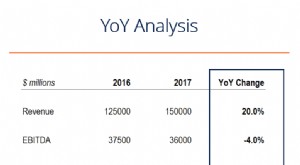 YoY Analysis: Understanding Year-over-Year Growth & Financial Insights
YoY stands for Year over Year and is a type of financial analysisAnalysis of Financial StatementsHow to perform Analysis of Financial Statements. This guide will teach you to perform financial stateme...