
Fixed Annuities: A Comprehensive Guide to Guaranteed Retirement Income
A fixed annuity is an investment product sold by insurance companies that provides guaranteed periodic (typically monthly) income payments to the annuity purchaser. It is essentially an investment intended to provide regular income to an individual following their retirement from the workforce.

Summary
- A fixed annuity is an investment product sold by insurance companies that provides guaranteed periodic income payments to the annuity purchaser.
- A fixed annuity offers a guaranteed rate of investment return, much like a bank CD. In contrast, a variable annuity doesn’t offer a guaranteed return but comes with the potential for higher returns than fixed annuities offer.
- Fees are a major consideration in relation to annuity investments – examine them closely before deciding to invest in an annuity.
Understanding Fixed Annuities
A fixed annuity refers to a contract where the interest rate return that is earned on the money invested in the annuity and subsequently paid out to the annuitant (the purchaser or holder of an annuity) is specified at the time the annuity is purchased.
For example, a fixed annuity might be set at an annual percentage rateAnnual Percentage Rate (APR)The Annual Percentage Rate (APR) is the yearly rate of interest that an individual must pay on a loan, or that they receive on a deposit account. Ultimately, APR is a simple percentage term used to express the numerical amount paid by an individual or entity yearly for the privilege of borrowing money. of 7%. In such a case, the annuitant is guaranteed to realize a 7% annual return on his annuity investment each year, regardless of how prevailing interest rates in the economy may change over time.
Getting a fixed-rate annuity means that the annuitant will benefit if interest rates decline below their annuity’s fixed rate. Still, they will miss out on potentially higher returns that might have been realized from a rising interest rate environment.
A fixed annuity is thus similar to a regular bank certificate of deposit (CD)Certificate of Deposit (CD)A certificate of deposit (CD) refers to a financial product that is offered by financial institutions – such as banks and credit unions – that allow that offers investors a specified interest rate over the duration of their investment.
Fixed Annuity vs. Variable Annuity
A fixed annuity stands in contrast to the alternative: a variable annuity. With a variable annuity, the income payments that the annuitant receives, rather than being a fixed amount that reflects a constant rate of returnRate of ReturnThe Rate of Return (ROR) is the gain or loss of an investment over a period of time copmared to the initial cost of the investment expressed as a percentage. This guide teaches the most common formulas, will vary in accordance with how well (or how poorly) the investments that the annuitant selects perform.
Either type of annuity can be purchased with a single, lump-sum payment or gradually invested in over time, just like many other retirement plans.
Annuities typically offer investors a choice of several different mutual fund investments. There is usually enough flexibility in investment options to suit the income desires and risk tolerance levels of just about any investor. If you’re looking to invest in a variable annuity, you should indeed choose your investment(s) carefully, making sure that they are a good match for your personal financial goals and that they don’t exceed your risk tolerance.
Variable annuities provide investors with the opportunity – although there is certainly no guarantee regarding returns on investment – to earn substantially higher profits than what is possible with a fixed annuity. However, with potentially greater reward comes greater risk.
Investing Considerations
If your chosen annuity investments fare poorly, declining substantially in value, it will result in a significantly negative effect on the amount of the periodic payouts you receive from the annuity. The key question to ask yourself is whether the income from your annuity will still be enough to meet your post-retirement income needs if, for example, the funds that you invest in decline in value by 5%-10%.
Don’t lose sight of the central fact that the purpose of investing in an annuity is to provide yourself with reliable, regular income during your retirement years. It’s perfectly fine to try to obtain higher returns on your annuity investment, but not at the cost of seriously endangering your standard of living in retirement.
Another factor to consider is the taxation policy on annuities. In the United States, profits from annuity investments are taxed at the annuitant’s regular income tax rate, rather than at the substantially more favorable capital gains rate. It is the basic rule – however, taxation of annuities is also determined by the source (pre-tax or post-tax) of the money you use to fund your annuity. Be sure that you know exactly the tax implications of the specific annuity you intend to buy before deciding to invest.
A final note that’s relevant to both fixed and variable annuities. Beyond the standard management feesManagement FeesManagement Fees are fees paid to professionals entrusted with managing investments on a client’s behalf. Typically determined as a percentage of the total and transaction costs associated with mutual fund investments, annuities come with additional investment costs in the form of setup and maintenance fees, and such fees often tend to be on the high side. It’s well worth your while to carefully examine all of the investment fees that are charged with an annuity.
Annuity Tips
One of the major advantages that annuities offer investors is exceptional flexibility in investments. Therefore, if, after a thorough investigation, you’ve decided that an annuity fits well with your overall financial plan, you can get very creative in the exact design of your personal annuity investment.
For example, you don’t need to definitively choose between the guaranteed returns that come with a fixed annuity or the potentially higher returns available with a variable annuity. Instead, you may choose to put together an annuity investment that is sort of a hybrid mix of fixed annuities and variable annuities.
Rather than purchasing a single $100,000 annuity, you can opt to purchase two $50,000 annuities, with one annuity being fixed and the other being variable. (You can also vary the amount of money committed to each annuity – it doesn’t need to be a strict 50/50 split – with the same $100,000, you can choose to purchase a $70,000 fixed annuity and a $30,000 variable annuity.)
You can even select a third option – what’s known as a fixed indexed annuity. A fixed index annuity offers a guaranteed minimum rate of return, like a fixed annuity does (although the rate will be lower than what a comparable fixed annuity would provide). It also offers a portion of the higher potential returns available with variable annuities (usually with a cap on maximum percentage return), but with lower risk than a typical variable annuity carries.
Keep Learning
CFI is the official provider of the global Commercial Banking & Credit Analyst (CBCA)™Program Page - CBCAGet CFI's CBCA™ certification and become a Commercial Banking & Credit Analyst. Enroll and advance your career with our certification programs and courses. program, designed to teach you all the knowledge and skills required to become a skilled credit analyst. The following CFI resources will be helpful in furthering your financial education and advancing your career:
- Open-end vs. Closed-end Mutual FundsOpen-end vs Closed-end Mutual FundsMany investors consider open-end vs. closed-end mutual funds similar due to both mutual funds allowing them a low-cost way to pool capital together and
- Personal FinancePersonal FinancePersonal finance is the process of planning and managing personal financial activities such as income generation, spending, saving, investing, and protection. The process of managing one’s personal finances can be summarized in a budget or financial plan.
- Fixed-Rate LoansFixed-Rate LoansA fixed-rate loan is a type of loan where the interest rate remains unchanged for the entire term of the loan or for a part of the loan term.
- Risk ToleranceRisk ToleranceRisk tolerance refers to the amount of loss an investor is prepared to handle while making an investment decision. Several factors determine the level of
-
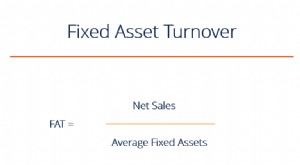
Fixed Asset Turnover Ratio: Calculation & Importance
Fixed Asset Turnover (FAT) is an efficiency ratio that indicates how well or efficiently a business uses fixed assets to generate sales. This ratio divides net sales by net fixed assets, calculated ov
-

Immediate Annuities: A Comprehensive Guide for Retirement Planning
An immediate annuity is a type of investment that is commonly used in retirement planning. Here are the basics of the immediate annuity and what it can provide to you as an investor. Immediate A
finance
- Commercial Annuities: Understanding Contracts & Payments
- Federal Annuities: A Comprehensive Overview for Qualified Individuals
- Understanding Annuities: A Comprehensive Guide
- Annuity Due Explained: Payments at the Beginning of Each Period
- Fixed Assets: Definition, Examples & Importance for Businesses
- Fixed Annuities: A Comprehensive Guide to Guaranteed Retirement Income
- Deferred Annuities: A Comprehensive Guide for Retirement Planning
- Annuity Loans: Access Retirement Funds Without Cashing Out
- Annuities Explained: A Simple Guide to Retirement Income
-
 Fixed Income Portfolio: Definition, Types & Benefits
A fixed income portfolio comprises investment securities that pay a fixed interest until their maturity date. Upon maturity, the principal amount of the security is paid back to the investor. &nb...
-
Fixed Income ETFs: A Beginner's Guide to Lower-Risk Investing
Fixed income ETF investment is a strategy for lower-risk investors on a fixed income. ETFs, or exchange traded funds, track an index of investments as they trade. The total value of the ETF...