
Foreign Exchange Reserves: Definition & Importance
Foreign exchange reserves refer to foreign assets held by the central bank of a country. Foreign assets comprise assets that are not denominated in the domestic currency of the country. For example, US government bondsTreasury Bills (T-Bills)Treasury Bills (or T-Bills for short) are a short-term financial instrument issued by the US Treasury with maturity periods from a few days up to 52 weeks. held by the Bank of Japan are foreign assets for Japan.
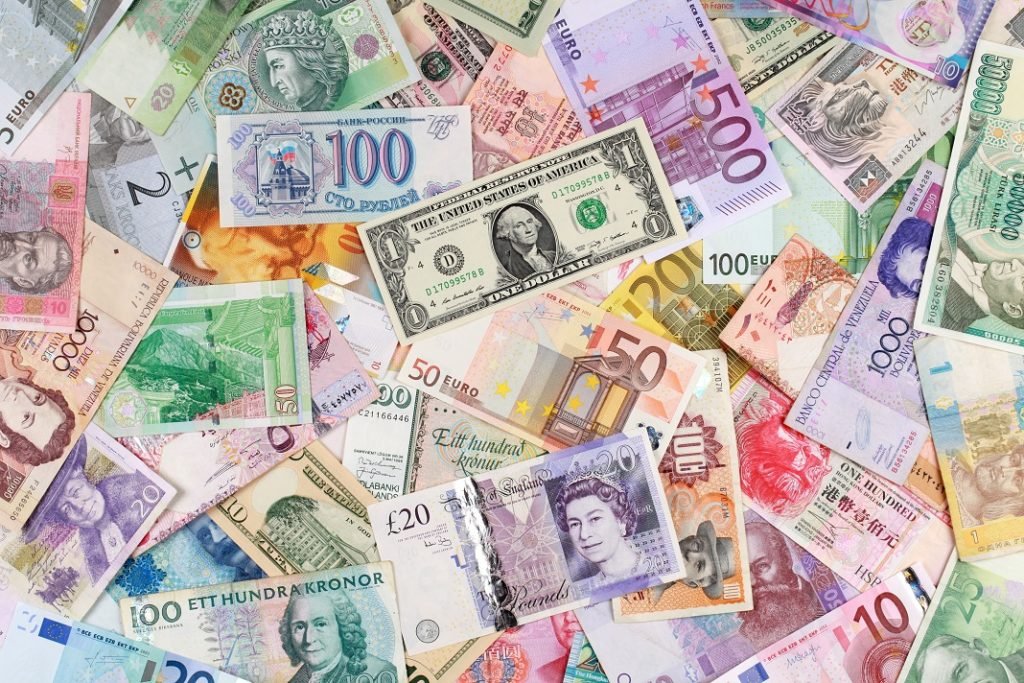
For most central banksFederal Reserve (The Fed)The Federal Reserve is the central bank of the United States and is the financial authority behind the world’s largest free market economy. (or central monetary authorities), foreign exchange reserves consist of foreign currency (cash) that generates no income and foreign government bonds (fixed income instruments) that generate income in the form of interest payments. Foreign assets generate income in foreign currency. For example, US government bonds pay interest in US dollars, and Japanese government bonds pay interest in Japanese yen.
Summary:
- Foreign exchange reserves refer to foreign assets held by the central bank of a country. Foreign assets comprise assets that are not denominated in the domestic currency of the country.
- All income generated by a foreign asset is in terms of foreign currency. For example, US Government bonds pay interest in US dollars, and Japanese Government bonds pay interest in Japanese yen.
- The two most popular foreign assets are US dollar-denominated assets and euro-denominated assets. About 61.5% of all foreign exchange reserves are held in US dollars, and 26.2% of all foreign exchange reserves are held in euros.
The US Dollar and Foreign Exchange Reserves
The US dollar is the de-facto “global currency” and is used for the majority of international transactions. In fact, most international transactions use the US dollar even if the United States is not one of the transacting parties. In addition, most commodity marketsTypes of Markets - Dealers, Brokers, ExchangesMarkets include brokers, dealers, and exchange markets. Each market operates under different trading mechanisms, which affect liquidity and control. The different types of markets allow for different trading characteristics, outlined in this guide (such as crude oil and gold) use the US dollar.
One of the reasons the US dollar is viewed as a global currency is because the USA is home to well-developed financial markets and strong legal and political institutions. As a result, the US dollar is a relatively stable currency. This means that transacting parties don’t need to worry about the value of their payments fluctuating wildly.
In addition, holders of US government bonds don’t need to worry about the US government defaulting on interest payments on the bonds. The US dollar is also widely used for cross-border investments. Almost 58% of all international loans made by banks are made using the US currency.
Composition of Foreign Exchange Reserves
The two most popular foreign assets are US dollar-denominated assets and euro-denominated assets. Similar to the US dollar, the euro offers its holders access to a large common market (the Eurozone area) that consists of well-developed legal and political institutions.
According to the Bank for International Settlements (BIS)Bank for International Settlements (BIS)The Bank for International Settlements (BIS) started in 1930, and is owned by the central banks of different countries. It serves as a bank for member central banks, and its role is to foster international monetary, financial stability and financial corporation. The Bank for International Settlements is based in, 63% of all foreign exchange trading in 2010 was done using either the US dollar or the euro. Of the 63%, around 42% of the trading was done using US dollars, and about 21% was done using euros. The next most-traded foreign currency was the Japanese yen, which was used for around 10% of all foreign exchange trading. (Source)
Related Readings
CFI offers the Financial Modeling & Valuation Analyst (FMVA)™Become a Certified Financial Modeling & Valuation Analyst (FMVA)®CFI's Financial Modeling and Valuation Analyst (FMVA)® certification will help you gain the confidence you need in your finance career. Enroll today! certification program for those looking to take their careers to the next level. To keep learning and advancing your career, the following CFI resources will be helpful:
- Calculating Foreign Exchange SpreadCalculating Foreign Exchange SpreadThe foreign exchange spread (or bid-ask spread) refers to the difference in the bid and ask prices for a given currency pair. The bid price refers to the maximum amount that a foreign exchange trader is willing to pay to buy a certain currency, and the ask price is the minimum price that a currency dealer is willing to accept for the currency.
- FX Rates – CurrenciesFX Rates - CurrenciesThe Table below has FX Rates for major Currencies, as compared to the USD. The USD is the most widely traded currency in the world, and is involved in over 81% of all forex trading. The USD is popularly referred to as the Greenback, due to its bill colour.
- Gross National ProductGross National ProductGross National Product (GNP) is a measure of the value of all goods and services produced by a country’s residents and businesses. It
- Triangular Arbitrage OpportunityTriangular Arbitrage OpportunityA triangular arbitrage opportunity is a trading strategy that exploits the arbitrage opportunities that exist among three currencies in a foreign currency exchange. The arbitrage is executed through the consecutive exchange of one currency to another when there are discrepancies in the quoted prices
-

Corporate Bonds: A Comprehensive Guide to Investing
Corporate bonds are issued by corporationsCorporationA corporation is a legal entity created by individuals, stockholders, or shareholders, with the purpose of operating for profit. Corporations are a
-
Currency Forward Explained: Contracts for Future Exchange Rates
A currency forward is a customized, written contract between parties that sets a fixed foreign currency exchange rate for a transaction that will occur on a specified future date. The future date for
finance
- Understanding Bank Reserves: A Comprehensive Guide
- Cash Reserves: Definition, Benefits & Short-Term Needs
- Understanding Excess Reserves: What Banks Hold & Why It Matters
- Understanding Foreign Exchange Rates: A Comprehensive Guide
- Foreign Exchange (Forex): A Comprehensive Guide
- Understanding Foreign Exchange Risk: A Comprehensive Guide
- Understanding Foreign Tax Credits: A Comprehensive Guide
- Foreign Exchange Swaps: Definition, Mechanics & Uses
- Understanding Foreign Exchange Reserves: A Comprehensive Guide
-
 CCPPO Shares Explained: Understanding Cumulative, Convertible, & Participating Preferred Stock
CCPPO (Cumulative, Convertible, Participating, Preferred-dividend Ordinary) shares are a rare type of equity shares issued by a company, which contain multiple features, including cumulative dividends...
-
 Understanding Company Bylaws: A Comprehensive Guide
Company bylaws are the rules that govern how a company is run and one of the first items to be established by the board of directorsBoard of DirectorsA board of directors is a panel of people elected ...