
Understanding Foreign Exchange Risk: A Comprehensive Guide
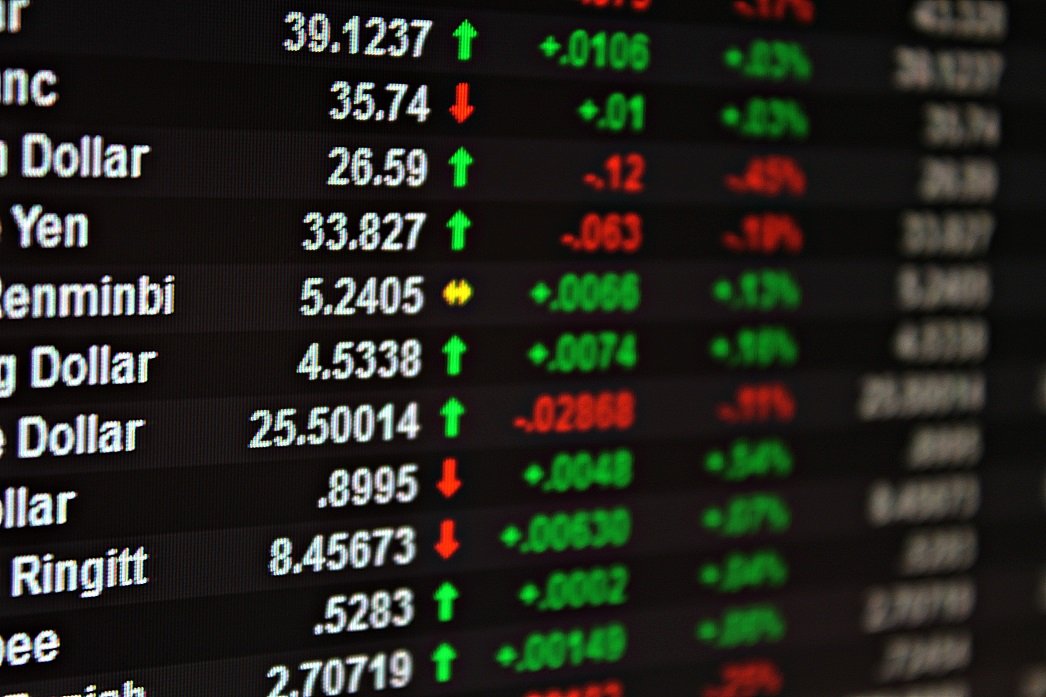
Foreign exchange risk, also known as exchange rate risk, is the risk of financial impact due to exchange rate fluctuations. In simpler terms, foreign exchange risk is the risk that a business’ financial performance or financial position will be impacted by changes in the exchange rates between currenciesFX Rates - CurrenciesThe Table below has FX Rates for major Currencies, as compared to the USD. The USD is the most widely traded currency in the world, and is involved in over 81% of all forex trading. The USD is popularly referred to as the Greenback, due to its bill colour..
Summary
- Foreign exchange risk refers to the risk that a business’ financial performance or financial position will be affected by changes in the exchange rates between currencies.
- The three types of foreign exchange risk include transaction risk, economic risk, and translation risk.
- Foreign exchange risk is a major risk to consider for exporters/importers and businesses that trade in international markets.
Understanding Foreign Exchange Risk
The risk occurs when a company engages in financial transactions or maintains financial statements in a currency other than where it is headquartered. For example, a company based in Canada that does business in China – i.e., receives financial transactions in Chinese yuan – reports its financial statements in Canadian dollars, is exposed to foreign exchange risk.
The financial transactions, which are received in Chinese yuan, must be converted to Canadian dollars to be reported on the company’s financial statements. Changes in the exchange rateExchange RateAn exchange rate is the rate at which one currency can be exchanged for another between nations or economic zones. It is used to determine the between the Chinese yuan (foreign currency) and Canadian dollar (domestic currency) would be the risk, hence the term foreign exchange risk.
Foreign exchange risk can be caused by appreciation/depreciation of the base currency, appreciation/depreciation of the foreign currency, or a combination of the two. It is a major risk to consider for exporters/importers and businesses that trade in international markets.
Types of Foreign Exchange Risk
The three types of foreign exchange risk include:
1. Transaction risk
Transaction risk is the risk faced by a company when making financial transactions between jurisdictions. The risk is the change in the exchange rate before transaction settlement. Essentially, the time delay between transaction and settlement is the source of transaction risk. Transaction risk can be mitigated using forward contractsForward ContractA forward contract, often shortened to just "forward", is an agreement to buy or sell an asset at a specific price on a specified date in the future and options.
For example, a Canadian company with operations in China is looking to transfer CNY600 in earnings to its Canadian account. If the exchange rate at the time of the transaction was 1 CAD for 6 CNY, and the rate subsequently falls to 1 CAD for 7 CNY before settlement, an expected receipt of CAD100 (CNY600/6) would instead of CAD86 (CNY600/7).
2. Economic risk
Economic risk, also known as forecast risk, is the risk that a company’s market value is impacted by unavoidable exposure to exchange rate fluctuations. Such a type of risk is usually created by macroeconomic conditions such as geopolitical instability and/or government regulations.
For example, a Canadian furniture company that sells locally will face economic risk from furniture importers, especially if the Canadian currency unexpectedly strengthens.
3. Translation risk
Translation risk, also known as translation exposure, refers to the risk faced by a company headquartered domestically but conducting business in a foreign jurisdiction, and of which the company’s financial performance is denoted in its domestic currency. Translation risk is higher when a company holds a greater portion of its assets, liabilities, or equities in a foreign currency.
For example, a parent company that reports in Canadian dollars but oversees a subsidiary based in China faces translation risk, as the subsidiary’s financial performance – which is in Chinese yuan – is translated into Canadian dollar for reporting purposes.
Examples of Foreign Exchange Risk
Question 1: Company A, based in Canada, recently entered into an agreement to purchase 10 advanced pieces of machinery from Company B, which is based in Europe. The price per machinery is €10,000, and the exchange rate between the euro (€) and the Canadian dollar ($) is 1:1. A week later, when Company A commits to purchasing the 10 pieces of machinery, the exchange rate between the euro and Canadian dollar changes to 1:1.2. Is it an example of transaction risk, economic risk, or translation risk?
Answer: The above is an example of transaction risk, as the time delay between transaction and settlement caused Company A to need to pay more, in Canadian dollars, for the pieces of machinery.
Question 2: Company A, based in Canada, reports its financial statements in Canadian dollars but conducts business in U.S. dollars. In other words, the company makes financial transactions in United States dollars but reports in Canadian dollars. The exchange rate between the Canadian dollar and the US dollar was 1:1 when the company reported its Q1 financial results. However, it is now 1:1.2 when the company reported its Q2 financial results. Is it an example of transaction risk, economic risk, or translation risk?
Answer: The above is an example of translation risk. The company’s financial performance from Q1 to Q2 is negatively impacted due to the translation from the U.S. dollar to the Canadian dollar.
Additional Resources
CFI offers the Commercial Banking & Credit Analyst (CBCA)™Program Page - CBCAGet CFI's CBCA™ certification and become a Commercial Banking & Credit Analyst. Enroll and advance your career with our certification programs and courses. certification program for those looking to take their careers to the next level. To keep learning and developing your knowledge base, please explore the additional relevant resources below:
- DevaluationDevaluationDevaluation is a downward adjustment to the country’s value of money relative to a foreign currency or standard. Many countries that operate
- Market RiskMarket RiskMarket risk, also known as systematic risk, refers to the uncertainty associated with any investment decision. Price volatility often arises due to
- International TradeInternational TradeInternational trade is an exchange involving a good or service conducted between at least two different countries. The exchanges can be
- Multinational Corporation (MNC)Multinational Corporation (MNC)A multinational corporation is a company that operates in its home country, as well as in other countries around the world. It maintains a
-

Understanding Risk Aversion in Investing: A Beginner's Guide
The term risk aversion is often applied to certain types of investors. Here are the basics of risk aversion and what it means to investors. Risk Aversion The term risk aversion basically means t
-
1031 Exchange: A Comprehensive Guide for Real Estate Investors
One of the most important tax benefits that real estate investors should know about is a 1031 exchange — which, in simple terms, is a popular (and legal) way to bypass capital gains taxes when selling
finance
- Understanding Foreign Exchange: Impact on Investment & Economy
- Understanding Foreign Exchange Risks: A Comprehensive Guide
- Understanding Forex Spreads: A Comprehensive Guide
- Foreign Exchange (Forex): A Comprehensive Guide
- Foreign Exchange Reserves: Definition & Importance
- Understanding Operating Risk: A Key Component of Business Risk
- Understanding Financial Risk: A Comprehensive Guide
- Risk Shifting: Definition, Examples & Implications
- Foreign Exchange Swaps: Definition, Mechanics & Uses
-
 Portfolio Diversification: Reduce Risk & Enhance Returns
Diversification is a technique of allocating portfolio resources or capital to a mix of different investments. The ultimate goal of diversification is to reduce the volatilityVIXThe Chicago Board Opti...
-
Value at Risk (VaR): Understanding Investment Risk
Value at risk is a method that is used to determine the possible risk of loss for a particular type of investment. This is a strategy that attempts to determine what the worst-case scenario is f...