
Understanding the Essential Functions of Money
Money performs four main functions in today’s society. It mainly serves as:
- A medium of exchange
- A standard of deferred payment
- A store of wealth
- A measure of value
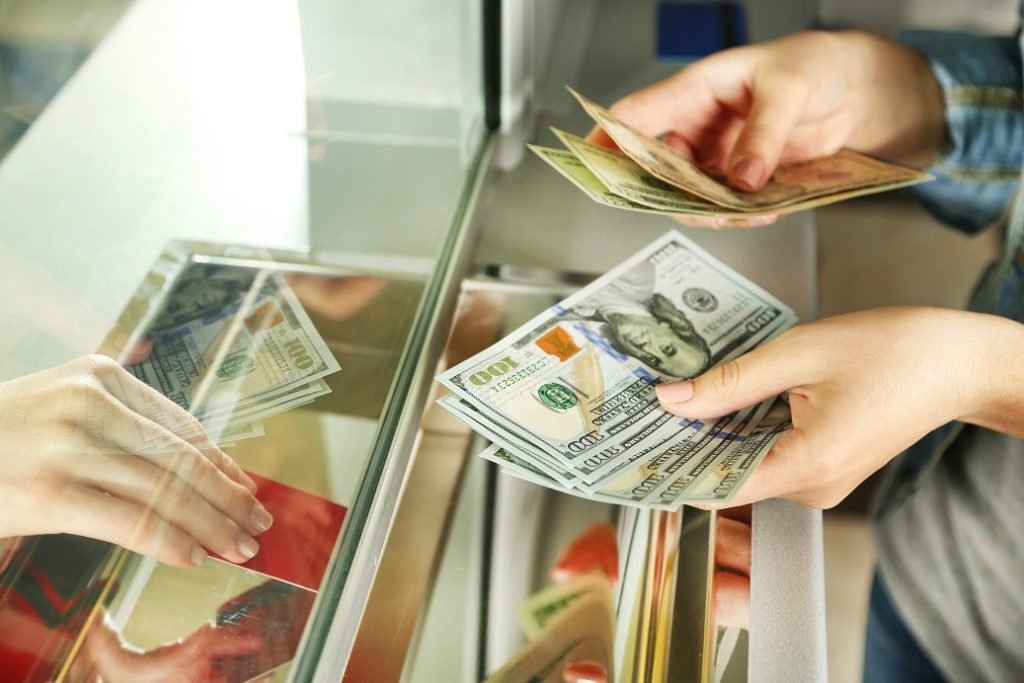
Barter Economy
In theory, people are generally able to exchange goods and services without the need for a monetary transaction between the parties involved. For example, a farmer can exchange 10 kilos. of apples for 10 liters of milk with another farmer.
An economy based on barterBarteringBartering is the act of trading one good or service for another without using a medium of exchange such as money. A bartering economy differs would face several restrictions:
- Each of the parties involved in a transaction would have to want what the other party has to offer. The two farmers in the example above should agree that x kilograms of apples are worth y liters of milk and be willing to exchange them at such conditions.
- The goods and services exchanged should be divisible. If the goods are indivisible (such as a car), the owner wouldn’t be able to use them to purchase other goods and services of lower value.
- The goods a person can exchange may be perishable, which means their owner should exchange them or use them before they lose their value. It means that services and many types of goods wouldn’t allow the value associated with them to be stored.
- Governments may offer incentives to limit barter even when it’s feasible, as it generally reduces tax revenue.
Once we understand the limits of barter, we can easily understand the functions of money in our society.
Money as a Medium of Exchange
A medium of exchange is an asset that can be used in a transaction to exchange goods and services. Gold and other precious metals have been used as a medium of exchange before money itself, or alongside it.
Not every asset can be used as a medium of exchange. To be a proper medium of exchange, an asset must have the following characteristics:
- It must be readily acceptable. It is generally true if the medium of exchange has a known value. People know how much a $100 dollar bill is worth and have at least an idea of what it can buy at any given moment.
- It must be easily divisible. A good medium of exchange should allow small transactions, as well as large transactions. Banknotes and coins are generally available in different denominations in order to allow large value transactions, as well as small value ones.
- It must have a high value relative to its weight. It is because a good medium of exchange should be easy to transport. Banknotes and coins are light and easy to carry.
- It must be difficult to counterfeit. If it’s not, its value would be difficult to know with reasonable certainty, and it wouldn’t be accepted in transactions.
Money as a Standard of Deferred Payment
The above function is somehow related to the first, as it creates credit and allows transactions to be settled in the future. To be a standard of deferred payment, money must be an accepted way to value and settle a debt in the future.
Money as a Store of Wealth
As services can’t be stored and a lot of goods are perishable, society requires more effective ways of storing wealth. Money can be easily stored, retrieved, and used at a later time, and, at least in times of low inflationInflationInflation is an economic concept that refers to increases in the price level of goods over a set period of time. The rise in the price level signifies that the currency in a given economy loses purchasing power (i.e., less can be bought with the same amount of money)., it’s able to maintain most of its value.
Money as a Measure of Value
Money can be used as a universal unit of account to measure the value of all the goods and servicesProducts and ServicesA product is a tangible item that is put on the market for acquisition, attention, or consumption while a service is an intangible item, which arises from exchanged in an economy.
In a money-based economy, prices can be indicated using only one measure of value, simplifying transactions and people’s understanding of how much a good or service is worth.
Conversely, in a barter economy, the prices for a good or service should be established based on all the other goods or services produced and exchanged.
Precious Metals as Money
Especially in the past, gold and other precious metals have been successfully used as money in many societies. It is due to the following:
- They were a good medium of exchange for transactions settled immediately or in the future, as their value was known, they could be easily divisible, were difficult to counterfeit, and had a high value relative to their weight.
- Precious metals are considered a good store of wealth, as they are not perishable goods. However, others would argue that their success as stores of wealth also depended on people’s expectations. They are expected to maintain their value because others would keep valuing them in the future due to the expectations that the demand for items, such as jewelry and ornaments, would continue to be strong.
- They were good and simple measures of value. Anybody could easily use grams or ounces of gold to measure the price of goods and services.
More Resources
CFI is the official provider of the Commercial Banking & Credit Analyst (CBCA)™Program Page - CBCAGet CFI's CBCA™ certification and become a Commercial Banking & Credit Analyst. Enroll and advance your career with our certification programs and courses. certification program, designed to transform anyone into a world-class financial analyst.
To keep learning and developing your knowledge of financial analysis, we highly recommend the additional resources below:
- Definitions of MoneyDefinitions of MoneyThe definitions of money vary by country but generally include at least a measure for narrow money and one for broad money. Money is a medium of exchange
- CurrencyCurrencyCurrency refers to money, that which is used as a medium of exchange for goods and services in an economy. Before the concept of currency was introduced, goods and services were exchanged for other goods and services under the barter system.
- Paper EconomyPaper EconomyThe paper economy, or financial economy, refers to the part of the economy that is made up of non-real or financial variables. All transactions and activities in the paper economy take place on paper, i.e., there is no exchange of real goods and services.
- Virtual CurrencyVirtual CurrencyVirtual currency is a type of unregulated digital currency. It is not issued or controlled by a central bank. Examples of virtual currencies include Bitcoin
-

Electronic Money Explained: Types, Benefits & How It Works
Electronic money refers to the currency electronically stored on electronic systems and digital databases, as opposed to physical paper and coin money, and is used to make it easier for users to trans
-
Understanding Equity: A Comprehensive Guide for Investors
In finance and accounting, equity is the value attributable to the owners of a business. The book value of equity is calculated as the difference between assetsTypes of AssetsCommon types of assets in
finance
- Understanding the Core Functions of Money
- Commodity Money: Advantages and Historical Significance
- Understanding the Essential Role of Money in Society
- Factors Influencing Money Value: A Comprehensive Overview
- Understanding Money: Definition, History & Value
- Stable Value Funds vs. Money Market Funds: Which is Right for You?
- Understanding the Time Value of Money: A Finance Essential
- Understanding Time Value of Money: Practical Examples & Calculations
- Time Value of Money: Understanding Its Importance & Calculations
-
 Understanding Money: Definitions and Types (Narrow vs. Broad)
The definitions of money vary by country but generally include at least a measure for narrow money and one for broad money. Money is a medium of exchange and, more generally, any medium that can be us...
-
 Understanding Financial Denomination: A Comprehensive Guide
A denomination is a classification for the face value of a financial instrument. It includes financial instruments, such as bondsBondsBonds are fixed-income securities that are issued by corporations ...