
Understanding Money: Definition, History & Value
Money refers to any verifiable record that is accepted as a medium of exchange for payment of goods and services and repayment of debts in a specific country. Throughout history, governments adopted different forms of money, such as gold, silver, coins, and banknotes.
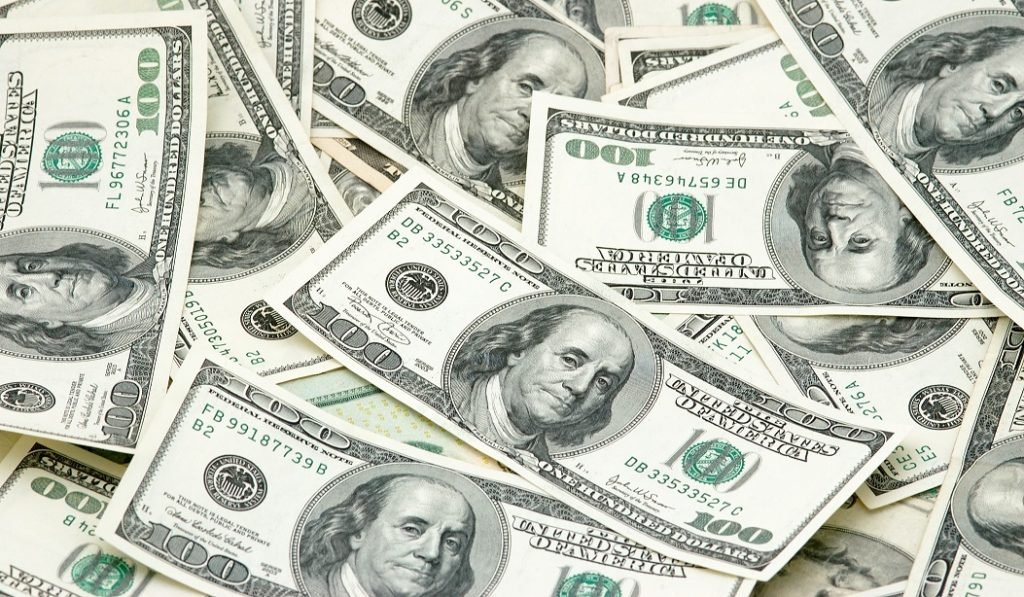
The value of money is not necessarily derived from the materials used in its production, but from the willingness of consumers to agree to a displayed value and agree to use this value in future transactions. For money to be accepted as a form of payment in a country, the government must declare the currencyCurrencyCurrency refers to money, that which is used as a medium of exchange for goods and services in an economy. Before the concept of currency was introduced, goods and services were exchanged for other goods and services under the barter system. as a legal tender for use in financial transactions.
Summary
- Money is defined as a unit of measure that is generally accepted and recognized as a medium of exchange in the economy.
- For a commodity or currency to be recognized as money, it must be fungible, stable, recognizable, portable, and durable.
- Different countries around the world use their own monetary systems, which are regulated by a central monetary authority.
Functions of Money
The following are the main functions of money:
1. Medium of exchange
The primary function of money is to be a medium of exchange. It means that money serves as an intermediary instrument in the acquisition of goods and servicesProducts and ServicesA product is a tangible item that is put on the market for acquisition, attention, or consumption while a service is an intangible item, which arises from. The basic assumption of designating money as a medium of exchange is that one cannot acquire a good or service without providing the other party with something of material importance in exchange.
2. Store of value
For money to serve as a store of value, it should be reliably saved for future use and be used as a medium of exchange when it is retrieved. As a store of value, money can be used to store value obtained through current production processes or trade activities for use at a future date.
Traders can store the value of the goods to trade them at a future time and/or different location. Therefore, money makes it possible to save for the future, and participate in transactions in different geographical locations.
3. Measure of value
Money is employed as a measure of value in the market to determine the actual value of specific goods and/or services. A unit of account is required when formulating legal agreements that involve debt. Therefore, money acts as a standard measure of trade, and it is used as a basis for making trading quotations and bargaining for better prices in transactions.
4. Standard of deferred payment
A standard of deferred payment is considered one of the accepted methods of settling debts. For example, Person A can lend Person B an amount equivalent to $10,000 for one year, with an agreement to repay the loaned amount after the expiry of one year. The stored value in the sum loaned to Person B is transferred from Person A in exchange for an agreed amount of stored value at a future date.
Person B can then use the loaned funds to purchase other goods and services in exchange for repayment at a future date. It, in essence, means that Person A loaned the use of the goods and services that person B purchased, even though he did not originally own the goods and services.
Properties that Money Must Meet
For a currency or commodity to be recognized as money, it must meet the following properties:
1. Fungibility
Fungibility refers to the property of a commodity whose individual units should be interchangeable with each other, and the units should be distinguishable from each other. If individual units of the same commodity come in different quantities, it means that the commodity will not be consistent when used in future transactions.
For example, diamonds are not perfectly fungible because of their varying sizes, colors, grades, and cuts. Nevertheless, the U.S. dollar is perfectly fungible, and $10 is interchangeable with two $5s or ten $1s.
2. Durability
Money should be durable enough to withstand repeated usage and retain its usefulness for use in future transactions. The commodity or currency should remain functional, without requiring frequent maintenance or repair over its lifetime. If the commodity is not durable, it will degrade quickly with repeated use, and it will not be useful for future transactions.
3. Portability
Money should be divisible into small quantities so that consumers can carry different quantities of the commodity with ease. It should be convenient for consumers to carry smaller quantities of the commodity when purchasing goods and services from retail stores. If the commodity is immovable or indivisible, consumers will have to incur additional costs to physically transport the commodity.
4. Recognizable
The commodity used as money should be easily identifiable so that users agree on its authenticity and quantity. It makes transactions easier because both parties in the transaction agree to the terms of exchange without incurring additional costs of paying to verify the authenticity of the goods by all parties in the exchange.
When the commodity is non-recognizable, the parties in the transaction will incur transaction costsTransaction CostsTransaction costs are costs incurred that don’t accrue to any participant of the transaction. They are sunk costs resulting from economic trade in a market. In economics, the theory of transaction costs is based on the assumption that people are influenced by competitive self-interest. to verify its authenticity and distinguish between real money and counterfeit money.
5. Stability
The value placed on the commodity against other goods that it trades with should be relatively stable. The commodity’s value should either be consistent or gradually increasing over time. A commodity whose value fluctuates frequently is unsuitable since it will create value disparities when used as a measure of value and a medium of exchange. An unstable commodity will require frequent re-evaluation to determine its actual value in successive transactions.
Related Readings
CFI is the official provider of the Commercial Banking & Credit Analyst (CBCA)™Program Page - CBCAGet CFI's CBCA™ certification and become a Commercial Banking & Credit Analyst. Enroll and advance your career with our certification programs and courses. certification program, designed to transform anyone into a world-class financial analyst.
In order to help you become a world-class financial analyst and advance your career to your fullest potential, these additional resources will be very helpful:
- Capital MarketsCapital MarketsCapital markets are the exchange system platform that transfers capital from investors who want to employ their excess capital to businesses
- Digital WalletDigital WalletA digital wallet refers to software, an electronic device, or an online service that enables individuals or businesses to make transactions
- How the Government Makes MoneyHow the Government Makes MoneyThe primary way that the United States government makes money is through taxation. In section 8 of the first article of the Constitution, the US Congress is
- Virtual CurrencyVirtual CurrencyVirtual currency is a type of unregulated digital currency. It is not issued or controlled by a central bank. Examples of virtual currencies include Bitcoin
-

Understanding Smart Money: Definition & Strategies
Smart money refers to the capital that institutional investors, central banks, and other professionals or financial institutions control. It is managed by expert investors who can foresee market trend
-
Par Value Explained: Understanding Bonds & Stocks
Par value is the nominal or face value of a bond, share of stock, or coupon as indicated on a bond or stock certificate. The certificate is issued by the lender and given to a borrower or by a corpora
finance
- Understanding Financial Denomination: A Comprehensive Guide
- Electronic Money Explained: Types, Benefits & How It Works
- Understanding Equity: A Comprehensive Guide for Investors
- Face Value Explained: Definition, Examples & Importance
- Understanding Fair Value: Definition & Importance
- Understanding Money Laundering: Definition & How It Works
- Mastering Money Management: A Comprehensive Guide
- Near Money Explained: Definition, Examples & Importance
- Time Value of Money: Understanding Its Importance & Calculations
-
 Understanding Hot Money Investments: Strategies & Capital Gains Yield
Hot money is the investment of funds between varying vehicles or assets in order to increase capital gainsCapital Gains YieldCapital gains yield (CGY) is the price appreciation on an investment or a&n...
-
 Understanding Money Flow: A Guide for Traders
Money flow is a technical indicator used to assess the future movement of prices based on demand and supplySupply and DemandThe laws of supply and demand are microeconomic concepts that state that in ...