
Understanding Financial Denomination: A Comprehensive Guide
A denomination is a classification for the face value of a financial instrument. It includes financial instruments, such as bondsBondsBonds are fixed-income securities that are issued by corporations and governments to raise capital. The bond issuer borrows capital from the bondholder and makes fixed payments to them at a fixed (or variable) interest rate for a specified period., currency notes, coins, etc. In particular, the denomination is a classification used to clarify acceptable payment options in financial trades.
Summary
- Denomination refers to the face value classification of a financial instrument.
- Transactions can be denominated in all forms of currency.
- Stocks are denominated by the minimum value given for a specific security. Bonds are denominated by their value at maturity.
Forms of Denomination
A denomination is a concept that comes with an assortment of different meanings. Discussed below are the many forms of a denomination in finance:
1. Currency Notes
In regard to tangible money, denomination refers to the types of notes that are dispensed from an ATMAutomated Teller Machine (ATM)An Automated Teller Machine, better known as an ATM, is a specialized computer that makes it convenient for bank account holders to manage their money. The denomination of bills can range from $20, $50, and $100.
2. Transactions
Let us say Italy invoiced Canada for a large shipment of metal. The invoice would be described as a “Canadian dollar-denominated transaction” if the invoice were in Canadian dollars. If it were the other way, it would be a “euro-denominated transaction.”
3. Stocks
Stocks come with a par value that relates to denomination. The value is referred to as the minimum value given for a specific security. The denomination, in this case, would be if a stock issuer chose to issue stock for “one cent par value per share.”
Although it may seem odd, the denomination is set low to avoid potential legal liabilities if the stock was listed at a higher price.
4. Bonds
The denomination for a bond is equal to the bond’s par valuePar ValuePar Value is the nominal or face value of a bond, or stock, or coupon as indicated on a bond or stock certificate. It is a static value. As a reminder, the par value of a bond is the price paid to the lender at the maturity date. The value comprises an extremely large range because every bond matures differently.
With regard to selling, bonds are sold below the denomination. Bonds are sold below denomination because sellers are confident they can make their money back through the accumulation of interest over time.
Denomination – Collectable Currency
As stated above, the denomination is used to classify several financial instruments. It can also apply to collectible currency.
For example, you are taking a walk in a park, and you find a silver quarter from the 1950s. The face value of the quarter would read “25 cents,” but it could potentially be worth more. It is because quarters made in the U.S. between 1932 and 1964 could be made out of 90% silver. If it were truly made out of silver, the quarter would be worth more than the original denomination (25 cents) just based on the value of silver.
Other than the value of the silver, the quarter can surpass the value of the original denomination with a number of factors, such as rarity, condition, and grading.
To put it into perspective, below is a list of currency that is worth more than the face value.
1913 Liberty Head Nickel: In 1913, an extremely small amount of the coins was put into circulation. If auctioned, the nickel can be worth up to $3.1 million.
1969-S Lincoln Cent: If the coin comprises the “double die obverse” characteristic, it can be worth $24,000 above face value.
1928 Gold Certificate ($50): The bill can be worth up to $120,000.
Denomination Nomenclature Examples
Denomination nomenclature refers to the “nicknames” that are given to specific values of currency. Below are some examples of denomination nomenclature:
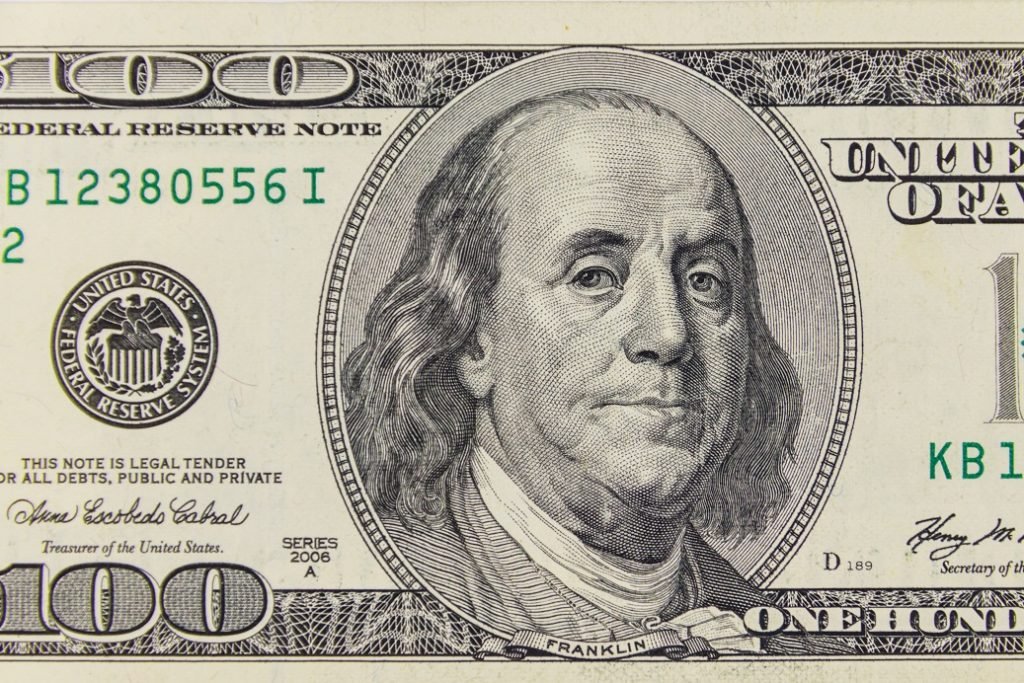
United States: The $100 bill is referred to as a “Benjamin.” It is a reference to the Founding Father, Benjamin Franklin.
Canada: In Canada, dollar coins are referred to as “loonies” and their two-dollar coins are referred to as “toonies.”
Britain: In the U.K., 500 pounds is sometimes referred to as a “monkey.”
Australia: In Australia, the five-cent coin is sometimes referred to as “shrapnel.” It is because it is the smallest coin value in Australia.
New Zealand: One- and two-dollar coins are often referred to as “gold coins.”
Russia: Due to hyperinflationHyperinflationIn economics, hyperinflation is used to describe situations where the prices of all goods and services rise uncontrollably over a defined after the Russian Civil War, one billion rubles may be referred to as “watermelon.”
Additional Resources
CFI is the official provider of the global Commercial Banking & Credit Analyst (CBCA)™Program Page - CBCAGet CFI's CBCA™ certification and become a Commercial Banking & Credit Analyst. Enroll and advance your career with our certification programs and courses. certification program, designed to help anyone become a world-class financial analyst. To keep advancing your career, the additional resources below will be useful:
- Functions of MoneyFunctions of MoneyMoney performs four main functions in today’s society. It mainly serves as a medium of exchange, a standard of deferred payment, a store of wealth, and a
- NumismaticsNumismaticsNumismatics is the study and collection of coins, tokens, and other coin-like objects that people used as currencies throughout history. The term may also
- Nominal ValueNominal ValueNominal value is a common financial term that is used in various contexts within finance. For stocks and bonds, it is also referred to as the “face
- Virtual CurrencyVirtual CurrencyVirtual currency is a type of unregulated digital currency. It is not issued or controlled by a central bank. Examples of virtual currencies include Bitcoin
-

Understanding Market Capitalization: A Comprehensive Guide
Market Capitalization (Market Cap) is the most recent market value of a company’s outstanding sharesWeighted Average Shares OutstandingWeighted average shares outstanding refers to the numb
-

Understanding Market Value of Debt: Beyond Book Value
The Market Value of Debt refers to the market price investors would be willing to buy a company’s debt for, which differs from the book value on the balance sheet. A company’s debt doesn&r
finance
- Understanding Equity: A Comprehensive Guide for Investors
- Face Value Explained: Definition, Examples & Importance
- Understanding Fair Value: Definition & Importance
- Understanding Money: Definition, History & Value
- Nominal Value Explained: Definition & Financial Significance
- Understanding Value Added: Definition & Business Applications
- What is Value Date?
- Ex-Post Analysis: Understanding Outcomes After Events
- Par Value Explained: Understanding Bonds & Stocks
-
 Gross Merchandise Value (GMV): Definition & Importance
Gross Merchandise Value (GMV), also referred to as gross merchandise volume, is the total amount of sales a company makes over a specified period of time, typically measured quarterly or yearly. GMV i...
-
 Initial Outlay: Definition, Examples & Business Implications
An initial outlay refers to the initial investments needed in order to begin a given project. For instance, if opening a new factory, a company would need to purchase new land and machinery in order t...