
Straight-Line Depreciation: Understanding the Basics
The straight line basis is a method used to determine an asset’s rate of reduction in value over its useful lifespan. Other common methods used to calculate depreciation expenses of fixed assets are sum of year’s digits, double-declining balance, and units produced.
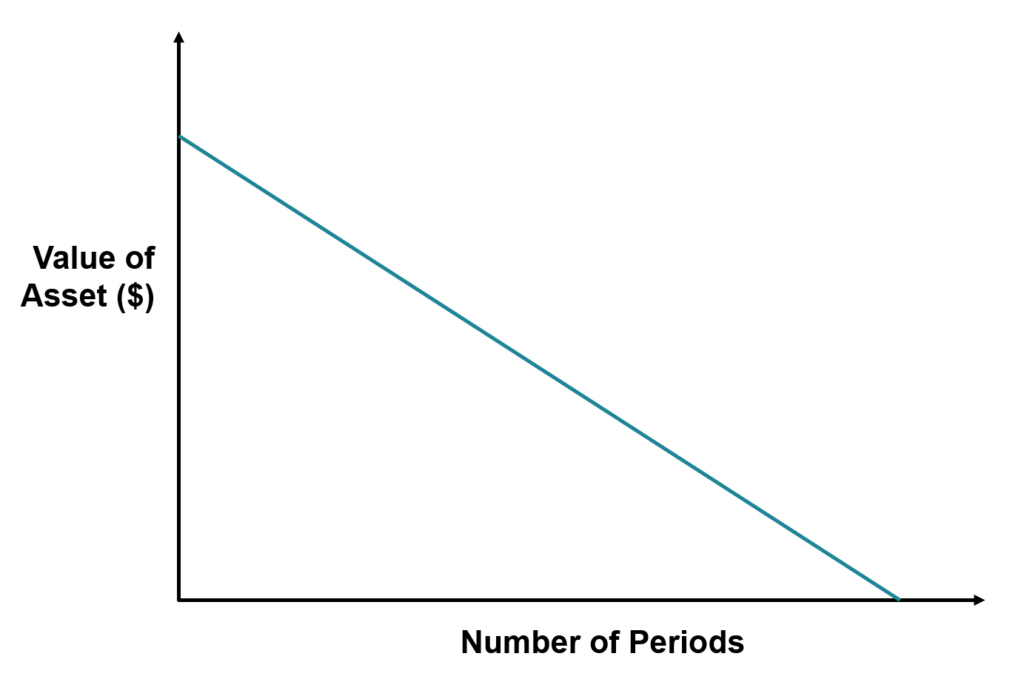
Straight line basis is the simplest technique used to compute the value loss of an asset over its useful life. Also called straight line depreciation, straight line basis charges an equal expense amount to each accounting period. It assumes that the asset’s value diminishes equally over each accounting period during its useful life.
Summary
- Straight line basis is a depreciation method used to calculate the wearing out of an asset’s value over its serviceable lifespan by assuming an equal depreciation expense each accounting period.
- Companies use the straight line basis to expense the value of an asset over accounting periods to reduce net income.
- Accountants prefer the straight line basis to calculate an asset’s depreciated value because it is simple and easy to use.
Understanding the Straight Line Basis Method
Recording depreciation and amortization is in accordance with accounting’s matching principleMatching PrincipleThe matching principle is an accounting concept that dictates that companies report expenses at the same time as the revenues they are related. The matching principle is the basis of accrual accounting, which requires expenses that are incurred to be recorded in the same period as the revenues earned. The convention is meant to match sales and expenses to the period in which they occurred, as opposed to when payment was made or collected.
Depreciation and amortization are the conventions companies use to attain the matching objective. Intangible assets are only amortized if they have limited useful years. Straight line basis is also used to amortize fixed and intangible assets, such as software and patents. Depreciation of fixed assets is similar to amortization, and in both, the straight line basis is commonly used to calculate the expense amount.
Companies use depreciation and amortization to expense an asset over a long period of time, as opposed to deducting the full cost of the asset in the period it was purchased. The latter being done under the cash basis of accounting. The straight line basis simply allocates the expense equally into each period of its useful life, which smooths the expense and ultimately net income.
How to Calculate the Straight Line Basis
Companies use the straight line basis method to determine the amount to be expensed over accounting periods. To calculate the depreciation of an asset, an asset’s salvage valueSalvage ValueSalvage value is the estimated amount that an asset is worth at the end of its useful life. Salvage value is also known as scrap value is deducted from its purchase price the difference is then divided by the estimated useful years of the asset.
Practical Example
Assume that Company X purchases an asset at the cost of $20,500. The asset’s life expectancy is 20 years, with $1,500 as the estimated salvage value. First, the difference between the purchase price of the asset and the salvage value is calculated. This difference is sometimes called the depreciable base. The difference is then divided by the asset’s expected life to find the annual depreciation expense amount. The asset’s straight line depreciation is:
Depreciable Base = $20,500 – $1,500 = $19,000
Straight Line Depreciation = $19,000/20 = $950
Thus, Company X only needs to expense $950 instead of writing off the asset’s full cost in the current accounting period, which is what would happen under the cash basis of accounting. Furthermore, the company will continue to expense $950 annually until the book value of the asset reaches the salvage value of $1,500.
Advantages and Disadvantages of Straight Line Basis
Advantages
Accountants prefer the straight line basis because it is easy to calculate and understand. The method allocates an even amount to each accounting period over the asset’s useful life making it a predictable expense, and allows for the smoothing of net income.
Disadvantages
On the downside, the straight line basis method’s major pitfalls lie in its simplicity. One of the most obvious disadvantages is that the asset’s useful life is based on guesswork. For example, the risk of an asset becoming obsolete earlier than anticipated due to the transformative nature of innovative technology is not considered.
Additionally, the straight line basis method does not factor in the actual physical rapid loss of an asset’s value in the early years of its life. At the same time, it does not take into consideration the fact that an asset will likely require more maintenance as it ages.
Special Considerations
Straight line basis is also applied in operating leasesOperating LeaseAn operating lease is an agreement to use and operate an asset without ownership. Common assets that are leased include real estate,, where it is used to calculate the amount of rental payments due under a lease agreement. The payments will be equal for each period until the end of the lease..
Additional Resources
CFI offers the Commercial Banking & Credit Analyst (CBCA)™ certification program for those looking to take their careers to the next level. To keep learning and advancing your career, the following resources will be helpful:
- Depreciation ScheduleDepreciation ScheduleA depreciation schedule is required in financial modeling to link the three financial statements (income, balance sheet, cash flow) in Excel.
- Double Declining Balance DepreciationDouble Declining Balance DepreciationThe double declining balance depreciation method is a form of accelerated depreciation that doubles the regular depreciation approach. It is
- Straight Line Depreciation TemplateStraight Line Depreciation TemplateThis straight line depreciation template demonstrates how to calculate depreciation expense using the straight line depreciation method.
- Sum of Years DepreciationAccountingOur Accounting guides and resources are self-study guides to learn accounting and finance at your own pace. Browse hundreds of guides and resources.
-
Understanding Average Inventory: Definition & Calculation
The average inventory is the mean value (that can be different from the median value) of an inventory during a determined period of time. The average inventory is thus a mathematical calculation. It e
-
Balance Sheet Explained: A Comprehensive Guide for Finance Professionals
The balance sheet is one of the three fundamental financial statementsThree Financial StatementsThe three financial statements are the income statement, the balance sheet, and the statement of cash fl
Accounting
- Understanding the MICR Line on Checks: A Comprehensive Guide
- Arbitrage Pricing Theory (APT): A Comprehensive Overview
- Asset Turnover Ratio: Definition & Calculation - Financial Analysis
- Debt-to-Asset Ratio: Definition, Calculation & Significance
- Advance-Decline Line: Understanding Market Sentiment & Trends
- Kagi Chart Explained: A Clearer View of Price Action
- Understanding the Security Market Line (SML) | Capital Asset Pricing Model
- Understanding Below-the-Line Items in Financial Statements
- Straight-Line Depreciation: Definition, Calculation & Example
-
 Understanding the Accounting Equation: Assets = Liabilities + Equity
The accounting equation is a basic principle of accounting and a fundamental element of the balance sheetBalance SheetThe balance sheet is one of the three fundamental financial statements. The financ...
-
 Asset Disposal: Definition, Types & Financial Statement Impact
Asset disposal is the removal of a long-term asset from the company’s accounting recordsThree Financial StatementsThe three financial statements are the income statement, the balance sheet, and ...