
Understanding MJSD: Financial Reporting Dates for US Public Companies
MJSD is an acronym that stands for the months of March, June, September, and December. The months are the final months of the four annual quarters for releasing financial earnings and declaring dividends. Public companies operating in the United States are required to file quarterly earnings reports (10-Q reports) with the U.S. Securities and Exchange CommissionSecurities and Exchange Commission (SEC)The US Securities and Exchange Commission, or SEC, is an independent agency of the US federal government that is responsible for implementing federal securities laws and proposing securities rules. It is also in charge of maintaining the securities industry and stock and options exchanges.
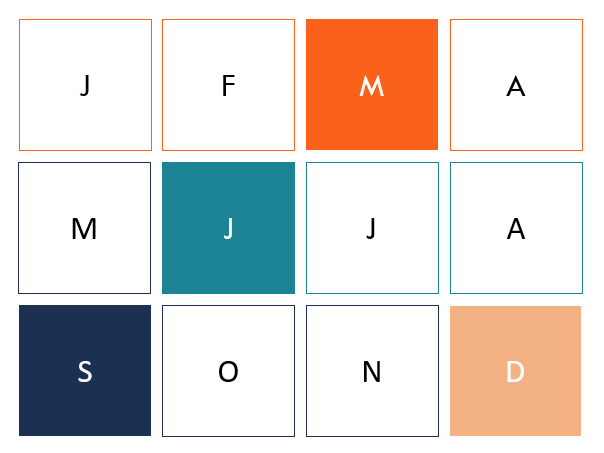
Public companies must file their 10-QForm 10-QForm 10-Q is a report – required by the Securities and Exchange Commission (SEC) – that must be filed quarterly by all public companies. The form is similar to Form 10-K; however, it typically contains fewer details and the financial statements included are typically unaudited. Three quarterly Forms 10-Q must be filed each year during the last month of the first three quarters of the year and then an annual report (10-K10-KForm 10-K is a detailed annual report that is required to be submitted to the U.S. Securities and Exchange Commission (SEC). The filing provides a comprehensive summary of a company’s performance for the year. It is more detailed than the annual report that is sent to shareholders) that includes all the quarters of the year. Other reporting month combinations include JAJO (January, April, July, and October) and FMANFMANFMAN is one of the three options cycles, and it comprises multiple options contracts that share the same terms and expire in the months of February, May, (February, May, August and November).
Summary
- MJSD is an acronym for March, June, September, and December.
- It is one of the three annual cycles in which options contracts are assigned.
- Each of the four months in the MJSD cycle represents the closing month of each of the four quarters for financial reporting.
Quarters 1, 2, 3 and 4
A quarter refers to one-fourth of a year, which equals three months of a company’s financial calendar. Each quarter acts as a basis for preparing periodic financial reports, as well as paying dividends to shareholders. However, not all companies will follow the financial calendar quarters, and it is common for them to adopt fiscal quarters ending in other months. For example, Walmart’s Q1 occurs in February, March, and April, whereas Apple’s first quarter starts from October to December.
The standard financial calendar quarters are as follows:
- Q1: January, February, and March
- Q2: April, May, and June
- Q3: July, August, and September
- Q4: October, November, and December
MJSD takes the last month of each of the quarters above. A new earnings season begins one month after the close of each quarter, and the earnings are released at the start of the new earnings quarter, i.e., January, April, July, and October. Some companies may take longer to release earnings after a busy month, but it is uncommon to find companies releasing earnings in the middle of the earnings season.
How Quarterly Reports Are Used
When the quarterly reports are published, investors and analysts rely on the available information to make comparisons and analyze performance trends. Investors can compare the current quarter’s performance to the same quarter in the previous year to determine how the company is performing, and use that information to decide whether or not to invest in it. Analysts may also evaluate the company’s quarterly performance to understand how it is performing in relation to other competing firms in the industry.
The release of a company’s earnings report also tends to affect the value of its stocks. If the company reported improved earnings compared to the previous period, the value of the stock will increase, attracting more investors. Similarly, a fall in earnings will result in a decline in the value of the company’s stock.
MJSD in Derivatives (Options Series)
Most investors in option contractsOptions: Calls and PutsAn option is a derivative contract that gives the holder the right, but not the obligation, to buy or sell an asset by a certain date at a specified price. are aware that the MJSD option series expire during the months of March, June, September, and December. An options series comprises options that are based on the same underlying security and expiration dates but with different strike prices. The option listings are associated with option cycles, which determine the expiration dates of the options. A listed option can be assigned any of the following cycles:
- Cycle 1: January, April, July, and October
- Cycle 2: February, May, August, and November
- Cycle 3: March, June, September, and December
The expiration date is the last date when derivatives such as options or futures contracts are valid. Before or on the last trading day, investors must take a position on what to do with the expiring position. For example, an investor can exercise the options contract and close the position to earn a profit or loss. They retain the contract and require their representative broker to sell the underlying asset of the derivative.
If an investor does nothing after the expiration, and the option they hold is out of the money, then the options contract will expire worthless. Options with an automatic exercise provision are exercised automatically if they are in the money at the expiration date. If the investor does not want the option excised automatically, they must close out the position before or on the last trading day.
MJSD in Dividend Cycles
Most companies distribute dividends to their shareholders at the end of every quarter when releasing their quarterly earnings results, although there are a few that pay dividends monthly. The dividend cycle begins on the declaration date, which is the date when the board of directorsBoard of DirectorsA board of directors is a panel of people elected to represent shareholders. Every public company is required to install a board of directors. notifies the shareholders that the company will pay a dividend, the amount of cash dividends, and the date when the distribution will be done.
Companies that make quarterly dividend distributions make payments in the following months:
- JAJO: January, April, July, and October
- FMAN: February, May, August, and November.
- MJSD: March, June, September, and December
The dividend cycle assists investors to structure their dividend income for the year. Some companies may alter the dividend payment period from one month to the next if the payment date falls on a weekend and is the last day of the month.
Related Readings
CFI offers the Financial Modeling & Valuation Analyst (FMVA)™Become a Certified Financial Modeling & Valuation Analyst (FMVA)®CFI's Financial Modeling and Valuation Analyst (FMVA)® certification will help you gain the confidence you need in your finance career. Enroll today! certification program for those looking to take their careers to the next level. To keep learning and developing your knowledge base, please explore the additional relevant CFI resources below:
- Earnings GuidanceEarnings GuidanceAn earnings guidance is the information provided by the management of a publicly traded company regarding its expected future results, including estimates
- Fiscal Year (FY)Fiscal Year (FY)A fiscal year (FY) is a 12-month or 52-week period of time used by governments and businesses for accounting purposes to formulate annual
- Important Dividend DatesImportant Dividend DatesIn order to understand dividend-paying stocks, knowledge of important dividend dates is crucial. A dividend typically comes in the form of a cash distribution that is paid from the company's earnings to investors.
- Types of SEC FilingsTypes of SEC FilingsThe US SEC makes it mandatory for publicly traded companies to submit different types of SEC filings, forms include 10-K, 10-Q, S-1, S-4, see examples. If you are a serious investor or finance professional, knowing and being able to interpret the various types of SEC filings will help you in making informed investment decisions.
-

Understanding the 'Keep and Pay' Bankruptcy Strategy
“Keep and Pay” refers to a type of bankruptcyBankruptcyBankruptcy is the legal status of a human or a non-human entity (a firm or a government agency) that is unable to repay its outs
-
Understanding Management Discussion & Analysis (MD&A): A Comprehensive Guide
Management discussion and analysis, or MD&A, is a section that can be found in the annual report of a company. The MD&A section provides key information regarding how a company is performing f
finance
- Understanding Appraisals: A Comprehensive Guide
- Understanding Earnings: A Guide to Financial Profitability
- Understanding Earnings Announcements: A Comprehensive Guide
- Understanding Earnings Calls: A Comprehensive Guide
- Understanding Earnings Guidance: A Comprehensive Guide
- Earnings Management: Definition, Techniques & Impact
- Understanding Earnings Reports: A Comprehensive Guide for Investors
- Understanding Earnings Season: A Guide for Investors
- Understanding Earnings Volatility: Risk & Stock Price Prediction
-
 Earnings Season: A Comprehensive Guide for Investors
Once every quarter, investors in the stock market feel a communal tingle at the base of their spines. Their inner alarm clocks go off, their pulses race, their smartphone notifications go haywire, ...
-
 March Deals: Smart Shopping Guide (What to Buy & Avoid)
March is an exciting month, as millions across the country eagerly watch to see who takes the title in the month-long college basketball tournament. But what if you’re not a basketball fan? What if re...