
Net Working Capital (NWC): Definition, Calculation & Importance
Simply put, Net Working Capital (NWC) is the difference between a company’s current assetsCurrent AssetsCurrent assets are all assets that a company expects to convert to cash within one year. They are commonly used to measure the liquidity of a and current liabilitiesCurrent LiabilitiesCurrent liabilities are financial obligations of a business entity that are due and payable within a year. A company shows these on the on its balance sheetBalance SheetThe balance sheet is one of the three fundamental financial statements. The financial statements are key to both financial modeling and accounting.. It is a measure of a company’s liquidity and its ability to meet short-term obligations, as well as fund operations of the business. The ideal position is to have more current assets than current liabilities and thus have a positive net working capital balance.
Different approaches to calculating NWC may exclude cash and debt (current portion only), or only include accounts receivable, inventory, and accounts payable.
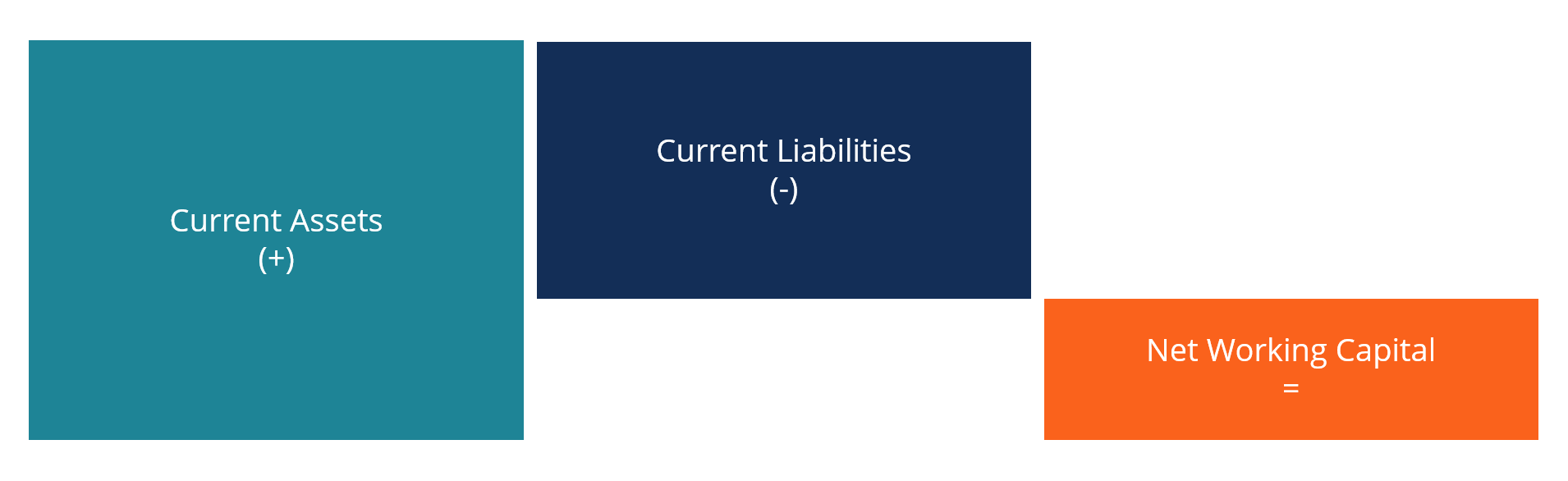
Image: CFI’s Financial Analysis Fundamentals Course.
Net Working Capital Formula
There are a few different methods for calculating net working capital, depending on what an analyst wants to include or exclude from the value.
Formula:
Net Working Capital = Current Assets – Current Liabilities
or,
Formula:
Net Working Capital = Current Assets (less cash) – Current Liabilities (less debt)
or,
NWC = Accounts Receivable + Inventory – Accounts Payable
The first formula above is the broadest (as it includes all accounts), the second formula is more narrow, and the last formula is the most narrow (as it only includes three accounts). Learn more in CFI’s Financial Analyst Training ProgramBecome a Certified Financial Modeling & Valuation Analyst (FMVA)®CFI's Financial Modeling and Valuation Analyst (FMVA)® certification will help you gain the confidence you need in your finance career. Enroll today!.
Download the Free Template
Enter your name and email in the form below and download the free template now!
Setting up a Net Working Capital Schedule
Below are the steps an analyst would take to forecast NWC using a schedule in Excel.
Step 1
At the very top of the working capital schedule, reference sales and cost of goods sold from the income statement Income StatementThe Income Statement is one of a company's core financial statements that shows their profit and loss over a period of time. The profit orfor all relevant periods. These will be used later to calculate drivers to forecast the working capital accounts.
Step 2
Under salesSales RevenueSales revenue is the income received by a company from its sales of goods or the provision of services. In accounting, the terms "sales" and and cost of goods soldAccountingOur Accounting guides and resources are self-study guides to learn accounting and finance at your own pace. Browse hundreds of guides and resources., lay out the relevant balance sheet accounts. Separate current assets and current liabilities into two sections. Remember to exclude cash under current assets and to exclude any current portions of debt from current liabilities. For clarity and consistency, lay out the accounts in the order they appear in the balance sheet.
Step 3
Create subtotals for total non-cash current assets and total non-debt current liabilitiesCurrent LiabilitiesCurrent liabilities are financial obligations of a business entity that are due and payable within a year. A company shows these on the. Subtract the latter from the former to create a final total for net working capital. If the following will be valuable, create another line to calculate the increase or decrease of net working capital in the current period from the previous period.
Step 4
Populate the schedule with historical data, either by referencing the corresponding data in the balance sheetBalance SheetThe balance sheet is one of the three fundamental financial statements. The financial statements are key to both financial modeling and accounting. or by inputting hardcoded data into the net working capital schedule. If a balance sheet has been prepared with future forecasted periods already available, populate the schedule with forecast data as well by referencing the balance sheet.
Step 5
If future periods for the current accounts are not available, create a section to outline the drivers and assumptions for the main assets. Use the historical data to calculate drivers and assumptions for future periods. See the table below for common drivers used in calculating specific line items. Finally, use the prepared drivers and assumptions to calculate future values for the line items.
Video Explanation of Net Working Capital
Below is a short video explaining how the operating activities of a business impact the working capital accounts, which are then used to determine a company’s NWC.
Common Drivers Used for Net Working Capital Accounts
Below is a list of assumptions that are used in a financial modelTypes of Financial ModelsThe most common types of financial models include: 3 statement model, DCF model, M&A model, LBO model, budget model. Discover the top 10 types to forecast NWC:
- Accounts ReceivablesAccountingOur Accounting guides and resources are self-study guides to learn accounting and finance at your own pace. Browse hundreds of guides and resources.: Accounts Receivable Days
- InventoryInventoryInventory is a current asset account found on the balance sheet, consisting of all raw materials, work-in-progress, and finished goods that a: Inventory Days
- Other Current Assets: Percentage of sales, growth percentage, fixed amount, or increasing amount
- Accounts payable: Accounts Payable Days
- Other current liabilities: Percentage of sales, growth percentage, fixed amount, increasing amount
Accounts receivableAccounts ReceivableAccounts Receivable (AR) represents the credit sales of a business, which have not yet been collected from its customers. Companies allow days, inventory days, and accounts payable days all rely on sales or cost of goods sold to calculate. If either sales or COGS is unavailable, the “days” metrics cannot be calculated. When this happens, it may be easier to calculate accounts receivables, inventory, and accounts payables by analyzing the past trend and estimating a future value.
Use of Net Working Capital in Financial Modeling
Changes in net working capital impact cash flow in financial modelingWhat is Financial ModelingFinancial modeling is performed in Excel to forecast a company's financial performance. Overview of what is financial modeling, how & why to build a model..
Look closely at the image of the model below, and you will see a line labeled “Less Changes in Working Capital” – this is where the impact of increases/decreases in accounts receivable, inventory, and accounts payable impact the unlevered free cash flowUnlevered Free Cash FlowUnlevered Free Cash Flow is a theoretical cash flow figure for a business, assuming the company is completely debt free with no interest expense. of a firm.
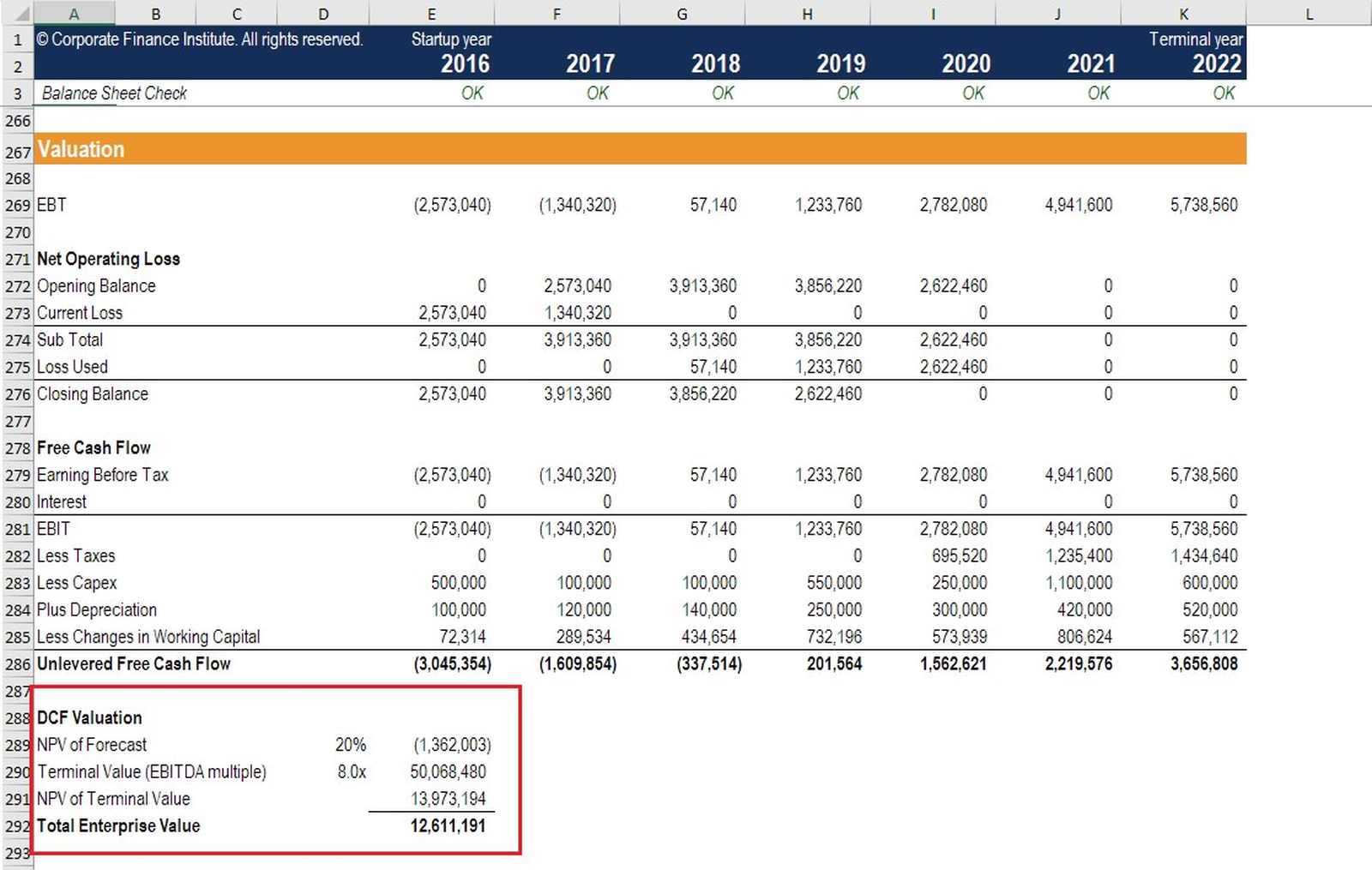
Understanding the impact of changes in net working capital is extremely important in financial modeling and corporate valuationValuation MethodsWhen valuing a company as a going concern there are three main valuation methods used: DCF analysis, comparable companies, and precedent transactions. To learn more, check out CFI’s financial modeling courses now!
Additional Resources
CFI is the official provider of the Financial Modeling & Valuation Analyst (FMVA)®Become a Certified Financial Modeling & Valuation Analyst (FMVA)®CFI's Financial Modeling and Valuation Analyst (FMVA)® certification will help you gain the confidence you need in your finance career. Enroll today! certification, designed to transform anyone into a world-class financial analyst. To advance your career as an analyst, read more about the other elements that populate financial statements:
- Core StatementsThree Financial StatementsThe three financial statements are the income statement, the balance sheet, and the statement of cash flows. These three core statements are
- Income StatementIncome StatementThe Income Statement is one of a company's core financial statements that shows their profit and loss over a period of time. The profit or
- Cash Flow StatementCash Flow StatementA cash flow Statement contains information on how much cash a company generated and used during a given period.
- Financial Modeling GuideFree Financial Modeling GuideThis financial modeling guide covers Excel tips and best practices on assumptions, drivers, forecasting, linking the three statements, DCF analysis, more
-

Financial Engineering: Principles, Applications & Career Paths
Financial engineering encompasses a broad, multidisciplinary field of study and practice that, essentially, applies an engineering approach and methodology to the world of finance. It integrates and u
-

Understanding Your Financial Health: A Comprehensive Guide
Financial health is a basic measure of the soundness of an individual’s finances – essentially, it’s about what kind of financial shape you’re in overall. You may also view it
finance
- Understanding Auditors: Roles, Responsibilities & Audit Processes
- Net Interest Income (NII): Definition & Calculation
- Understanding Net Investment: A Key Metric for Business Growth
- Net Working Capital (NWC): Definition, Calculation & Importance
- Working Capital Management: A Comprehensive Guide
- Working Capital vs. Investing Capital: A Clear Distinction
- Calculating Working Capital: A Comprehensive Guide
- Working Capital: Definition, Importance & Management
- Net Working Capital (NWC): A Small Business Guide to Calculation
-
 Understanding Finance: A Comprehensive Overview of Key Concepts
Finance is defined as the management of money and includes activities such as investing, borrowing, lending, budgeting, saving, and forecasting. There are three main types of finance: (1) personalPers...
-
 Understanding Financial Crises: Causes, Impacts, and Examples
A financial crisis is defined as any situation where one or more significant financial assets – such as stocks, real estateReal EstateReal estate is real property that consists of land and impro...