
Proxy Voting Explained: Understand Your Voting Rights
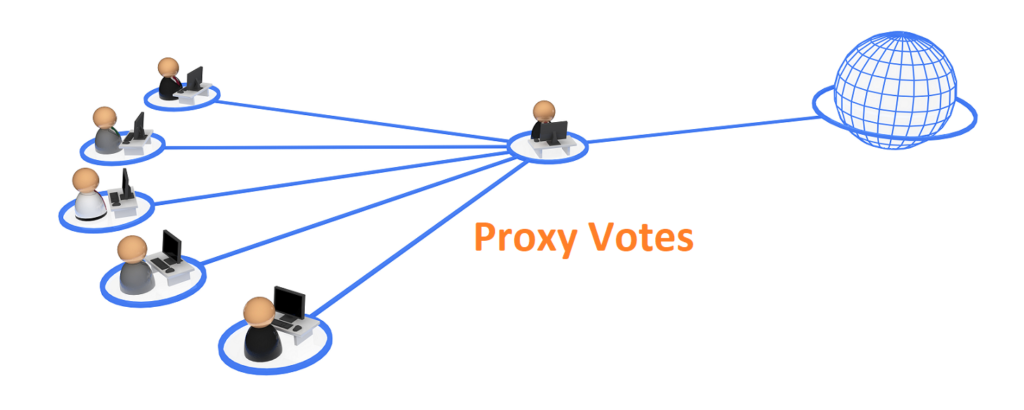
A Proxy Vote is a delegation of voting authority to a representative on behalf of the original vote-holder. The party who receives the authority to vote is known as the Proxy and the original vote-holder is known as the Principal. The concept is important in financial markets and particularly with public companiesPrivate vs Public CompanyThe main difference between a private vs public company is that the shares of a public company are traded on a stock exchange, while a private company's shares are not. as it allows groups of shareholders to amass greater influence by pooling their votes together.
Reasons for Proxy Vote in a Financial Context
For shareholders of a corporation, voting by proxy can be a common practice. The two most common reasons to give up votes to another party are:
#1 Delegate to someone who is more informed
The reason behind the delegation is largely because shareholders have limited time to fully analyze and understand what’s happening at the company, and may prefer to delegate their votes to someone who is more informed.
#2 Principal is unable to attend in person
Another common reason to delegate authority to someone else is if the principal is unable to attend a shareholders’ meeting. If remote voting is not possible, then a proxy can be sent in their place to fulfill the rights of the principal.
Proxy Fight
In financial markets, public companies can be subjected to what is known as a proxy fight. A proxy fight takes place when a large shareholder (or group of shareholders) convince other shareholders to hand over their voting power. Forming a large block of votes this way enables the group to have more power and may enable them to sway a corporate vote, which wouldn’t have been possible if all the shareholders had been acting independently.
A proxy fight can work in the following way:
- The lead shareholder in the fight engages a proxy solicitation company
- The solicitation company gets a complete list of shareholders
- The leader of the proxy fight sends a message encouraging other shareholders to appoint the leader as their proxy
- If the leader is able to acquire enough proxies, then they may be successful in achieving their goal of controlling the outcome of a vote at the shareholders meeting
Example of Proxy Vote/Fight
According to Fortune, the largest instance of a proxy fight occurred in 2017 when Proctor & Gamble shareholders wanted to give activist investor Nelson Peltz a seat on the board, but the company was strongly opposed to that happening.
Peltz wrote a lengthy analysis outlining changes he wanted to see at the company and used a proxy solicitation company to reach all shareholders with his message.
However, in the end, the shareholders voted to deny Peltz a board seat, causing him to lose the fight he had waged against the company.
Additional Resources
Thank you for reading this guide to a better understanding of how a Proxy Vote works in the context of public companies. To keep learning and advancing your career in the financial industry, CFI highly recommends these additional resources:
- Shareholder PrimacyShareholder PrimacyShareholder primacy is a shareholder-centric form of corporate governance that focuses on maximizing the value of shareholders before considering
- Chinese WallChinese WallIn finance, a Chinese Wall (or a Wall of China) is a virtual information barrier erected between those who have material, non-public information and those who don’t, to prevent conflicts of interest. A bank uses a Chinese Wall policy to comply with securities regulations.
- Financial Analyst GuideAnalyst Trifecta eBookCFI's Analyst Trifecta eBook is FREE and available for anyone to download as a pdf. Learn about Analytics, Presentation & Soft Skills. Learn industry-leading best practices to stand out from the crowd and become a world-class financial analyst, 141 pages.
- Financial ModelingFinancial ModelingFree financial modeling resources and guides to learn the most important concepts at your own pace. These articles will teach you financial modeling best practices with hundreds of examples, templates, guides, articles, and more. Learn what financial modeling is, how to build a model, Excel skills, tips and tricks
-

Come-Along Clause in Shareholders Agreements: Definition & Impact
Close-up of business contract A come-along clause, also known as a drag-along clause, is a common provision included in shareholder agreements, particularly in the agreements of growing compa
-

Jumbo CDs: Higher Rates & Deposits Explained
A jumbo CD is similar to a conventional CD although the former generally requires a higher deposit and accrues interest at a higher rate. A CD is a certificate of deposit that is offered by banks for
finance
- Understanding Proxy Season: Shareholder Meetings & Key Dates
- Understanding Proxies: Representation and Voting Rights
- Activist Shareholders: Definition, Tactics & Impact
- Understanding Corporations: Definition, Formation & Key Features
- Understanding Dividends: A Comprehensive Guide
- Irrevocable Proxy: Understanding Proxy Voting & Shareholder Rights
- Proxy Fight: Understanding Shareholder Power & Corporate Control
- Shareholder Agreement: Definition, Purpose & Key Provisions | [Your Company Name]
- Shareholders' Agreement: Definition, Purpose & Key Provisions
-
 Understanding Stock Market Proxies: A Comprehensive Guide
If you've ever tried to explain how the stock market did on a particular day, you'll know that it's a deceptively tricky question to answer. There are hundreds of thousands of publicly tra...
-
 Shareholders' Equity: A Comprehensive Guide for Investors
...