
Russian Ruble (RUB): History, Value & Key Facts
The Russian Ruble refers to Russia’s currency. Coming into use in the 14th century, the ruble is the second oldest currency after the Sterling Pound. In 1704, it became the first European currency to be decimalized, when the ruble was equivalent to 100 kopeks.
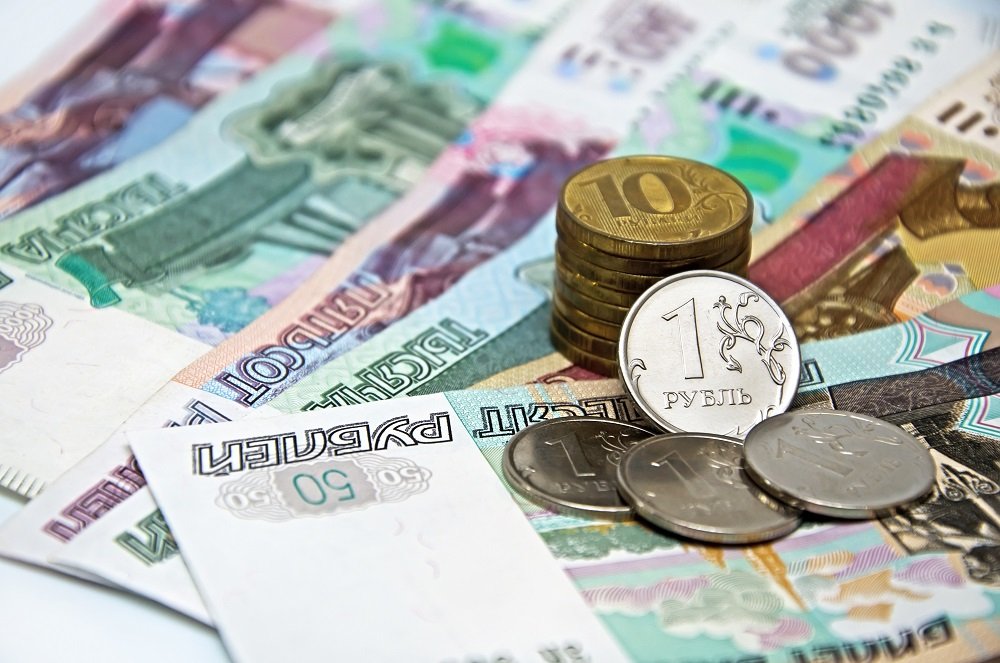
Russian ruble notes are printed in Moscow’s state-owned factory, which began its operations at the end of World War I. Coins are minted in both Moscow and the almost 300-year-old St. Petersburg Mint. While there is no official symbol, py6 (three Cyrillic characters equal to RUB in Russian) is currently used to represent the Russian ruble.
Summary
- The Russian Ruble refers to Russia’s currency and is considered the second-oldest currency after the sterling pound.
- Russian ruble notes are printed in Moscow’s state-owned factory, and coins are minted in both Moscow and the St. Petersburg Mint.
- Although Russia is one of the largest oil exporters, its currency is not strongly correlated with oil prices.
History of the Russian Ruble
The history of the ruble dates back to 1704, when the coin was standardized to 28 grams of silver during the rule of Peter the Great. A new standard was implemented on December 17, 1885, which did not affect the silver ruble but lowered the gold content to 1161 grams. Later, during the rule of Nicholas I, the silver ruble was declared a monetary unit and a principal instrument of payment, and banknotes became a payment support instrument.
Although the ruble went through innovations, reforms, and trials, the value remained intact until 1971. The design of the Russian currency changed in 1991 during the Soviet Union’s dissolution. The Central Bank of the Soviet Union placed into circulation new notes and coins. The Bank of Russia also issued Russian ruble banknotes in denominations 5,000 and 10,000. There was a new reform in 1993, which along with the new notes issued, aimed to bring an end to the circulation of Soviet versions.
Current Russian Ruble
A new 10-ruble coin made of brass-plated steel, incorporating optical security features, was issued in October 2009. The 10-ruble banknote would’ve been discontinued in 2012, but a lack of 10-ruble coins forced the central bank to pause this and bring new coins into circulation. Bimetallic commemorative coins of 10 rubles will continue to be issued.
A collection of circulated Olympic memorial coins of 25 rubles made of cupronickel began in 2011. Many small special edition coin denominationsDenominationA denomination is a classification for the face value of a financial instrument. This includes financial instruments such as bonds, currency remain in circulation, representing national historic occasions and anniversaries.
In 2017, the Central Bank of Russia launched two new banknotes – 200 RUB and 2,000 RUB. A vote was held in September 2016 to determine the icons and cities to be shown on the new notes. Russian Internet users selected the symbols through an online poll conducted by the Bank of Russia. The Russian Central Bank unveiled the new icons in February 2017.
Russian Ruble and International Trade
On November 23, 2010, Russian President Vladimir Putin and the then-Prime Minister of China, Wen Jiabao, declared that Russia and China would use their currencies instead of USD for bilateral trade. The goal was to further strengthen relations between Moscow and Beijing and secure their local economies during the economic crisis.
In January 2014, Putin stated that the forex rate for ruble should be well balanced. Also, that the national exchange rateExchange RateAn exchange rate is the rate at which one currency can be exchanged for another between nations or economic zones. It is used to determine the would only be controlled by the central bank as it went above the upper or lower bounds of the floating forex rate; and that the more open the Russian national currency, the better and that it would help the country’s economy to respond in a more effective and timely manner.
Though Russia is one of the largest exporters of oil, its currency is not strongly correlated with oil prices due to continuing political uncertainty in Russia.
Additional Resources
CFI is the official provider of the Commercial Banking & Credit Analyst (CBCA)™Program Page - CBCAGet CFI's CBCA™ certification and become a Commercial Banking & Credit Analyst. Enroll and advance your career with our certification programs and courses. certification program, designed to transform anyone into a world-class financial analyst.
In order to help you become a world-class financial analyst and advance your career to your fullest potential, these additional resources will be very helpful:
- Currency RiskCurrency RiskCurrency risk, or exchange rate risk, refers to the exposure faced by investors or companies that operate across different countries, in regard to unpredictable gains or losses due to changes in the value of one currency in relation to another currency.
- DevaluationDevaluationDevaluation is a downward adjustment to the country’s value of money relative to a foreign currency or standard. Many countries that operate
- International TradeInternational TradeInternational trade is an exchange involving a good or service conducted between at least two different countries. The exchanges can be
- United States Dollar (USD)United States Dollar (USD)The United States Dollar refers to the national currency of the U.S and is represented by the ISO code USD and is often abbreviated as US$.
-
Acid-Test Ratio: Understanding Your Company's Short-Term Liquidity
The Acid-Test Ratio, also known as the quick ratioQuick RatioThe Quick Ratio, also known as the Acid-test, measures the ability of a business to pay its short-term liabilities with assets readily conv
-

Advertising to Sales Ratio: Measuring Ad Effectiveness & ROI
The advertising to sales ratio, also called the “A to S” for short, measures the effectiveness, or how successful, a company’s advertising strategiesAIDA ModelThe AIDA model, which s
finance
- Current Ratio: Definition, Calculation & Financial Health
- Understanding Forward Rates: A Comprehensive Guide
- Hope Credit: Understanding Your Post-Secondary Education Tax Credit
- Libra Cryptocurrency: A Comprehensive Overview
- Modigliani-Miller Theorem: Understanding Capital Structure & Firm Value
- Understanding NCREIF: Real Estate Investment Performance Data
- Operating Ratio: Definition, Calculation & Importance
- Understanding the Overnight Interest Rate: A Comprehensive Guide
- Prime Rate Explained: Understanding Interest Rates for Businesses & Consumers
-
![Rule of 72: Calculate Investment Doubling Time | [Your Brand Name]](https://www.etffin.com/article/uploadfiles/202110/2021100815281678_S.png) Rule of 72: Calculate Investment Doubling Time | [Your Brand Name]
Rule of 72: Calculate Investment Doubling Time | [Your Brand Name]In finance, the Rule of 72 is a formula that estimates the amount of time it takes for an investment to double in value, earning a fixed annual rate of returnRate of ReturnThe Rate of Return (ROR) is ...
-
 Nifty 50: History, Significance & Key Stocks - A Comprehensive Guide
The Nifty 50 refers to the fifty most popular large-cap stocks that traded at high valuations in the 1960s and 1970s. They included household names such as Xerox (XRX), IBM, Polaroid and Coca-Cola (...