
Understanding Your Company's Shareholder Base: A Comprehensive Guide
Shareholder base refers to the total number of shareholders in a company. In other words, it is a base of owners (investorsInvestorAn investor is an individual that puts money into an entity such as a business for a financial return. The main goal of any investor is to minimize risk and) of a company that holds a certain number of stock (shares) in the business distributed proportionally, depending on the amount of investment made.

Shareholders are diverse, which means that a shareholder base may include institutional investors, such as pension funds or hedge fundsHedge Fund StrategiesA hedge fund is an investment fund created by accredited individuals and institutional investors for the purpose of maximizing returns and, with their own financial goals and thus investment strategies. They can also be individual investors or high net worth individuals with different investment periods.
The majority of companies focus on shareholder base management. The main reason is that companies believe that their stocks will trade at a significantly higher price if they attract an “ideal” shareholder base.
Quick Summary
- Shareholder base represents the total pool of shareholders in a company.
- Shareholders differentiate from each other by adopting various investment strategies to pursue different goals.
- Shareholder base can be either private or public.
Private and Public Shareholder Bases
Shareholder base is initially formed while opening and registering a company by filing the articles of incorporationArticles of IncorporationArticles of Incorporation are a set of formal documents that establish the existence of a company in the United States and Canada. For a business to be. Typically, at the very beginning, the founders of the company would be the only shareholders provided there was no early investment (seed financing) made by other investors (e.g., angel investors).
Once the company grows, it expands its shareholder base by raising funds to maximize efficiency and scale the business faster. If the company is not publicly listed, i.e., not traded on a stock exchange, then it has a private shareholder base. In other words, private shareholders represent a closed circle of individuals or entities who have invested in the company.
When the company matures, achieves stable operations and a solid market position, it decides to go public by offering shares in exchange for cash through an initial public offeringInitial Public Offering (IPO)An Initial Public Offering (IPO) is the first sale of stocks issued by a company to the public. Prior to an IPO, a company is considered a private company, usually with a small number of investors (founders, friends, family, and business investors such as venture capitalists or angel investors). Learn what an IPO is (IPO). After the IPO, the company will have a public shareholder base due to offering its shares (a portion of ownership) to anyone who is ready to invest in it.
Value Investors vs. Growth Investors
What particular style of investor strategies is more valued by companies – value investing or growth investing?
Briefly, value investingStock Investing: A Guide to Value InvestingSince the publication of "The Intelligent Investor" by Ben Graham, what is commonly known as "value investing" has become one of the most widely respected and widely followed methods of stock picking. is an investment style based on the current company’s worth. It involves calculating the value and earnings per share and determining whether the stock is overvalued or undervalued after conducting a thorough financial analysis.
Growth investing, conversely, is focused on the expected future performance of a company and ignores the current situation of its operations and market conditions.
Growth investors seek share price growth, assuming certain stocks will deliver above-average results. They aim to purchase stocks as cheap as possible and sell them later after price appreciation.
More Resources
CFI is the official provider of the Financial Modeling and Valuation Analyst (FMVA)™Become a Certified Financial Modeling & Valuation Analyst (FMVA)®CFI's Financial Modeling and Valuation Analyst (FMVA)® certification will help you gain the confidence you need in your finance career. Enroll today! certification program, designed to transform anyone into a world-class financial analyst.
In order to help you become a world-class financial analyst and advance your career to your fullest potential, these additional resources will be very helpful:
- Capital StructureCapital StructureCapital structure refers to the amount of debt and/or equity employed by a firm to fund its operations and finance its assets. A firm's capital structure
- Seed FinancingSeed FinancingSeed financing (also known as seed capital, seed money, or seed funding) is the earliest stage of the capital-raising process of a startup. Seed financing is a type of equity-based financing. In other words, investors commit their capital in exchange for an equity interest in a company.
- Stockholders EquityStockholders EquityStockholders Equity (also known as Shareholders Equity) is an account on a company's balance sheet that consists of share capital plus
- Weighted Average Shares OutstandingWeighted Average Shares OutstandingWeighted average shares outstanding refers to the number of shares of a company calculated after adjusting for changes in the share capital over a reporting period. The number of weighted average shares outstanding is used in calculating metrics such as Earnings per Share (EPS) on a company's financial statements
-

Goodwill in Accounting: Definition & Value
In accounting, goodwill is an intangible assetIntangible AssetsAccording to the IFRS, intangible assets are identifiable, non-monetary assets without physical substance. Like all assets, intangible as
-

OIBDA Explained: Understanding Operating Income Before Depreciation & Amortization
OIBDA is an abbreviation for Operating Income Before Depreciation and Amortization. It is a non-GAAP measure of the financial performance of a company during a specific period of time while excluding
finance
- Acquirer Definition: Understanding Corporate Acquisitions
- Activist Shareholders: Definition, Tactics & Impact
- Majority Shareholder: Definition, Rights & Implications
- Shareholders: Understanding Ownership and Dividends
- Shareholder Activism: Understanding Shareholder Activists and Their Tactics
- Shareholder Letter: Understanding Company Performance & Outlook
- Shareholder Yield: A Comprehensive Guide to Returns for Investors
- Stakeholders vs. Shareholders: Understanding the Key Differences
- Shareholder Value: Definition, Calculation & Importance
-
 EBITA Explained: Understanding Earnings Before Interest, Taxes, and Amortization
EBITA is an acronym that refers to the earnings of a company before interest, tax, and amortization expenses are deducted. Investors use EBITA as an indicator to measure the profitability and efficien...
-
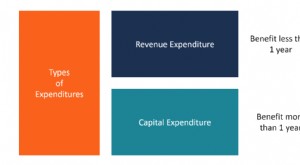 Understanding Expenditures: Definition and Types
An expenditure represents a payment with either cash or credit to purchase goods or services. An expenditure is recorded at a single point in time (the time of purchase), compared to an expenseAccrued...