
Structured Finance: Understanding Risk Mitigation & Lending Instruments
Structured finance deals with financial lending instruments that work to mitigate serious risks related to complex assets. For most, traditional tools such as mortgagesMortgageA mortgage is a loan – provided by a mortgage lender or a bank – that enables an individual to purchase a home. While it’s possible to take out loans to cover the entire cost of a home, it’s more common to secure a loan for about 80% of the home’s value. and small loans are sufficient. However, borrowers with greater needs, such as corporations, seek structured finance to deal with complex and unique financial instruments and arrangements to satisfy substantial financial needs.

The term “structured finance” is often used to explain the bundling of receivables, although it is more generally applicable to the offering of a structured system to help borrowers – and lenders – accomplish their end goal. The primary goal is to facilitate financing solutions that don’t involve free cash flow and to address different asset classesTypes of AssetsCommon types of assets include current, non-current, physical, intangible, operating, and non-operating. Correctly identifying and across various industries, making less risky products available to clients that need them.
The Matter of Securitization
Securitization is the core of structured finance. It is the method by which those in structured finance create asset pools and ultimately form complex financial instruments that are useful to corporationsCorporationA corporation is a legal entity created by individuals, stockholders, or shareholders, with the purpose of operating for profit. Corporations are allowed to enter into contracts, sue and be sued, own assets, remit federal and state taxes, and borrow money from financial institutions. and investors with special needs.
The specific reasons why securitization is valuable include:
- Alternative funding formats for unique or complicated needs
- Reduction of focus on credit
- Managing risk through liquidity and interest rates
- Efficient use of capital available, to capitalize on the potential for greater earnings or profit
- Less-costly funding options, which may be primarily important for borrowers with a less-than-stellar credit rating
- Transfer of risk away from investors
Examples
For large corporations looking to borrow substantial sums, a collected group of assets and financial transactions may be necessary. There are lending transactions that can’t be done with a traditional financial instrument. Therefore, structured finance comes into play.
Several structured finance products and combinations of products can be used to accomplish the financing needs of large borrowers. Structured finance products include:
- Syndicated loansSyndicated LoanA syndicated loan is offered by a group of lenders who work together to provide credit to a large borrower. The borrower can be a corporation, an individual project, or a government. Each lender in the syndicate contributes part of the loan amount, and they all share in the lending risk. One of the lenders act as the manager
- Collateralized bond obligations (CBOs)
- Credit default swaps (CDSs)Credit Default SwapA credit default swap (CDS) is a type of credit derivative that provides the buyer with protection against default and other risks. The buyer of a CDS makes periodic payments to the seller until the credit maturity date. In the agreement, the seller commits that, if the debt issuer defaults, the seller will pay the buyer all premiums and interest
- Hybrid securities
- Collateralized mortgage obligations
- Collateralized debt obligations (CDOs)
Summary
Structured finance and its products are important. It provides the scaffolding and space for major borrowers needing a capital injection or alternative source of financing when other, more traditional borrowing options won’t work.
More Resources
CFI offers the Financial Modeling & Valuation Analyst (FMVA)™Become a Certified Financial Modeling & Valuation Analyst (FMVA)®CFI's Financial Modeling and Valuation Analyst (FMVA)® certification will help you gain the confidence you need in your finance career. Enroll today! certification program for those looking to take their careers to the next level. To keep learning and advancing your career, the following CFI resources will be helpful:
- Capital StructureCapital StructureCapital structure refers to the amount of debt and/or equity employed by a firm to fund its operations and finance its assets. A firm's capital structure
- Key Players in the Capital MarketsKey Players in the Capital MarketsIn this article, we provide a general overview of the key players and their respective roles in the capital markets. The capital markets consist of two types of markets: primary and secondary. This guide will provide an overview of all the major companies and careers across the capital markets.
- Marketable SecuritiesMarketable SecuritiesMarketable securities are unrestricted short-term financial instruments that are issued either for equity securities or for debt securities of a publicly listed company. The issuing company creates these instruments for the express purpose of raising funds to further finance business activities and expansion.
- Staple FinancingStaple FinancingStaple financing is a financing package arranged by a seller for potential purchasers as part of an auction process. The term “staple” is derived from the fact that the commitment letter and term sheets are stapled at the back of the acquisition term sheet
-
![Top Personal Finance Software: Reviews & Comparison - [Year]](https://www.etffin.com/article/uploadfiles/202110/2021100815121750_S.jpeg)
Top Personal Finance Software: Reviews & Comparison - [Year]
Given the myriad of options available on the market today, it can be difficult to choose the best personal finance software. Modern technology has given us personal finance software that is desig
-
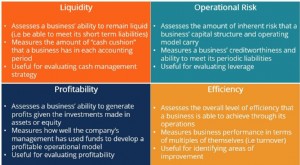
Understanding Corporate Finance Ratios: A Comprehensive Guide
Corporate Finance Ratios are quantitative measures that are used to assess businesses. These ratios are used by financial analysts, equity research analysts, investors, and asset managers to evaluate
finance
- Understanding Finance: A Comprehensive Overview of Key Concepts
- Haircut (Finance): Definition, Calculation & Importance
- Understanding Islamic Finance: Principles and Practices
- Leveraged Finance Explained: Strategies & Applications
- Managerial Finance: Techniques for Business Decision-Making
- Personal Finance: A Comprehensive Guide to Planning & Management
- Behavioral Finance: Understanding Investor Psychology & Market Impacts
- Framing Bias: Understanding How Presentation Influences Decisions
- Understanding Structured Settlements: A Comprehensive Guide
-
 Quantitative Finance: Models, Data & Market Analysis
Quantitative finance is the use of mathematical models and extremely large datasets to analyze financial markets and securitiesTrading SecuritiesTrading securities are securities purchased by a compan...
-
 Real Estate Project Finance: A Comprehensive Guide
Project finance is long-term financing of an independent capital investment, which are projects with cash flowsStatement of Cash FlowsThe Statement of Cash Flows (also referred to as the cash flow sta...