
Turkish Lira (TRY): History, Value & Key Information
The Turkish lira is the official currency of Northern Cyprus and Turkey. The new Turkish lira is the second issue that was introduced at the beginning of 2005. It is the same as 1 million of the previous Turkish lira.
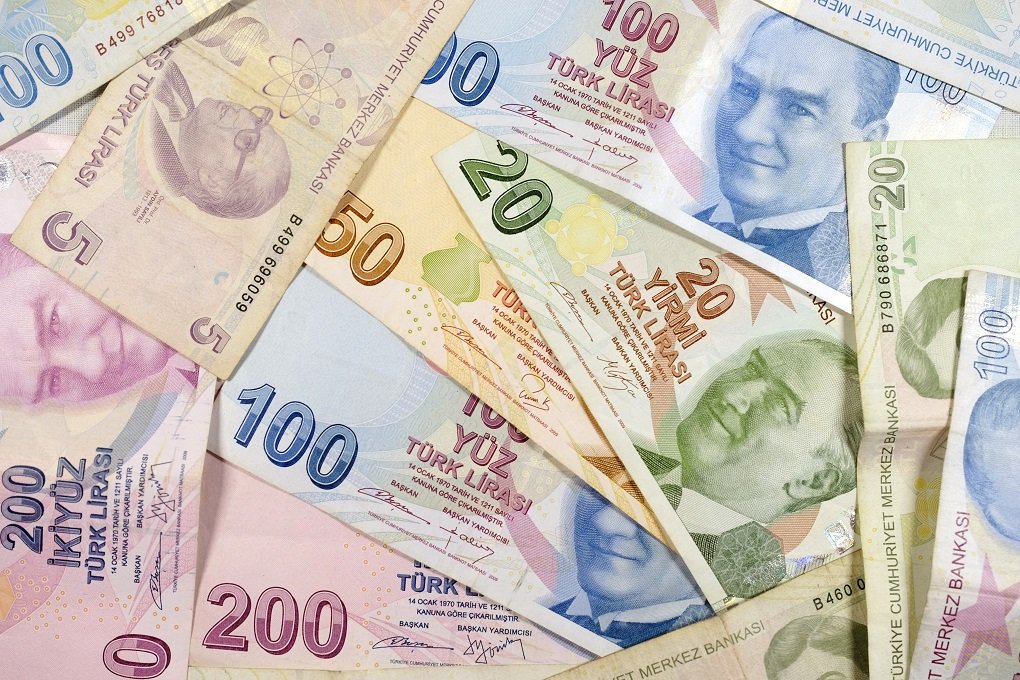
During the 2005 revaluation, the legislation deducted the last six zeros from the currency’s value. In 2009, the ninth issue of the currency was published. The Turkish new lira is represented by the ISO code TRY and abbreviated as TL.
Summary
- The Turkish lira is the official currency of Northern Cyprus and Turkey, represented by the ISO code TRY and abbreviated as TL.
- The Turkish new lira is the second issue that was introduced at the beginning of 2005.
- Currently, the TRY is experiencing a phase of devaluation, regularly hitting all-time lows.
History of the Turkish lira
The lira, including similar currencies of the Middle East and Europe, traces its origins in the libra, the unit of weight in ancient Rome. The introduction of the currency by the Roman Libra spread across Europe and the nearby eastern regions, where it began to be used throughout medieval times. The Turkish lira, the Italian lira (used until 2002), the French pound (used until 1794), and the British pound are the modern successors of the ancient currency.
The introduction of TRY as a currency is divided into two phases. The first phase of the Turkish lira was between 1923 and 2005. The second era of the Turkish lira began in 2005. Throughout its history, the Turkish lira was pegged to the British pound, the French franc, and the soft and hard peggingPeggingIn finance, pegging refers to two different actions. First, a peg is the act of linking the exchange rate of one currency to another. For most countries, the general practice is to peg the exchange rate of their currency to that of the U.S. dollar. to the USD. Although there is no longer a clear peg, Turkey is actively intervening in the currency markets and is seeking to manipulate the value of the TRY.
The Turkish Grand National Assembly passed legislation in December 2003 enabling the redenomination of the Turkish lira by eliminating six zeros and introducing a new currency. The Turkish new lira was launched on January 1, 2005 to replace the previous Turkish lira at the rate of 1 new Turkish lira (ISO code TRY) equivalent to 1,000,000 old Turkish lira (ISO code TRL).
The revaluation caused the Romanian leu, also revalued in 2005, to become the world’s least valuable currency for a while. At the same time, the Turkish Government launched two notes in denominations of 50 and 100.
Current Turkish Lira
The new series of notes, the “E-9 Emission Group,” came into circulation on January 1, 2009. The E-8 series ceased to be available after December 31, 2009, but remained redeemable at the central bank branches until December 31, 2019. The E-9 notes are referred to as “Turkish lira” rather than “new Turkish lira.” The new notes come in varying sizes to avoid forgery.
The main distinction of the latest group is that each denomination portrays the iconic Turkish character rather than the architectural features and geographical locations of Turkey. The main color of the 5 TRY banknote was decided to be “purple” in the second set of current notes.
Currently, there are banknotes in denominations of 5 TRY, 10 TRY, 20 TRY, 50 TRY, 100 TRY, and 200 TRY notes in circulation, in addition to 1, 5, 10, 25, and 50 kurus coins (100 kurus is one lira) and 1 lira coins.
Turkish Lira Exchange Rate Crisis
TRY’s exchange rate intensified depreciation in 2018, hitting US$4.50/TRY by the second week of May and US$4.90 a week later. Among economists, the accelerated loss of value was generally linked to Recep Tayyip Erdoğan, who prohibited the Central Bank of Turkey from making the requisite interest rate changes. Despite Erdogan’s clear resistance, the Turkish Central Bank increased the interest rates sharply.
TRY dropped more than 20% against the US dollar on August 10, 2018, due to a mix of geopolitical and economic problems surrounding Turkey. In addition to suffering from growing inflation and government pressure to hold interest rates down, the country faced a debt crisis that threatened to bring more pressure on its economy and the currency.
Currently, TRY continues to decline in value, with the currency experiencing a phase of devaluationDevaluationDevaluation is a downward adjustment to the country’s value of money relative to a foreign currency or standard. Many countries that operate and regularly hitting all-time lows. TRY’s fallen by more than 400% since 2008 relative to the US dollar and the British poundPound Sterling (GBP)The Pound Sterling refers to the national currency of the Isle of Man, the United Kingdom, South Sandwich Islands, Gibraltar, South Georgia,.
Related Readings
CFI is the official provider of the Capital Markets & Securities Analyst (CMSA)™Program Page - CMSAEnroll in CFI's CMSA® program and become a certified Capital Markets &Securities Analyst. Advance your career with our certification programs and courses. certification program, designed to transform anyone into a world-class financial analyst.
To keep learning and developing your knowledge of financial analysis, we highly recommend the additional resources below:
- European Sovereign Debt CrisisEuropean Sovereign Debt CrisisThe European Sovereign Debt Crisis refers to the financial crisis that occurred in several European countries as a result of high government
- Financial CrisisFinancial CrisisA financial crisis is defined as any situation where one or more significant financial asset – such as stocks, real estate, or oil – suddenly
- Fixed vs. Pegged Exchange RatesFixed vs. Pegged Exchange RatesForeign currency exchange rates measure one currency's strength relative to another. The strength of a currency depends on a number of factors such as its inflation rate, prevailing interest rates in its home country, or the stability of the government, to name a few.
- Swiss Franc (CHF)Swiss Franc (CHF)The Swiss franc refers to Switzerland’s national currency and is represented by ISO code CHF. It was formally recognized as Switzerland's
-
Acid-Test Ratio: Understanding Your Company's Short-Term Liquidity
The Acid-Test Ratio, also known as the quick ratioQuick RatioThe Quick Ratio, also known as the Acid-test, measures the ability of a business to pay its short-term liabilities with assets readily conv
-

Understanding LIRAs: Your Locked-In Retirement Account Explained
So, what is it exactly? Say you’re one of the lucky Canadians with a company pension. You’re about to get a new job, but you’re worried about what you’re going to do with your pension. Sounds like you
finance
- Current Ratio: Definition, Calculation & Financial Health
- Understanding Forward Rates: A Comprehensive Guide
- Hope Credit: Understanding Your Post-Secondary Education Tax Credit
- Libra Cryptocurrency: A Comprehensive Overview
- Modigliani-Miller Theorem: Understanding Capital Structure & Firm Value
- Understanding NCREIF: Real Estate Investment Performance Data
- Operating Ratio: Definition, Calculation & Importance
- Understanding the Overnight Interest Rate: A Comprehensive Guide
- Prime Rate Explained: Understanding Interest Rates for Businesses & Consumers
-
![Rule of 72: Calculate Investment Doubling Time | [Your Brand Name]](https://www.etffin.com/article/uploadfiles/202110/2021100815281678_S.png) Rule of 72: Calculate Investment Doubling Time | [Your Brand Name]
Rule of 72: Calculate Investment Doubling Time | [Your Brand Name]In finance, the Rule of 72 is a formula that estimates the amount of time it takes for an investment to double in value, earning a fixed annual rate of returnRate of ReturnThe Rate of Return (ROR) is ...
-
Nifty 50: History, Significance & Key Stocks - A Comprehensive Guide
The Nifty 50 refers to the fifty most popular large-cap stocks that traded at high valuations in the 1960s and 1970s. They included household names such as Xerox (XRX), IBM, Polaroid and Coca-Cola (...