
FHA Loans & Acreage: Understanding Land Limits

The Federal Housing Administration's (FHA) mission statement is "to create strong, sustainable, inclusive communities and quality affordable homes for all." In keeping with that message, there are no limits to the number of acres on an FHA mortgage, except in an unusual circumstance.
Excess Land
If your parcel size exceeds what is normal and customary in your neighborhood, that is classified as excess land, and no value is assigned to it in an appraisal. For example, if a home in a subdivision has a 3-acre lot but almost all other homes have ½-acre lots, no value is assigned for the property over that ½-acre average. This occurs most often in a cul-de-sac.
Separate Use
No value is assigned to acres that could have potential separate use. "If a property has access to different road frontage or easements," says certified FHA appraiser Larry Cissa, "the area would be judged as potential separate use, and that acreage would not receive value in the appraisal."
Comparable Acreage
The elimination of the value of those portions considered excess land or separate use can lead to an appraised value that is less than needed for an FHA mortgage approval. Therefore, one of the keys to having a property accepted for an FHA mortgage is buying a parcel, including the house and acreage, that is deemed comparable to others in the immediate area.
-

Face Value Explained: Definition, Examples & Importance
The value mentioned on an instrument like a coin, stamp, or bill is called the face value of that instrument. For example, a $100 bill comes with a face value of $100. In calculus, the face value of 3
-

Understanding Fair Value: Definition & Importance
Fair value refers to the actual value of an asset – a product, stockStockWhat is a stock? An individual who owns stock in a company is called a shareholder and is eligible to claim part of the c
home finance
- Mortgage Age Requirements: Understanding Lending Rules
- Bitcoin Price History & Value: A Comprehensive Overview
- Understanding Scrap Value: What It Is & How It's Determined
- Value Engineering: Definition, Benefits & How It Works
- Understanding Value Dates: Present Value & Financial Products
- Understanding Time Value in Options Trading
- Intrinsic Value: Understanding Asset Worth & Financial Analysis
- Understanding Appreciation: Definition & Key Factors
- Notional Value in Derivatives: Definition & Importance
-
 Understanding Financial Denomination: A Comprehensive Guide
A denomination is a classification for the face value of a financial instrument. It includes financial instruments, such as bondsBondsBonds are fixed-income securities that are issued by corporations ...
-
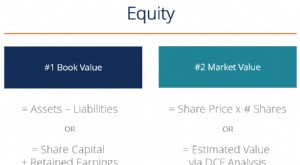 Understanding Equity: A Comprehensive Guide for Investors
In finance and accounting, equity is the value attributable to the owners of a business. The book value of equity is calculated as the difference between assetsTypes of AssetsCommon types of assets in...