
Capital Markets Explained: Investing in Equity & Debt
Capital markets are the exchange system platform that transfers capital from investors who want to employ their excess capital to businesses that require the capital to finance various projects or investments.
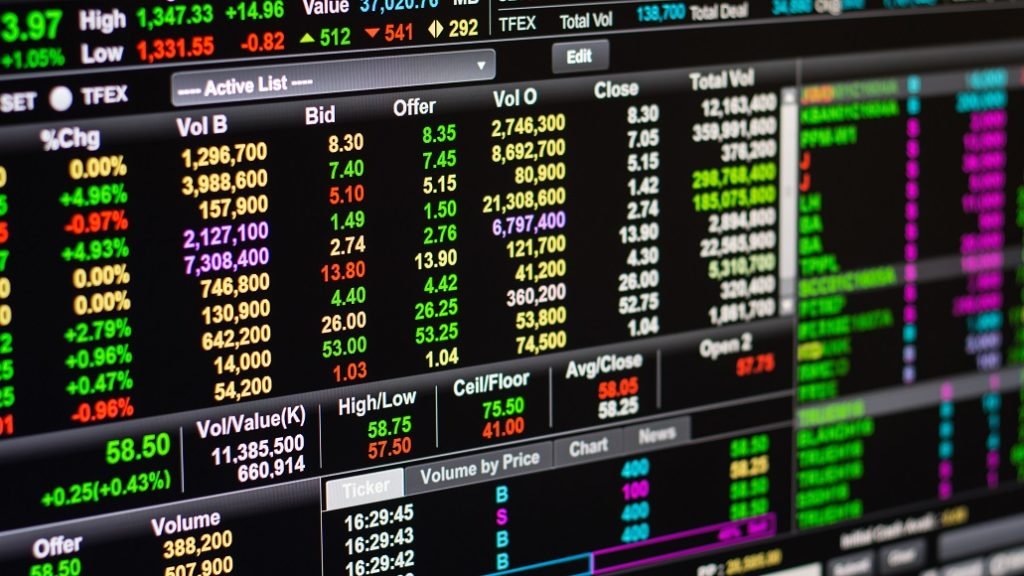
Types of Capital Markets
Capital markets primarily feature two types of securities – equity securities and debt securities. Both are forms of investments that provide investors with different returns and risks and provide users with capital with different obligations.
1. Equity Securities
Equity securities are traded on the stock market and are essentially ownership shares of a business or venture. When you own equity securities of a company, you essentially own a portion of that company and are entitled to any future earnings that the company brings in.
However, the money that you invest in equity securities is not required to be paid back by the business.
2. Debt Securities
Debt securities are traded on the bond market and are IOUs that can come in the form of bonds or notes. They essentially represent the borrowing of money that will be paid back at a later date with interest.
Interest is the required compensation that entices lenders to lend their money. The borrowers will take the money today, use it to finance their operations, and pay back the money in addition to a prescribed rate of interestInterest RateAn interest rate refers to the amount charged by a lender to a borrower for any form of debt given, generally expressed as a percentage of the principal. at a later date.
The securities can be bought and sold on two types of markets:
- The primary market is when a company directly issues the securities in exchange for capital.
- The secondary market is when the security holders trade with other investors in a transaction that is separate from the issuing company.
Other Capital Markets
Capital markets feature trading of other securities as well, including:
- Foreign exchange (forex)
- Commodities
- Derivatives
Capital Market Transactions
As mentioned earlier, transactions can take place in two types of markets. Both the primary market and the secondary market host such transactions.
As a company matures from a start-up to a larger company, it will usually require capital to finance the expansion of its operations. They will raise the required capital either through equity markets – on a stock exchange – or through debt markets.
The transactions are facilitated by investment bankers, lawyers, and accountants who ensure that the ownership transfer is legally executed and that enough investors are willing to invest their capital into the company.
After the money’s been invested, and securities are issued in exchange, investors can decide to sell their securities on the secondary market to other investors.
The transactions are facilitated either through a centralized exchange – such as the New York Stock Exchange (NYSE)New York Stock Exchange (NYSE)The New York Stock Exchange (NYSE) is the largest securities exchange in the world, hosting 82% of the S&P 500, as well as 70 of the biggest – or facilitated over-the-counter (OTC), which is a decentralized way of trading securities without a central exchange or broker.
Private Capital Markets
The information above refers to public capital markets, which receive more media coverage and attention. Publicly-traded securities can be traded to anyone, and there is full disclosure on a public company’s operations. However, there is also a large private market where securities are held privately.
There is less attention and information on private companies, making it difficult to invest in them, especially for smaller investors. In the private markets, there is less liquidity, meaning that it is more difficult to buy and sell securities.
It leads to longer time horizons for investors; in public markets, you can sell a security in a matter of seconds, but in the private markets, it can take much longer to find a buyer.
Investors are compensated for the lack of liquidity and lack of information. There are usually much greater returns from private capital markets. From the company’s perspective, they can raise capital without the scrutiny and regulation that comes with being publicly listed.
Capital Market Products
There are many different capital market products, some of which we referred to earlier:
- Equity securities
- Commodities
- Debt securities
- Foreign exchange
- Derivatives
Each of the above is traded in different markets and exchanges. Some of these are centralized, such as equity securities, foreign exchange, and some derivative securities.
Others are decentralized and traded between market participants without an exchange or a broker, such as debt securities, commodities, and other derivatives.
Derivatives can get complicated, but they represent a huge market as well. They are versatile and can be structured and created to tailor features such as risk and return for other securities.
Capital markets are a staple of the global economy. They provide an arena in which investors looking to invest saved funds in return for compensation. They can funnel their capital towards people and businesses who need the capital now in order to expand. This is the crux of how a capitalist, market-based economy grows.
Related Readings
To keep learning and developing your knowledge of financial analysis, we highly recommend the additional resources below:
- Alternative Investment Market (AIM)Alternative Investment Market (AIM)The Alternative Investment Market (AIM) was launched on 19 June 1995 as a sub-exchange market of the London Stock Exchange (LSE). The market was designed to
- London Stock Exchange (LSE)London Stock Exchange (LSE)The London Stock Exchange (LSE), which is based in London, the United Kingdom, is one of the leading stock markets in the world. Owned by the London Stock Exchange Group, the LSE was established in 1571, making it one of the oldest stock exchanges in the world
- Over-the-Counter (OTC)Over-the-Counter (OTC)Over-the-counter (OTC) is the trading of securities between two counter-parties executed outside of formal exchanges and without the supervision of an exchange regulator. OTC trading is done in over-the-counter markets (a decentralized place with no physical location), through dealer networks.
- Types of Markets – Dealers, Brokers, ExchangesTypes of Markets - Dealers, Brokers, ExchangesMarkets include brokers, dealers, and exchange markets. Each market operates under different trading mechanisms, which affect liquidity and control. The different types of markets allow for different trading characteristics, outlined in this guide
-

Understanding Capital Losses: Definition, Calculation & Examples
Capital loss is the reduction in the value of a company’s capital, i.e., investments, capital assets, etc. The loss is realized when capital assets are sold for a price lower than the original p
-

Bull & Bear Markets: Understanding Market Cycles
Bull and bear markets are, respectively, market conditions in which stock prices are by and large rising, or falling. Bull markets are often accompanied by overall good economic news — high employment
invest
- Understanding Capital Markets: An Introduction to Investing & Economic Growth
- Commodity-Linked Securities: Explained | Investment Guide
- Understanding Distressed Securities: Risks & Opportunities
- Understanding Financial Markets: A Comprehensive Guide
- Hybrid Securities: A Comprehensive Guide to Balanced Investments
- Non-Marginable Securities: Definition & Investing Implications
- Trading Securities: Definition, Types & Short-Term Investment Strategies
- Understanding Emerging Markets: Opportunities and Risks
- Securities Explained: A Beginner's Guide to Stocks, Bonds & More
-
 Capital Expenditures (CAPEX): Definition & Examples
Capital expenditures refer to funds that are used by a company for the purchase, improvement, or maintenance of long-term assetsLong Term AssetsLong term assets are assets that a company uses in its p...
-
 Held-to-Maturity Securities: Definition & Key Differences
Held to maturity securities are securities that companies purchase and intend to hold until they mature. They are unlike trading securitiesTrading SecuritiesTrading securities are securities purchased...