
Understanding Financial Markets: A Comprehensive Guide
Financial markets, from the name itself, are a type of marketplace that provides an avenue for the sale and purchase of assets such as bondsBondsBonds are fixed-income securities that are issued by corporations and governments to raise capital. The bond issuer borrows capital from the bondholder and makes fixed payments to them at a fixed (or variable) interest rate for a specified period., stocks, foreign exchange, and derivatives. Often, they are called by different names, including “Wall StreetWall StreetWall Street takes up eight blocks in Manhattan, New York. It runs east to west from Broadway to South Street, in the heart of the financial district. Representing the heart of capitalism, Wall Street is home to the New York Stock Exchange (NYSE), numerous banks, other financial institutions, and corporations.” and “capital market,” but all of them still mean one and the same thing. Simply put, businesses and investors can go to financial markets to raise money to grow their business and to make more money, respectively.

To state it more clearly, let us imagine a bank where an individual maintains a savings account. The bank can use their money and the money of other depositors to loan to other individuals and organizations and charge an interest fee.
The depositors themselves also earn and see their money grow through the interest that is paid to it. Therefore, the bank serves as a financial market that benefits both the depositors and the debtors.
Types of Financial Markets
There are so many financial markets, and every country is home to at least one, although they vary in size. Some are small while some others are internationally known, such as the New York Stock Exchange (NYSE) New York Stock Exchange (NYSE)The New York Stock Exchange (NYSE) is the largest securities exchange in the world, hosting 82% of the S&P 500, as well as 70 of the biggest that trades trillions of dollars on a daily basis. Here are some types of financial markets.
1. Stock market
The stock market trades shares of ownership of public companies. Each share comes with a price, and investors make money with the stocks when they perform well in the market. It is easy to buy stocks. The real challenge is in choosing the right stocks that will earn money for the investor.
There are various indices that investors can use to monitor how the stock market is doing, such as the Dow Jones Industrial Average (DJIA)Dow Jones Industrial Average (DJIA)The Dow Jones Industrial Average (DJIA), also referred to as "Dow Jones” or "the Dow", is one of the most widely-recognized stock market indices. and the S&P 500. When stocks are bought at a cheaper price and are sold at a higher price, the investor earns from the sale.
2. Bond market
The bond market offers opportunities for companies and the government to secure money to finance a project or investment. In a bond market, investors buy bonds from a company, and the company returns the amount of the bonds within an agreed period, plus interest.
3. Commodities market
The commodities market is where traders and investors buy and sell natural resources or commodities such as corn, oil, meat, and gold. A specific market is created for such resources because their price is unpredictable. There is a commodities futures market wherein the price of items that are to be delivered at a given future time is already identified and sealed today.
4. Derivatives market
Such a market involves derivatives or contracts whose value is based on the market value of the asset being traded. The futures mentioned above in the commodities market is an example of a derivative.
Functions of the Markets
The role of financial markets in the success and strength of an economy cannot be underestimated. Here are four important functions of financial markets:
1. Puts savings into more productive use
As mentioned in the example above, a savings account that has money in it should not just let that money sit in the vault. Thus, financial markets like banks open it up to individuals and companies that need a home loan, student loan, or business loan.
2. Determines the price of securities
Investors aim to make profits from their securities. However, unlike goods and services whose price is determined by the law of supply and demand, prices of securities are determined by financial markets.
3. Makes financial assets liquid
Buyers and sellers can decide to trade their securities anytime. They can use financial markets to sell their securities or make investments as they desire.
4. Lowers the cost of transactions
In financial markets, various types of information regarding securities can be acquired without the need to spend.
Importance of Financial Markets
There are many things that financial markets make possible, including the following:
- Financial markets provide a place where participants like investors and debtors, regardless of their size, will receive fair and proper treatment.
- They provide individuals, companies, and government organizations with access to capital.
- Financial markets help lower the unemployment rate because of the many job opportunities it offers
Additional Resources
Thank you for reading CFI’s explanation of financial markets. CFI offers the Financial Modeling & Valuation Analyst (FMVA)™Become a Certified Financial Modeling & Valuation Analyst (FMVA)®CFI's Financial Modeling and Valuation Analyst (FMVA)® certification will help you gain the confidence you need in your finance career. Enroll today! certification program for those looking to take their careers to the next level. To keep learning and advancing your career, the following resources will be helpful:
- London International Financial Futures & Options ExchangeLondon International Financial Futures and Options Exchange (LIFFE)The London International Financial Futures and Options Exchange (LIFFE) is a futures exchange located in London. Sir Brian Williamson established LIFFE on
- New York Mercantile Exchange (NYMEX)New York Mercantile Exchange (NYMEX)The New York Mercantile Exchange (NYMEX) is a commodity futures exchange located in Manhattan, New York City. It is owned by CME Group, one of the largest
- Stock MarketStock MarketThe stock market refers to public markets that exist for issuing, buying and selling stocks that trade on a stock exchange or over-the-counter. Stocks, also known as equities, represent fractional ownership in a company
- Types of Markets – Dealers, Brokers, ExchangesTypes of Markets - Dealers, Brokers, ExchangesMarkets include brokers, dealers, and exchange markets. Each market operates under different trading mechanisms, which affect liquidity and control. The different types of markets allow for different trading characteristics, outlined in this guide
-

Understanding Audit Assertions: A Comprehensive Guide
Assertions are claims that establish whether or not financial statements are true and fairly represented in the process of auditing. Importance of AssertionsAssertions are an important aspe
-

Understanding Cash Equivalents: Definition & Examples
Cash includes legal tender, bills, coins, checks received but not deposited, and checking and savings accounts. Cash equivalents are any short-term investment securities with maturity periods of 90 da
invest
- Understanding Financial Barriers: How Costs Impact Your Lifestyle
- Financial Covenants: Definition, Types & Importance
- Capital Markets Explained: Investing in Equity & Debt
- Robo-Advisors: A Comprehensive Guide to Automated Investment Management
- Spot Market Explained: Instant Delivery & Cash Transactions
- Understanding Financial Assets: Definitions & Types
- Understanding Financial Statements: A Comprehensive Guide
- Understanding Emerging Markets: Opportunities and Risks
- Understanding Financial Services: A Comprehensive Guide
-
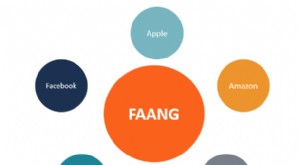 Understanding FAANG Stocks: A Guide to Tech Giants
FAANG stocks are the publicly tradedPrivate vs Public CompanyThe main difference between a private vs public company is that the shares of a public company are traded on a stock exchange, while a priv...
-
 Money Market Funds: A Comprehensive Guide to Liquidity & Safety
Money market funds are open-ended fixed income mutual funds that invest in short-term debt securities, such as Treasury billsTreasury Bills (T-Bills)Treasury Bills (or T-Bills for short) are a short-t...