
Understanding Initial Public Offerings (IPOs): A Comprehensive Guide
Flotation is the process of issuing and selling shares to public investors. In other words, it is when a company goes public and issues new shares to raise capital. It is a term commonly used in the United Kingdom.
Floating a company allows it to raise capital for the purpose of acquiring external financing for equipment, research and development (R&D)Research and Development (R&D)Research and Development (R&D) is a process by which a company obtains new knowledge and uses it to improve existing products and introduce, or new projects or to expand the business.

There are various methods to float a company. Depending on its objectives and business needs, each company will need to determine which flotation method is the most feasible. Some methods of floating a company will sell securities on a public stock exchange, while other methods will offer securities to private investors.
Methods of Flotation
1. Initial Public Offering (IPO)
One way to float a company is to issue an initial public offering (IPO), where a private company will go public by issuing shares for the first time. Floating a company using an IPO typically involves an investment bank that undertakes the underwriting process and determines the specific details of the IPO, such as the share price and the number of shares to be issued.
Additionally, the investment bank will develop the investment prospectusProspectusA prospectus is a legal disclosure document that companies are required to file with the Securities and Exchange Commission (SEC). The document provides information about the company, its management team, recent financial performance, and other related information that investors would like to know. required for the IPO and go on a roadshow to promote the new stock offering to potential investors.
2. Offer through Sale
In addition to an IPO, a private company can pursue flotation by offering securities for sale using an intermediary, such as a stockbroker. In this case, the issuance of new shares is not available to the public. Usually, a company that pursues such a flotation method is in its early stages of operations, or it wants to mitigate from issuing shares to the public due to high flotation costs.
3. Rights Issue
A company can also be floated by issuing new shares that are available only to a group of existing investors, who are given the opportunity to purchase new shares before the shares officially get offered to the public.
4. Private Placement
A private placement is also another way to float a company. Under the private placement, an intermediary would purchase securities from a company at a predetermined price and sell these securities to certain individuals and institutional investors. Again, it helps a company avoid incurring high flotation costs and raise more capital quicker than pursuing an IPO.
Benefits of Flotation
- Instead of using retained earningsRetained EarningsThe Retained Earnings formula represents all accumulated net income netted by all dividends paid to shareholders. Retained Earnings are part, a company can raise more capital from external sources by issuing new shares to fund capital projects, mergers/acquisitions, and other costs.
- An IPO can be used to promote and raise more awareness about a company’s brand in order to attract institutional investors.
- It establishes an exit strategy for venture capitalists to realize profits from their investments.
Drawbacks of Flotation
- A number of flotation costs are associated with issuing new shares. For example, there are costs incurred with legal fees, underwriting fees, and other administrative expenses.
- The company’s share price will be subjected to market fluctuations and other macroeconomic factors.
- It is required that public companies disclose their audited financial statements and maintain investor relationsRole of Investor RelationsInvestor Relations (IR) combines finance, communication, and marketing to control information between a company, investors & stakeholders. The IR role is to enable the company to achieve the optimum share price that reflects the fundamental value of the company. Additionally, there is more pressure for companies to increase the transparency of their business operations.
- Issuing more shares will diversify ownership of the company (loss of control).
- Once a company goes public, the company will be subject to regulatory constraints and management restrictions in order to comply with the securities commission.
Additional Resources
CFI is the official provider of the Capital Markets & Securities Analyst (CMSA)®Program Page - CMSAEnroll in CFI's CMSA® program and become a certified Capital Markets &Securities Analyst. Advance your career with our certification programs and courses. certification program, designed to transform anyone into a world-class financial analyst.
Additionally, CFI also offers a course in Introduction to Equity Markets for you to learn about the fundamentals of equity securities, stock exchanges, and valuation. Also, check out the following resources as well:
- Public FilingsPublic FilingsFind public company filings. CFI has organized all the main sources of public company filings such as 10-K, 10-Q, S-1,13D, EDGAR, SEDAR, and other databases. These sources are vital for financial analysts performing financial modeling and valuation work.
- Capital Raising ProcessCapital Raising ProcessThis article is intended to provide readers with a deeper understanding of how the capital raising process works and happens in the industry today. For more information on capital raising and different types of commitments made by the underwriter, please see our underwriting overview.
- Equity FinancingEquity FinancingEquity financing refers to the sale of company shares in order to raise capital. Investors who purchase the shares are also purchasing
- IPO ProcessIPO ProcessThe IPO Process is where a private company issues new and/or existing securities to the public for the first time. The 5 steps discussed in detail
-

OIBDA Explained: Understanding Operating Income Before Depreciation & Amortization
OIBDA is an abbreviation for Operating Income Before Depreciation and Amortization. It is a non-GAAP measure of the financial performance of a company during a specific period of time while excluding
-

Understanding Vouchers: A Guide to Accounts Payable Documents
A voucher is an internal document within a company that is issued by the accounts payable Accounts PayableAccounts payable is a liability incurred when an organization receives goods or services from
invest
- Authorized Shares: Understanding a Company's Issuance Limit
- Understanding Voting Shares: Your Right to Participate in Company Decisions
- Understanding Stock Dilution: Causes, Effects & Prevention
- Free Float Explained: Understanding Publicly Traded Shares
- Understanding Net-Net: A Financial Health Indicator
- Retired Shares: Definition, Impact & Accounting Methods
- Full Ratchet Options: A Comprehensive Explanation
- Greenmail Explained: Tactics, Risks & Implications
- Treasury Stock: Definition, Purpose, and Implications
-
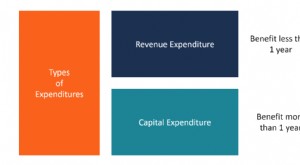 Understanding Expenditures: Definition and Types
An expenditure represents a payment with either cash or credit to purchase goods or services. An expenditure is recorded at a single point in time (the time of purchase), compared to an expenseAccrued...
-
 Goodwill in Accounting: Definition & Value
In accounting, goodwill is an intangible assetIntangible AssetsAccording to the IFRS, intangible assets are identifiable, non-monetary assets without physical substance. Like all assets, intangible as...