
High-Speed Data Feeds: Real-Time Market Data for HFT & Algorithmic Trading
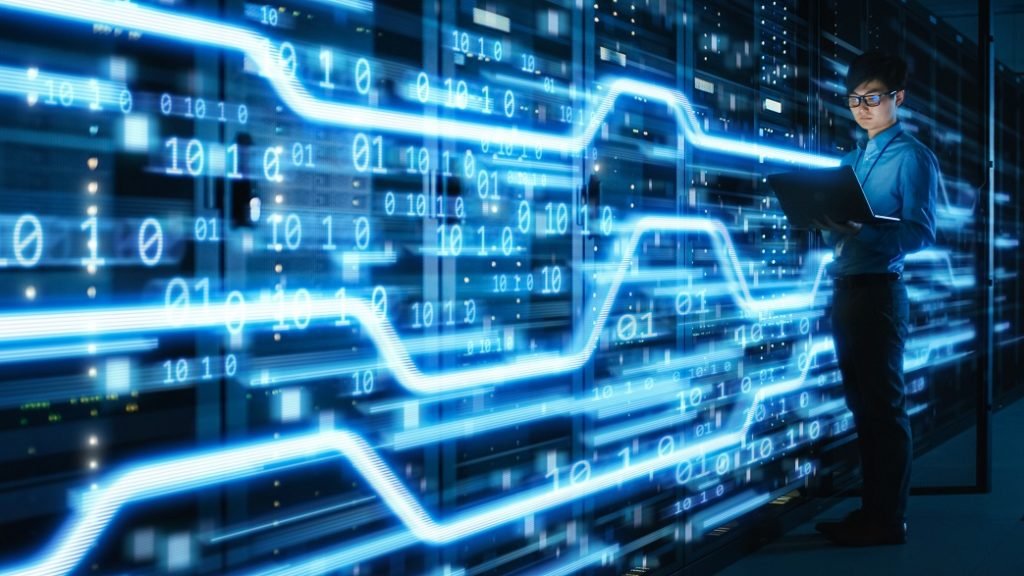
A high-speed data feed refers to a fast real-time market data-providing service. It facilitates high-frequency tradingHigh-Frequency Trading (HFT)High-frequency trading (HFT) is algorithmic trading characterized by high speed trade execution, an extremely large number of transactions, and algorithmic trading. Taking advantage of fast-growing information technology and strong computing power, a high-speed data feed can execute trades and update data several times faster than the traditional data feed does. It leads to both benefits and concerns for the market.
Summary
- A high-speed data feed refers to providing fast real-time market data with ultra-high update frequency and low latency.
- High-speed data feeds provide advantages to high-frequency trading and algorithmic trading strategies, which are highly latency-sensitive.
- One of the criticisms against high-speed data feeds is the unfair access to data. Vendors usually address the issue by adopting a fair access policy and by simply charging the same fee that is charged for their ordinary data feed.
Understanding High-Speed Data Feeds
A high-speed data feed is a service that market data vendors provide to investors or traders who are particularly sensitive to data latency. Feeds can update real-time market data in a fraction of a second with ultra-low latency.
Providing a high-speed data feed requires efficient network routes and special hardware. Thus, some data vendors offer high-speed data feeds at a higher price than the ordinary data feed to cover up the higher costs. However, some charge the same fee to ensure fair access to the data for all participants.
A high-speed data feed does not add extra value to investors with longer holding horizons and is less subject to immediate market movements. However, it benefits high-frequency traders who can make more profits with faster data access and thus higher execution speeds.
High-Frequency Trading and Algorithmic Trading
Algorithmic trading relies on complex mathematical models and pre-programmed automated trading instructions. It can be used in arbitrageArbitrageArbitrage is the strategy of taking advantage of price differences in different markets for the same asset. For it to take place, there must be a situation of at least two equivalent assets with differing prices. In essence, arbitrage is a situation that a trader can profit from, order execution, and trend trading. High-frequency trading, as a subset of algorithmic trading, requires strong computer programs to make thousands of transactions within seconds. The computer program analyzes real-time market data – such as the prices, volumes, and bid-ask spreads – and makes orders based on the market conditions.
As the trading decisions are made purely based on computer data analysis and executed within a fraction of a second, high-frequency trading and algorithmic trading strategies are highly latency-sensitive. Traders with higher execution speeds are typically more profitable than the ones with slower execution speeds.
Being able to receive real-time market data that can capture the market condition timely and accurately has been particularly important to these traders. High-speed data feed supports them with faster and more reliable market data through a higher update frequency.
High-speed data feeds are criticized for providing an unfair information advantage to high-frequency trading and algorithmic trading over other investors, who lag in receiving market data. However, it can also improve the market efficiency, as high-frequency trading can price more efficiently and add liquidity to the market. Retail and institutional investorsInstitutional InvestorAn institutional investor is a legal entity that accumulates the funds of numerous investors (which may be private investors or other legal entities) to can benefit from lower trading costs on spreads in a more efficient market.
Examples of Vendors
Thomson Reuters launched its high-speed data feed program in 2016. It provides clients with ten times faster price updates on its foreign exchange matching platform. The company’s Matching Binary Multicast Feed program is able to improve the updating frequency of real-time market data to as little as 25 milliseconds, which means 40 times per second.
Another example of a high-speed data feed provider is EBS BrokerTec. It is also a major competitor of Thomson Reuters in the electronic trading of currenciesFX Rates - CurrenciesThe Table below has FX Rates for major Currencies, as compared to the USD. The USD is the most widely traded currency in the world, and is involved in over 81% of all forex trading. The USD is popularly referred to as the Greenback, due to its bill colour.. Its EBS Live Ultra service provides high-speed data feed to banks as well as high-frequency and algorithmic trading firms. The updating frequency is five times higher than its ordinary data feed service.
In response to the criticism that high-speed data feed leads to an unfair advantage to the large high-frequency and algorithmic trading firms who can afford the higher data cost, many data vendors employ a fair access policy. Some vendors just simply set the same price for their high-speed data feeds as for their ordinary data feeds, making them more accessible to all.
Other Data Feed Considerations
Besides the speed and latency of data, there are other factors that investors and traders should consider when choosing their data feed service. One is data customization. The higher the customization level, the more filters or operational controls can be applied to the market data to meet the unique needs.
The other one is market depth, which refers to the volume of quotes. Data feeds with higher customization and market depth level are charged with higher fees. Data users should carefully measure their needs and costs based on these factors.
Learn More
CFI offers the Capital Markets & Securities Analyst (CMSA)® Program Page - CMSAEnroll in CFI's CMSA® program and become a certified Capital Markets &Securities Analyst. Advance your career with our certification programs and courses.certification program for those looking to take their careers to the next level. To keep learning and developing your knowledge base, please explore the additional relevant resources below:
- Algorithmic TradingAlgorithmic TradingAlgorithmic trading strategies involve making trading decisions based on pre-set rules that are programmed into a computer.
- Bloomberg TerminalBloomberg TerminalThe Bloomberg Terminal (aka Bloomberg Professional Services) connects finance professionals to a dynamic network of information, people, and ideas. At the core of this network is the ability to deliver real-time data to finance professionals around the world.
- Flash CrashesFlash CrashesFlash crashes refer to a scenario where the price of bonds, stocks, or commodities suddenly plunges but then quickly recovers. It is called a flash, as the market will crash suddenly but then prices will almost immediately rebound.
- Momentum InvestingMomentum InvestingMomentum investing is an investment strategy aimed at purchasing securities that have been showing an upward price trend or short-selling securities that
-
Head Trader: Definition, Role & Responsibilities
A head trader refers to either the head of an independent trading company or the head of the trading department at a registered securities firm or other financial institution that conducts trading in
-
High-Frequency Trading (HFT): A Comprehensive Overview
High-frequency trading (HFT) is algorithmic trading characterized by high-speed trade execution, an extremely large number of transactions, and a very short-term investment horizon. HFT leverages spec
invest
- CFD Trading Explained: A Comprehensive Guide for Investors
- Day Trading Explained: Strategies, Risks & How It Works
- Proprietary Trading: A Comprehensive Guide for Investors
- Quantitative Trading: A Deep Dive into Models & Analysis
- Spread Trading: A Comprehensive Guide to Relative Value Trading
- Trading Authorization: Empowering Your Broker & Account Security
- Trading Channels: Understanding Uptrends & Downtrends
- Trading Plan: A Comprehensive Guide to Successful Trading
- Understanding Trading Sessions: Hours & Global Markets
-
 Extended Trading Hours: A Comprehensive Guide for Investors
Extended trading (or electronic trading hours) is trading conducted by electronic networks either before or after the trading day of a stock exchange, i.e., pre-market trading or after-hours tradingAf...
-
 Floor Trader (FT): Definition, Role & Strategies
A floor trader (FT) is an individual who conducts transactions on the exchange floor for his/her own account. Usually, a floor trader trades in derivativesDerivativesDerivatives are financial con...