
Lock-Up Agreements: Understanding Insider Restrictions During IPOs
A lock-up agreement refers to a legally binding contract made between the insiders and underwriters of a company during its initial public offering (IPO)Initial Public Offering (IPO)An Initial Public Offering (IPO) is the first sale of stocks issued by a company to the public. Prior to an IPO, a company is considered a private company, usually with a small number of investors (founders, friends, family, and business investors such as venture capitalists or angel investors). Learn what an IPO is that prohibits them from selling any of their shares for a set period of time. These individuals may include venture capitalists, company directorsBoard of DirectorsA board of directors is a panel of people elected to represent shareholders. Every public company is required to install a board of directors., managers, executives, employees, and their family and friends.

A lock-up period normally lasts 180 days, or six months, but may last anywhere from four months to a year. Since there are usually no federal lawsSecurities and Exchange Commission (SEC)The US Securities and Exchange Commission, or SEC, is an independent agency of the US federal government that is responsible for implementing federal securities laws and proposing securities rules. It is also in charge of maintaining the securities industry and stock and options exchanges governing lock-up agreements, the decision on the duration is usually made by the underwriter.
Importance of Lock-Up Agreements
Before a company is allowed to go public, underwriters will require insiders to sign a lock-up agreement. The purpose is to maintain the stability of the company’s stocks during the first few months after the offering. The practice provides an orderly market in the company shares following the IPO. It allows enough time for the market to find out the real worth of the stock. It also ensures that the insiders carry on acting in line with the firm’s goals.
During the sale of a controlling stake, the company acquirer at times needs to agree to a lock-up clause. It forbids the resale of the assets or stake for the duration of the agreed lock-up period. The move is intended to maintain price stability for other stakeholders.
Companies under hostile takeoversHostile TakeoverA hostile takeover, in mergers and acquisitions (M&A), is the acquisition of a target company by another company (referred to as the acquirer) by going directly to the target company’s shareholders, either by making a tender offer or through a proxy vote. The difference between a hostile and a friendly sometimes explore a similar route. The restricted or “locked” stakeholders are only allowed to sell their stocks after the end of the lock-up period. This helps prevent the opportunistic behavior of some insiders that would want to sell the shares at a lower price.
Impact of Lock-up Agreements on Investors
Lock-up agreements are intended to provide investors with protection. The lock-up agreement tries to avoid a scenario where a group of insiders make public an overvalued company and dump it on investors, running away with the profits. Individuals with plans to invest in the company need to determine the time that the lock-up period will end. This because insiders selling some of their shares may initiate downward pressure on the company’s stock.
The lock-up agreement may include additional clauses that limit the number of shares that can be sold during a specified time period after the expiration of the lock-up agreement. Such clauses help prevent a significant decline in share prices that may ensue from a huge increase in supply.
Investors need to know if there is a lock-up agreement since there is a high probability of a stock price drop when the lock-up agreement expires.
Key Takeaways
Underwriters and insiders in IPOs agree on lock-ups to prevent insiders from opportunistically selling their stock within a given time window.
The lock-up agreement helps to ease volatility pressure when the company’s stock is in its first few months. It is only after the expiration of the lock-up period that the insiders are free to sell.
Lock-up agreements are of concern to investors since the terms can influence the stock’s price. After the expiration of the lock-ups, restricted people are allowed to sell their stock. When a significant number of insiders exit, the result can be a drastic decline in the share price.
Additional Resources
CFI is the official provider of the global Financial Modeling & Valuation Analyst (FMVA)™Become a Certified Financial Modeling & Valuation Analyst (FMVA)®CFI's Financial Modeling and Valuation Analyst (FMVA)® certification will help you gain the confidence you need in your finance career. Enroll today! certification program, designed to help anyone become a world-class financial analyst. To keep advancing your career, the additional resources below will be useful:
- Investing: A Beginner’s GuideInvesting: A Beginner's GuideCFI's Investing for Beginners guide will teach you the basics of investing and how to get started. Learn about different strategies and techniques for trading
- FAANG StocksFAANG StocksFAANG stocks are the publicly traded stocks of U.S. technology giants Facebook, Amazon, Apple, Netflix, and Google. They are among the best-
- Sale and Purchase AgreementSale and Purchase AgreementThe Sale and Purchase Agreement (SPA) represents the outcome of key commercial and pricing negotiations. In essence, it sets out the agreed elements of the deal, includes a number of important protections to all the parties involved and provides the legal framework to complete the sale of a property.
- Trade Order TimingTrade Order Timing - TradingTrade order timing refers to the shelf-life of a specific trade order. The most common types of trade order timing are market orders, GTC orders,
-

Outsourcing: A Comprehensive Guide to Benefits & Strategy
Outsourcing is a strategic decisionCorporate StrategyCorporate Strategy focuses on how to manage resources, risk and return across a firm, as opposed to looking at competitive advantages in business s
-
Ramp-Up: Definition, Benefits & How to Achieve It
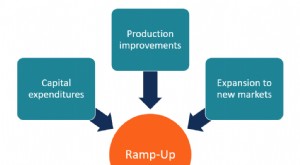
In business, ramp-up is a term that describes a significant increase in the output of a company’s products or services. Essentially, ramp-up implies bringing the company’s capacity utiliza
invest
- Acquirer Definition: Understanding Corporate Acquisitions
- Understanding Clawbacks: Protecting Stakeholders from Failed Performance
- Understanding Financial Gearing: Debt & Leverage Explained
- Keepwell Agreement: Definition, Purpose & Benefits
- Leverage in Finance: Strategies, Types & Risks
- Parent Company Explained: Definition, Control & Examples
- Subscription Agreement: Definition, Details & Importance
- Understanding Lock-Up Periods After an IPO: A Comprehensive Guide
- Understanding Net-Net: A Financial Health Indicator
-
 Holding Companies: Definition, Purpose & How They Work
A holding company is a company that doesn’t conduct any operations, ventures, or other active tasks for itself. Instead, it exists for the purpose of owning assets. In other words, the company d...
-
 Kaizen: Understanding Continuous Improvement for Business
Kaizen is a Japanese word (改善) that means “improvement” or “to improve.” When applied to the world of business, kaizen refers to every action, operation, or rule ...