
LIFFE: Understanding the London International Financial Futures Exchange
The London International Financial Futures and Options Exchange (LIFFE) is a futures exchange located in London. Sir Brian Williamson established LIFFE on September 30, 1982 to take advantage of the UK’s removal of currency controls in 1979.
Originally located in the historic Royal Exchange building near Bank, it later transferred to Cannon Bridge in 1991. Initially, it offered futures contracts and optionsOptions Case Study – Long CallTo study the complex nature and interactions between options and the underlying asset, we present an options case study. It's much easier to only. However, after merging with the London Traded Options Market in 1993, it started offering equity options as well. It then changed its name to the London International Financial Futures and Options Exchange.
After LIFFE’s merger with the London Commodity Exchange in 1996, a range of soft and agricultural commodity contractsGuide to Commodity Trading SecretsSuccessful commodity traders know the commodity trading secrets and distinguish between trading different types of financial markets. Trading commodities is different from trading stocks. was also added to the product list. By 1996, LIFFE was considered one of the largest futures exchanges in Europe. It was followed by other European exchanges, such as the MATIF (based in Paris) and the Deutsche Terminboerse (based in Frankfurt).
Originally, one of the most widely-traded products on the LIFFE was a futures contract on Bunds, a 10-year German Government Bond. The DTB offered a similar product but since it was an electronic exchange, it charged lower fees. Soon, DTB’s market share grew further, leaving LIFFE with only 10%.
Euronext took over LIFFE in 2002, and thus joined the exchanges of Amsterdam, Brussels, Paris, and Lisbon. Euronext was, in turn, taken over by the New York Stock ExchangeStock MarketThe stock market refers to public markets that exist for issuing, buying and selling stocks that trade on a stock exchange or over-the-counter. Stocks, also known as equities, represent fractional ownership in a company in 2007 to form NYSE Euronext. The very purpose of the deal was to take control over the LIFFE. In 2013, the Intercontinental Exchange purchased NYSE Euronext, with the principal motive of acquiring the LIFFE.
LIFFE Trading Mechanisms
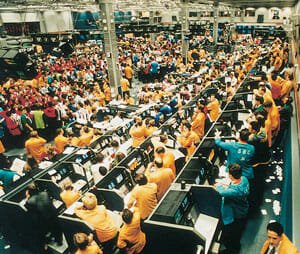
The London International Financial Futures and Options Exchange was originally structured after the Chicago Board of Trade and the Chicago Mercantile Exchange, with trading on an open outcry basis, wherein traders meet on the trading floor or the “pit” to conduct the transactions.
#1 Electronic Trading
After losing a substantial amount of market share for its main product, Bunds futures contracts, the LIFFE decided to develop an electronic trading platform. Initially, it put up an electronic trading platform known as Automated Pit Trading that was only used for after-hours trading. Now, the LIFFE uses a new electronic trading platform known as LIFFE CONNECT. On November 24, 2000, the last three of the once 26 open outcry pits were permanently closed.
Through LIFFE CONNECT, the exchange was able to reach out to customers from around 25 countries. Euronext CEO Jean-Francois Theodore claimed that it was the scope of the exchange’s business as well as its trading technology that attracted them to acquire it. However, many theorists still believe that it was the delay in embracing electronic trading technology that led the exchange to lose its independence.
#2 Arbitrage
One of the reasons that made the LIFFE competitive against its electronic counterparts, such as the DTB, was the practice of arbitrage. With the Bunds contracts being traded at both LIFFE and DTB, the opportunity for arbitrage was open. Arbitrage was frequently conducted. However, due to complex prep courses, arbitrage trading was restricted to institutional participants in the market only.
Other Resources
CFI offers the Commercial Banking & Credit Analyst (CBCA)™Program Page - CBCAGet CFI's CBCA™ certification and become a Commercial Banking & Credit Analyst. Enroll and advance your career with our certification programs and courses. certification program for those looking to take their careers to the next level. To keep learning and advancing your career, the following resources will be helpful:
- Types of Markets – Dealers, Brokers, ExchangesTypes of Markets - Dealers, Brokers, ExchangesMarkets include brokers, dealers, and exchange markets. Each market operates under different trading mechanisms, which affect liquidity and control. The different types of markets allow for different trading characteristics, outlined in this guide
- Call OptionsCall OptionA call option, commonly referred to as a "call," is a form of a derivatives contract that gives the call option buyer the right, but not the obligation, to buy a stock or other financial instrument at a specific price - the strike price of the option - within a specified time frame.
- Long and Short PositionsLong and Short PositionsIn investing, long and short positions represent directional bets by investors that a security will either go up (when long) or down (when short). In the trading of assets, an investor can take two types of positions: long and short. An investor can either buy an asset (going long), or sell it (going short).
- New York Mercantile Exchange New York Mercantile Exchange (NYMEX)The New York Mercantile Exchange (NYMEX) is a commodity futures exchange located in Manhattan, New York City. It is owned by CME Group, one of the largest
-
American Stock Exchange (AMEX): History, Overview & Key Facts
The American Stock Exchange (AMEX) started operations in 1908 as the New York Curb Market Agency. The AMEX was originally composed of traders and brokers that would get together to buy and sell stocks
-

Options Trading: A Beginner's Guide to Strategies & Risks
When it comes to investing, you’re not limited to simply buying a stock or asset at its current market price. Another way to invest is through options trading
invest
- Understanding the Asian Financial Crisis: Causes, Impact, and Lessons Learned
- Hong Kong Exchanges and Clearing (HKEX): A Comprehensive Overview
- ISDA: Understanding the International Derivatives Trade Association
- London Stock Exchange (LSE): History, Overview & Key Facts
- NCDEX: India's Leading Agricultural Commodity Exchange | Overview
- NSE India: Understanding the National Stock Exchange - History & Significance
- NEX Exchange: Understanding Canada's Alternative Trading Platform
- SEBI: Understanding India's Securities and Exchange Board
- SEC Explained: Your Guide to the U.S. Securities Regulator
-
Day Trading Futures: Benefits, Risks & Leverage Explained
Day trading futures is a process that will allow you to buy and sell futures contracts on commodities or stocks. Day trading futures allows you to place a bet on what you believe the future pric...
-
Stocks, ETFs, Options & Futures: A Beginner's Guide to Investing
Even the best at online stock trading admit that learning all the ins and outs of the industry makes for a daunting task. Entry into the field involves mastery over its often opaque jargon and complex...