
SEC Explained: Your Guide to the U.S. Securities Regulator
The US Securities and Exchange Commission, or SEC, is an independent agency of the US federal government that is responsible for implementing federal securities lawsSarbanes Oxley ActThe Sarbanes-Oxley Act is a U.S. federal law that aimed to protect investors by making corporate disclosures more reliable and accurate. and proposing securities rules. It is also in charge of maintaining the securities industry and stock and options exchangesTypes of Markets - Dealers, Brokers, ExchangesMarkets include brokers, dealers, and exchange markets. Each market operates under different trading mechanisms, which affect liquidity and control. The different types of markets allow for different trading characteristics, outlined in this guide, as well as regulating electronic securities markets and other activities in the country.
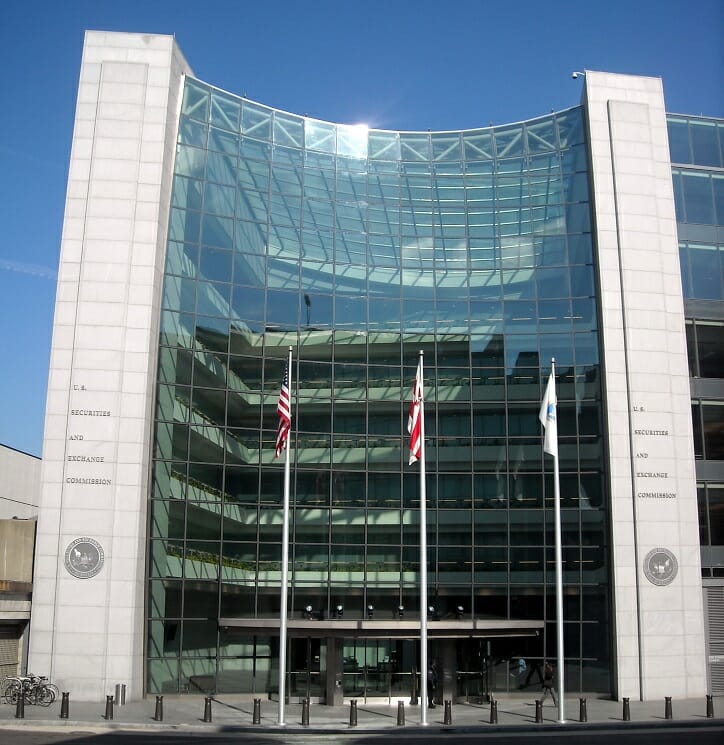
With headquarters in Washington, D.C. and operating in 11 regional offices throughout the US, the SEC aims to provide protection to investorsInvesting: A Beginner's GuideCFI's Investing for Beginners guide will teach you the basics of investing and how to get started. Learn about different strategies and techniques for trading and ensure that markets are fair, efficient, and in order. It also strives to create a market environment that people can trust.
History of the Securities and Exchange Commission
Before the creation of the US Securities and Exchange Commission, there were blue sky laws that were enforced at the state level. They were in charge of regulating the sale of securities to protect the investing public against fraud. However, said laws were found to be ineffective.
Congress then passed the Securities Act of 1933The 1933 Securities ActThe 1933 Securities Act was the first major federal securities law passed following the stock market crash of 1929. The law is also referred to as the Truth in Securities Act, the Federal Securities Act, or the 1933 Act. It was enacted on May 27, 1933 during the Great Depression. ...the law was aimed at correcting some of the wrongdoings to regulate interstate sale of securities at the federal level, while the Securities Exchange Act of 1934 regulates the sale of securities in the secondary market. The SEC was created by Section 4 of the Securities Exchange Act of 1934, also called the Exchange Act or the 1934 Act, to enforce federal securities laws.
Organizational Setup of the SEC
The Securities and Exchange Commission comprises five Commissioners who are appointed by the US President. One of them is designated as the Chairman of the Commission. The law dictates that no more than three Commissioners may come from the same political party, to ensure non-partisanship.
Here are the five divisions within the SEC:
1. Division of Corporation Finance
This division is responsible for helping the Securities and Exchange Commission in performing its role of overseeing the corporate disclosure of important information to investors. When stock is sold, a corporation is required to adhere to regulations related to disclosure. The Division of Corporation Finance is tasked to review on a regular basis disclosure documents that are filed by corporations. It also helps interpret the rules of the SEC. It likewise gives recommendations related to new adoption rules to the SEC.
2. Division of Trading and Markets
This division assists the SEC in ensuring that markets are fair, orderly, and efficient. It oversees the day-to-day activities of major securities market participants, securities firms, securities exchanges, self-regulatory organizations, clearing agencies, transfer agents, credit rating agencies, as well as securities information processors.
3. Division of Investment Management
The division of Investment Management helps the Securities and Exchange Commission in executing its role of protecting investors and promoting capital formation. It oversees and regulates the country’s investment management industry. It ensures that disclosures about investments such as mutual funds and exchange-traded funds are useful to retail customers. The division also ensures that the regulatory costs are not too high.
4. Division of Enforcement
The division of Enforcement is responsible for the enforcement of securities laws. It gives recommendations on the commencement of investigations of securities law violations. It is also in charge of working closely with law enforcement agencies to take on criminal cases.
5. Division of Economic and Risk Analysis
This division is in charge of protecting investors and keeping markets fair, orderly, and efficient. It also provides economic analyses and data analytics, and interacts with almost all divisions and offices within the Commission.
Related Readings
Thank you for reading CFI’s explanation of the Securities and Exchange Commission. CFI offers the Financial Modeling & Valuation Analyst (FMVA)™Become a Certified Financial Modeling & Valuation Analyst (FMVA)®CFI's Financial Modeling and Valuation Analyst (FMVA)® certification will help you gain the confidence you need in your finance career. Enroll today! certification program for those looking to take their careers to the next level. To keep learning and advancing your career, the following resources will be helpful:
- 2010 Flash Crash2010 Flash CrashThe 2010 Flash Crash is the market crash that occurred on May 6, 2010. During the 2010 crash, leading US stock indices, including the Dow
- Ethical vs. Legal StandardsEthical vs. Legal StandardsEthical vs. legal standards: what's the difference? Making decisions that are both ethical and respectful of laws is something that investment professionals
- Fraud Red FlagsFraud Red FlagsFraud red flags refer to undesirable situations or conditions that consistently contribute to fraud, waste, or abuse of resources.
- Types of SEC FilingsTypes of SEC FilingsThe US SEC makes it mandatory for publicly traded companies to submit different types of SEC filings, forms include 10-K, 10-Q, S-1, S-4, see examples. If you are a serious investor or finance professional, knowing and being able to interpret the various types of SEC filings will help you in making informed investment decisions.
-

Depository Trust Company (DTC): Central Securities Depository Explained
The Depository Trust Company (DTC), a US-based corporation, is a central securities depository accepting deposits from over 65 countries. It provides book-entry and depository services, transfer and p
-
London Stock Exchange (LSE): History, Overview & Key Facts
The London Stock Exchange (LSE), which is based in London, the United Kingdom, is one of the leading stock markets in the world. Owned by the London Stock Exchange Group, the LSE was established in 15
invest
- Australian Securities Exchange (ASX): Your Guide to Australia's Stock Market
- DTCC: Understanding the Depository Trust & Clearing Corporation
- Eurex Exchange: European Derivatives Market Overview
- Hong Kong Exchanges and Clearing (HKEX): A Comprehensive Overview
- Japan Exchange Group (JPX): Overview & Financial Markets
- NCDEX: India's Leading Agricultural Commodity Exchange | Overview
- SEC Form S-1: Your Guide to IPO Registration
- SEBI: Understanding India's Securities and Exchange Board
- 1933 Securities Act: Protecting Investors & Market Integrity
-
 Understanding the Secondary Market: A Guide for Investors
The secondary market is where investors buy and sell securities from other investors (think of stock exchangesStock MarketThe stock market refers to public markets that exist for issuing, buying and s...
-
 Series 7 Exam: Your Comprehensive Guide for Securities Licenses
The Series 7 exam is formally known as the General Securities Representative Examination, and it is administered by the Financial Industry Regulatory Authority (FINRA). In the United States, financial...