
Understanding the Equity Market: A Comprehensive Guide
An equity market is a hub in which shares of companies are issued and traded. The market comes in the form of an exchange – which facilitates the trade between buyers and sellers – or over-the-counter (OTC) in which buyers and sellers find each other.
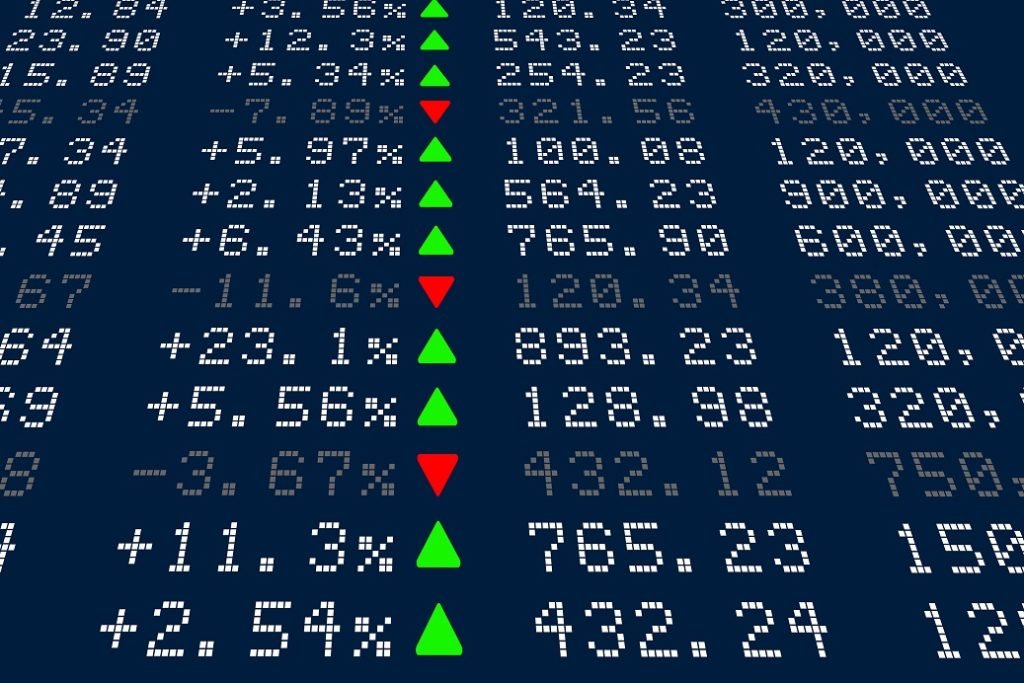
The equity market is also referred to as the stock market and is one of the most important leading indicators of the market economy. It also plays a pivotal role in supporting a market-based economy since it is the bridge between providing capital to companies who require it and providing investments for investors who are seeking a return on their investment.
Understanding Equity Markets
As mentioned, equity markets are the hub that connects buyers and sellers of equities. Equity securities are initially listed on the markets through an initial public offering (IPO)Initial Public Offering (IPO)An Initial Public Offering (IPO) is the first sale of stocks issued by a company to the public. Prior to an IPO, a company is considered a private company, usually with a small number of investors (founders, friends, family, and business investors such as venture capitalists or angel investors). Learn what an IPO is and are subsequently traded among people on the secondary market.
The trading can be done either publicly – which are listed on public exchanges – or privately, where the issuances and trades are initiated through dealers instead of a centralized exchange. The use of dealers in the private market is the defining feature of OTC markets.
History of Equity Markets
Equity markets come with long-entrenched histories, with debt issuances dating back to the 1300s. The first stock market was established in Belgium in 1531. The exchange dealt primarily with promissory notesPromissory NoteA promissory note refers to a financial instrument that includes a written promise from the issuer to pay a second party – the payee – and bonds, but not with actual stocks.
Throughout the 1600s, the British, Dutch, and French governments gave charters to companies that included ‘East India’ in their monikers. The countries would take stakes in the profits from India and Asia by funding sea voyages that would bring back goods – although it was risky due to the abundance of pirates, poor weather, and faulty navigation.
Instead of bearing all the risk for themselves, ship owners would seek out investors to help fund voyages, and in return, provide investors with a percentage of the profits should the voyage be successful.
They were the earliest forms of limited liability companies (LLCs)Limited Liability Company (LLC)A limited liability company (LLC) is a business structure for private companies in the United States, one that combines aspects of partnerships and corp that would last a single voyage. Shipowners could send their ships without bearing the risk for themselves, and investors could diversify their risk by investing in multiple different ships and voyages.
The East India companies eventually began paying dividends from the proceeds collected from multiple voyages instead of creating single-time LLCs for each voyage. It was the first form of joint-stock companies in which the companies could demand more capital, build larger fleets, and provide larger returns for investors.
Top Equity Exchanges
Some of the most well-known and largest equity markets are:
- New York Stock Exchange (NYSE) – United States
- Nasdaq (NASDAQ) – United States
- Japan Exchange Group (JPX) – Japan
- London Stock Exchange (LSE)London Stock Exchange (LSE)The London Stock Exchange (LSE), which is based in London, the United Kingdom, is one of the leading stock markets in the world. Owned by the London Stock Exchange Group, the LSE was established in 1571, making it one of the oldest stock exchanges in the world – United Kingdom
- Shanghai Stock Exchange (SSE) – China
- Hong Kong Stock Exchange (HKEX) – Hong Kong
- Euronext – European Union
- Toronto Stock Exchange – Canada
- Bombay Stock Exchange – India
Importance of Equity Markets
Equity markets play an important role in a market-based economy. They provide capital raising, liquidity, and investment options.
These important functions allow our economy to grow continuously, and they are the hallmark of capitalism.
1. Capital Raising
Equity markets facilitate the raising of equity capital. This is important for entrepreneurs who have a business idea but do not have the capital on-hand to start the business themselves.
Banks are debt investors who are unlikely to provide a loan to these businesses without collateral or an abnormally high return. Therefore, it is effective for these entrepreneurs to give up a stake in their business in exchange for the capital provided.
Equity markets allow these businesses to access the deepest pools of capital since they do not have to seek out individual investors – the investors are brought to them through the network of investment banks and financial exchanges.
2. Liquidity
Equity markets also provide liquidity for the markets. Liquidity refers to the ease of which an asset can be turned into cash. For example, checking accounts are the most liquid, and a painting will be illiquid.
Since equity markets are a centralized hub for buyers and sellers, it is easy to find someone who is willing to buy or sell your equity securities, and you can readily convert your securities to cash.
Equity markets are powerful pricing mechanisms since they reflect the immediate underlying supply and demand from millions of buyers and sellers across the globe. High demand and increased buying activity for stocks cause prices to rise, while low demand and increased selling activity for stocks cause prices to decline.
3. Investment Options
Equity markets provide a slew of investment options for investors. Investors can customize their risk profile and get exposure to different companies and industries by having the option to pick different equity securities.
Equity markets also provide the main alternative to debt investments, which is beneficial for investors with higher risk tolerance.
Additional Resources
CFI is the official provider of the global Commercial Banking & Credit Analyst (CBCA)™Program Page - CBCAGet CFI's CBCA™ certification and become a Commercial Banking & Credit Analyst. Enroll and advance your career with our certification programs and courses. certification program, designed to help anyone become a world-class financial analyst. To keep advancing your career, the additional CFI resources below will be useful:
- Secondary MarketSecondary MarketThe secondary market is where investors buy and sell securities from other investors. Examples: New York Stock Exchange (NYSE), London Stock Exchange (LSE).
- New York Stock Exchange (NYSE)New York Stock Exchange (NYSE)The New York Stock Exchange (NYSE) is the largest securities exchange in the world, hosting 82% of the S&P 500, as well as 70 of the biggest
- Market EconomyMarket EconomyMarket economy is defined as a system where the production of goods and services are set according to the changing desires and abilities of
- LiquidityLiquidityIn financial markets, liquidity refers to how quickly an investment can be sold without negatively impacting its price. The more liquid an investment is, the more quickly it can be sold (and vice versa), and the easier it is to sell it for fair value. All else being equal, more liquid assets trade at a premium and illiquid assets trade at a discount.
-

Understanding Secular Markets: Long-Term Trends & Investment Strategies
A secular market is predominantly driven and impacted by elements or forces that are likely to be present in the foreseeable future. The forces can impact the price or value of a financial assetFinanc
-
Sensex Explained: Understanding India's Key Stock Market Index
Sensex, also known as the S&P BSE Sensex Index, is the benchmark index that tracks India’s Bombay Stock Exchange (BSE). The Sensex is composed of the 30 largest and most-traded stocks within
invest
- Foreign Exchange (Forex): A Comprehensive Guide
- Understanding Auction Markets: How Prices Are Determined
- Doji Candlestick Pattern: Meaning & Trading Signals
- Understanding Frothy Markets: Risks & Opportunities
- Growth Equity: Investing in Expanding Businesses | [Your Company Name]
- Understanding Inefficient Markets: Causes & Implications
- Understanding Market Cycles: Trends & Economic Environments
- Understanding Market Depth: A Guide for Traders
- Understanding Market Exposure: Risk & Portfolio Allocation
-
 Understanding Quote-Driven Markets: A Guide for Investors
A quote-driven market is a type of secondary market trading structure where investors trade with dealers. Nearly all bonds, currenciesCurrencyCurrency refers to money, that which is used as a medium o...
-
 Understanding Stock Rallies: Definition & What Causes Them
A rally refers to a period of continuous increase in the prices of stocks, indexes or bondsBondsBonds are fixed-income securities that are issued by corporations and governments to raise capital. The ...