
Understanding Hard Assets: Definition, Examples & Investment
Hard assets are physical or tangible assets that hold value and are normally held for the long term. In addition to tangibility, they are also visible and are considered an investable asset because of their intrinsic valueIntrinsic ValueThe intrinsic value of a business (or any investment security) is the present value of all expected future cash flows, discounted at the appropriate discount rate. Unlike relative forms of valuation that look at comparable companies, intrinsic valuation looks only at the inherent value of a business on its own.. Companies and individuals can purchase and own hard assets for revenue growth and increase production.
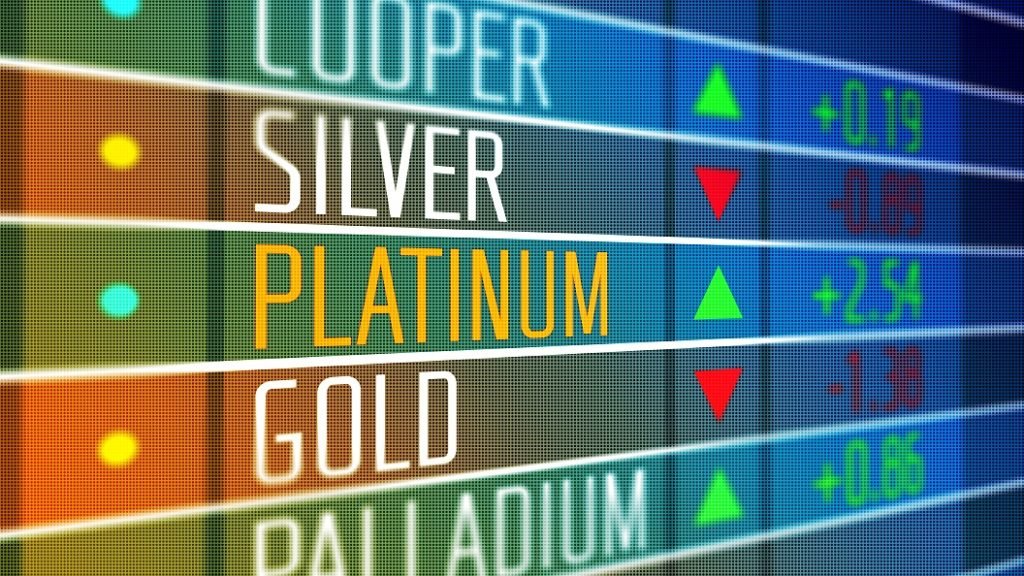
Hard assets are non-perishable and possess intrinsic value. They also act as a hedge against inflation, as their value changes inversely to changes in the value of soft assets and non-physical assets. However, such an inverse relationship does not always hold true. As an investment alternative, hard assets provide security in times of uncertainty, market instability, and volatility. They retain value regardless of how far their market prices may drop.
Summary
- Hard asset investments are a good investment alternative to conventional soft assets, such as stocks and bonds. Their principal characteristic is tangibility.
- They are an excellent hedge against inflation and their real use and scarcity are where their value is derived.
- Hard assets offer excellent diversification benefits due to their low correlation with soft assets.
Examples of Hard Assets
- Real estate
- Gold, Silver, Platinum & other precious metals
- Oil, Natural gas & other resources
- Equipment and machinery
- Vehicles / Classic cars
- CommoditiesCommoditiesCommodities are another class of assets just like stocks and bonds. Most commodities are products that come from the earth that possess
- Paintings
- Collectibles
Commodity hard assets include energy and alternative energy products, precious metals, agricultural products, forestry products, and base and industrial metals. Hard assets usually track inflation trends to retain value, and their demand does not falter. It is largely true for hard assets such as oil and real estate.
The opposite of hard assets is intangible assetsIntangible AssetsAccording to the IFRS, intangible assets are identifiable, non-monetary assets without physical substance. Like all assets, intangible assets, which are non-physical in nature but hold value. Intangibles include assets such as goodwill, trademarks, patents, etc. There are also soft assets such as stocks and bonds.
Investing in Hard Assets
- There is a high demand for hard assets from individuals and companies as alternative investment options. Some investors particularly like such assets because of their tangibility and physicality. Hard assets can be good investments, as they offer benefits that other investments lack.
- Hard asset investments add diversity to traditional portfolios of stocks and fixed-income instruments.
- The investments offer competitive returns that can outperform most conventional investment assets.
- Hard assets also show a high correlation with inflation, making them perfect hedges.
- There is a possibility of improving the risk/reward profile of a portfolio by including hard assets in the asset mix.
- Hard assets usually demonstrate a low correlation with conventional investments, such as stocks and bonds; hence, their inclusion adds value to a portfolio through diversification.
- Investment in hard assets does not need regular or daily check-ups like with stock investing, where every piece of news on the stock can affect the price. With hard asset investing it is a sit back and watch investment.
- Hard assets do not lose their value by more than 10% or 50% in a day typical of stocks. Their value, if eroded, happens gradually.
Opportunities for Hard Asset Investing
Performance drivers for mainstream stocks are largely different from those that drive hard assets. The two asset classes react differently to changing market conditions. Hard assets tend to outperform equities during periods of global growth, moderate inflation, and high interest rates. Inversely, equities tend to outperform hard assets during periods of slow growth and low inflation.
The above factors present an opportunity for hard asset investing if predictions by global financial institutions, such as IMF and World Bank, indicate strong global growth and positive consumption patterns for commodities and base metals.
Other opportunities come from optimistic growth estimates for global industry and manufacturing powerhouse countries that consume hard assets such as commodities and natural resources notably the USA, China, Japan, Germany, etc.
Forecasts of a global economy heating up will indicate rising inflation, which is usually greeted with a sense of panic by most investors. However, it is an opportunity where investing in hard assets can prove to be advantageous. Hard asset investment as an addition to the portfolio will offer a hedge against inflation, as well as provide diversification benefits.
Related Readings
CFI offers the Capital Markets & Securities Analyst (CMSA)™Program Page - CMSAEnroll in CFI's CMSA® program and become a certified Capital Markets &Securities Analyst. Advance your career with our certification programs and courses. certification program for those looking to take their careers to the next level. To keep learning and advancing your career, the following resources will be helpful:
- Alternative InvestmentAlternative InvestmentAn alternative investment is an investment in assets different from cash, stocks, and bonds. Alternative investments can be investments in tangible assets such as precious metals or wine. In addition, they can be investments in financial assets such as private equity, distressed securities, and hedge funds.
- Commodity Trading SecretsGuide to Commodity Trading SecretsSuccessful commodity traders know the commodity trading secrets and distinguish between trading different types of financial markets. Trading commodities is different from trading stocks.
- HedgingHedgingHedging is a financial strategy that should be understood and used by investors because of the advantages it offers. As an investment, it protects an individual’s finances from being exposed to a risky situation that may lead to loss of value.
- Store of ValueStore of ValueA store of value is an asset, currency, or commodity that maintains its value over a long period. An item would be considered a store of
-
Understanding Current Assets: Definition & Importance
Current assets are all assets that a company expects to convert to cash within one year. They are commonly used to measure the liquidity of a company. A company’s assets on its balance sheetBala
-

Non-Current Assets: Definition, Examples & Accounting
Non-current assets are assets whose benefits will be realized over more than one year and cannot easily be converted into cash. The assets are recorded on the balance sheet at acquisition cost, and th
invest
- Investable Assets: A Comprehensive Guide for Investors
- Understanding Household Assets: A Comprehensive Guide
- Fixed Assets: Definition, Examples & Importance for Businesses
- Monetary Assets: Definition, Examples & Key Characteristics
- Understanding Non-Monetary Assets: Definition & Examples
- Understanding Quick Assets: Definition & Examples
- Trading Assets: Definition, Types & How They Work
- Biological Assets: Definition, Examples & Accounting
- Understanding Financial Assets: Definitions & Types
-
 Understanding Unrestricted Net Assets for Nonprofits
Unrestricted net assets are the asset (current and/or fixed) donations made to not-for-profit organizations (NPOs)Not-for-Profit OrganizationsA not-for-profit organization focuses on a particular soci...
-
 Capital Expenditures (CAPEX): Definition & Examples
Capital expenditures refer to funds that are used by a company for the purchase, improvement, or maintenance of long-term assetsLong Term AssetsLong term assets are assets that a company uses in its p...