
Naked Puts: Definition, Strategy & Risks - Investopedia
A naked put refers to a situation where an investor sells a put option without already having an equivalent short position in the option’s underlying security. It is one of the ways that an investor can profit from changes in the price of a security without directly investing in the security itself.

Options offer numerous investment strategies, as they provide numerous ways to combine the buying and selling of call optionsCall OptionA call option, commonly referred to as a "call," is a form of a derivatives contract that gives the call option buyer the right, but not the obligation, to buy a stock or other financial instrument at a specific price - the strike price of the option - within a specified time frame. and put options with different strike prices and expiration dates.
A put is a type of options contract that offers its owner or buyer the right to sell the option’s underlying asset at a predetermined strike priceStrike PriceThe strike price is the price at which the holder of the option can exercise the option to buy or sell an underlying security, depending on. With an American-style option, the option holder may choose to exercise the option to sell the underlying security at any time up until the option’s date of expiration. With a European-style option, the option to sell short the underlying security may only be exercised on the option’s expiration date.
Summary
The seller of a put option is looking to profit from the price of the underlying security staying at or above the option strike price through the option’s expiration date.
- A naked put involves an investor selling a put option without holding an equivalent short sell position in the market.
- The most an investor can lose from selling a naked put is the strike price multiplied by 100 shares, minus the premium received; the maximum potential profit is the premium received.
The Naked Put Strategy
The naked put strategy involves an investor selling a put option without:
1. Already having, or establishing at the time of selling the option, an equivalent short position in the underlying security; or
2. Having the necessary funds in their investment account to cover the cost of establishing an equivalent amount of short position in the underlying security in the event that the option is exercised.
If the conditions of either scenario above are met, then the put optionPut OptionA put option is an option contract that gives the buyer the right, but not the obligation, to sell the underlying security at a specified price (also known as strike price) before or at a predetermined expiration date. It is one of the two main types of options, the other type being a call option. the investor sells is not considered a naked put, but instead, a “covered” or “secured” put. If the conditions of scenario B, but not of scenario A, are met, then the put option sold is referred to as being “cash-secured.”
A put that an investor sells may be either naked, covered, or partially covered. The put option is said to be partially covered if the investor selling the put has a short position in the underlying security, but not one large enough to represent an amount equivalent to the amount represented by the put option they are selling.
Understanding the “Equivalent Amount”
So, what are we talking about when we refer to an “equivalent amount” of an option’s underlying security? An equivalent amount is an amount equal to the amount of the underlying security that is represented by the option.
For example, options on stocks are typically options to either buy (for the holder of a call option) or sell (for a put option holder) 100 shares of the underlying stock. Therefore, 100 shares of the underlying stock is the amount that is equivalent to one option contract on the stock.
If an option seller sold five options contracts, then the equivalent amount of the underlying stock would be 500 shares. If the option seller of five put options wanted to sell covered puts, then they would need to either already have sold short (since it is a put option) or sell short at the same time that they sell the put option at least 500 shares of the underlying stock.
Understanding the Strike Price
The buyer of a put option expects to profit from a decline in the price of the underlying security. For example, an investor who expects the stock of Company ABC, currently with a market price of $50, to decline in price to $25 per share, may be interested in buying a put option on the stock. The put option gives the person who buys the option the right to sell the underlying security short at the option’s designated strike price.
Options offer a variety of strike prices for an investor to choose from. For example, a stock currently selling for $50 a share may have strike prices of $60, $55, $50, $45, and $40. Since we’re talking about a put option – an option that offers its holder a profit if the underlying security falls, rather than rises, in price – the option holder profits to the extent that a decline in the underlying security’s price increases the value, or price, of their put option.
All put options on an underlying security will increase in value if the security declines in price, but that does not necessarily mean that the option holder will want to exercise the option to obtain a short position in the market. Exercising the option is only profitable if the price of the underlying security falls to a price below the strike price of the option. Continuing with the example above of a stock trading at $50 per share, let’s assume an investor buys an option on the stock with a strike price of $45.
Now, if the market price of the stock fell to $48 a share after the investor bought a put option with a $45 strike price, then the put option would increase in value (depending on the time remaining till expiration), and the investor may be able to sell their option and realize a profit.
However, it would not be profitable for them to exercise the option with the market price at $48, because establishing a short sell position at $45 would give them a $3 per share loss. It is only profitable to exercise the option if the market price of the underlying stock declines to a price below $45.
Requirements for Naked Option Trading
Selling a naked put, one that is not covered requires the seller to be approved for margin tradingMargin TradingMargin trading is the act of borrowing funds from a broker with the aim of investing in financial securities. The purchased stock serves as collateral for the loan. The primary reason behind borrowing money is to gain more capital to invest by their broker and thus have a margin account. A margin account enables the investor to essentially borrow from their broker the necessary funds to implement their options trading strategy of selling a naked put.
The requirements to be approved for margin trading depend on (1) the investor’s financial position, and (2) the investor’s stated investment goals and preferences. As for the latter requirement, the investor must have declared themselves as being interested in either speculative investing or day tradingDay TradingThe main attribute of day trading is that the purchasing and selling of securities occurs within the same trading day. and also have declared themselves as having a high level of risk tolerance.
Maximum Profit and Loss from Selling a Naked Put
The seller of a put option is an investor who believes that the underlying security’s price will not decline to any point below the strike price of the option before expiration. If they are correct, then the option they sell will expire as worthless, and they will realize the maximum potential profit – the amount of the premium they receive for selling the option. The “premium” is the purchase price of the option.
The maximum potential loss for the seller of a naked put option is the strike price of the option times 100 shares, minus the premium received for selling the put. So, if an option seller sold a naked put with a strike price of $45 and the price of the underlying security went to $0, then their loss would be $4,500 ($45 times 100 shares), minus the amount of the premium they received.
In any event, the naked put seller’s profit/loss is equal to the premium received, minus any loss incurred from the option being exercised.
Additional Resources
CFI offers the Commercial Banking & Credit Analyst (CBCA)™Program Page - CBCAGet CFI's CBCA™ certification and become a Commercial Banking & Credit Analyst. Enroll and advance your career with our certification programs and courses. certification program for those looking to take their careers to the next level. To keep learning and advancing your career, the following resources will be helpful:
- American vs. European vs. Bermudan OptionsAmerican vs European vs Bermudan OptionsThere are different types of options that differ in terms of their exercise restrictions. Let’s explore American vs European vs Bermudan options to find out
- Expiration DateExpiration Date (Derivatives)The expiration date refers to the date in which options or futures contracts expire. It is the last day of the validity of the derivatives contract.
- Long and Short PositionsLong and Short PositionsIn investing, long and short positions represent directional bets by investors that a security will either go up (when long) or down (when short). In the trading of assets, an investor can take two types of positions: long and short. An investor can either buy an asset (going long), or sell it (going short).
- Naked OptionNaked OptionA naked option is an investing term that refers to an investor selling an option without holding a corresponding position in the option’s underlying
-
Understanding Digital Options: A Comprehensive Guide for Traders
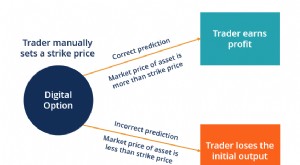
A digital option is a form of option that allows traders to manually set a strike price. The digital option provides the traders with a fixed payout in the case when the market price of the underlying
-
Understanding Exercise Price in Options Trading
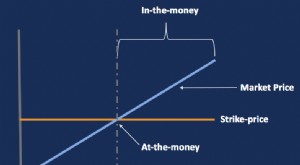
The exercise price within an option is the price at which the holder is capable of purchasing the underlying asset. If the market price of the asset is above the exercise price, the holder is capable
invest
- Naked Put Options: Strategy, Risks & How They Work
- Naked Options: Risks, Rewards, and How They Work
- Barrier Options: Understanding and Trading Strategies
- Bull Put Spread: Strategy, Mechanics & Risk
- Understanding Gamma in Finance: A Comprehensive Guide
- Naked Calls Explained: Strategy, Risks & Rewards
- Naked Options: Risks, Rewards, and How They Work
- Put Options Explained: A Comprehensive Guide for Investors
- Short Put Options: A Comprehensive Guide for Investors
-
 Currency Option Bonds: Understanding Flexible Investments
A currency option bond is a security that offers returns in multiple currencies. The holder of a currency option bond can choose the currency in which they would like to be paid. The feature extends t...
-
 Understanding Delta: A Key Risk Measure in Derivatives
Delta is a risk sensitivity measure used in assessing derivativesDerivativesDerivatives are financial contracts whose value is linked to the value of an underlying asset. They are complex financial in...