
Naked Calls Explained: Strategy, Risks & Rewards
A naked call is a type of option strategy where an investor writes (sells) a call option without the security of owning the underlying stock. The investor must take the short side of the call option in order to deliver shares of the underlying security if the option is exercised before the date of expirationExpiration Date (Derivatives)The expiration date refers to the date in which options or futures contracts expire. It is the last day of the validity of the derivatives contract..

For investors going the speculative options trading route, among the riskiest of investments is a naked call. There are several ways to profit based on how stocks move. OptionsOptions: Calls and PutsAn option is a derivative contract that gives the holder the right, but not the obligation, to buy or sell an asset by a certain date at a specified price. provide a variety of strategies for investment because there are numerous ways to combine both the purchase and sale of call and put options.
Call options contracts enable their owners to buy the options’ underlying securities at a previously specified strike priceStrike PriceThe strike price is the price at which the holder of the option can exercise the option to buy or sell an underlying security, depending on up until the date that the contracts expire.
Summary
- Call options contracts enable their holders to buy the options’ underlying securities at a previously specified strike price up until the date that the contracts expire.
- A naked call is a type of options strategy where investors write a call option without the security of owning the underlying stock.
- Naked calls are, by their nature, not a conservative trading strategy and thus should only be used by experienced traders with a high risk tolerance.
Understanding Naked Calls
The naked call strategy is very risky because, should the option be exercised, the investor is then required to purchase the option’s underlying stock at the current market price. Stock prices, by their nature, come with limitless maximums, meaning that if the option is exercised, the investor stands to lose a significant amount of money.
Example of a Naked Call
Let’s look at an example of a naked call. If a stock is trading at $20, but the investor doesn’t believe the stock will climb higher than $35, he may sell a naked $35 call option. For this example, we’ll say that the premium the investor receives for the option is $100.
An investor uses the naked call strategy with the maximum gain in mind. He believes the stock’s underlying price won’t exceed the amount of the options contract and thus won’t be exercised. If the option isn’t exercised, the investor keeps the entire premium, which, in this example, would be $100.
Again, naked calls are extremely risky because of the potential for loss. For the example above, let’s say that the option’s underlying stock climbs to $50, and the option holder exercises the option. It means that the investor must go out and buy 100 shares of the stock at $50, shares that he’s already effectively sold for $35 a share.
So, for each share, the investor loses $15. $15 times 100 shares = $1,500. Minus the $100 premium he received for selling the option, the investor’s net loss is a whopping $1,400.
Ultimately, every investor’s goal is to make money on their investments. Naked calls are, by their nature, not a conservative trading strategy and thus should be used by experienced traders.
Related Readings
CFI is the official provider of the global Commercial Banking & Credit Analyst (CBCA)™Program Page - CBCAGet CFI's CBCA™ certification and become a Commercial Banking & Credit Analyst. Enroll and advance your career with our certification programs and courses. certification program, designed to help anyone become a world-class financial analyst. To keep advancing your career, the additional resources below will be useful:
- Long and Short PositionsLong and Short PositionsIn investing, long and short positions represent directional bets by investors that a security will either go up (when long) or down (when short). In the trading of assets, an investor can take two types of positions: long and short. An investor can either buy an asset (going long), or sell it (going short).
- Option Profit/Loss Graph MakerOption Profit/Loss Graph MakerThis option profit/loss graph maker allows the user to combine up to ten different types of options and the underlying stock to create a profit/loss graph.
- Spot PriceSpot PriceThe spot price is the current market price of a security, currency, or commodity available to be bought/sold for immediate settlement. In other words, it is the price at which the sellers and buyers value an asset right now.
- Six Skills of Master TradersSix Essential Skills of Master TradersJust about anyone can become a trader, but to be one of the master traders takes more than investment capital and a three-piece suit. Keep in mind: there is a sea of individuals looking to join the ranks of master traders and bring home the kind of money that goes with that title.
-

Understanding Call Prices: Callable Bonds & Preferred Stocks
A call price refers to the price that a preferred stock or bond issuer would pay to buyers if they chose to redeem the callable security before the maturity date. The price is set during the issuance
-
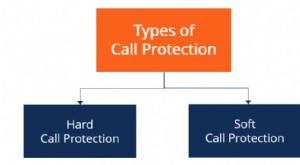
Understanding Call Protection in Bonds: Investor Protection Explained
Call protection refers to protection from investment risk to bond investors that exists by limiting the conditions under which a bond issuer may elect to call, i.e., redeem bonds before a bond’s
invest
- Understanding Call Options and Auctions in Finance
- Naked Options: Risks, Rewards, and How They Work
- Barrier Options: Understanding and Trading Strategies
- Bull Call Spread: Strategy, Benefits & How It Works
- Call Options: A Comprehensive Guide for Investors
- Interest Rate Call Options: Understanding & Benefits
- Naked Options: Risks, Rewards, and How They Work
- Naked Puts: Definition, Strategy & Risks - Investopedia
- Covered Call Options: A Beginner's Guide to Income Strategy
-
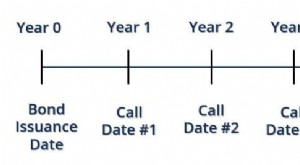 Understanding Call Dates: What You Need to Know
A call date refers to the date when a callable bondCallable BondA callable bond (redeemable bond) is a type of bond that provides the issuer of the bond with the right, but not the obligation, to rede...
-
 Understanding the Call Market: Trading Hours & Price Determination
The call market refers to a market where trading does not take place continuously, but only at specified times during the trading day. Prices are dictated by the exchange rather than by bids and offer...