
NYMEX Explained: A Comprehensive Guide to Commodity Futures
The New York Mercantile Exchange (NYMEX) is a commodity futures exchange located in Manhattan, New York City. It is owned by CME Group, one of the largest futures exchangesTypes of Markets - Dealers, Brokers, ExchangesMarkets include brokers, dealers, and exchange markets. Each market operates under different trading mechanisms, which affect liquidity and control. The different types of markets allow for different trading characteristics, outlined in this guide in the world. CME Group also runs the Chicago Mercantile Exchange and Chicago Board of Trade. The NYMEX maintains offices in other U.S. cities, such as Boston, Washington DC, and San Francisco. Other global NYMEX offices are located in Dubai, Tokyo, and London.
The NYMEX is comprised of two divisions: the New York Mercantile Exchange and the Commodities Exchange Inc. (COMEX). The two divisions were previously separate entities owned by NYMEX Holdings Inc.
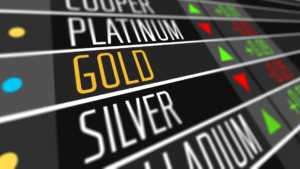
NYMEX Holdings Inc. was acquired by CME Group for $11.8 billion in cash and stock, with the acquisitionMergers Acquisitions M&A ProcessThis guide takes you through all the steps in the M&A process. Learn how mergers and acquisitions and deals are completed. In this guide, we'll outline the acquisition process from start to finish, the various types of acquirers (strategic vs. financial buys), the importance of synergies, and transaction costs completed in August 2006. The NYMEX division handles billions of dollars worth of futures and options contracts for energy products such as oil and natural gas. The COMEX division oversees the trading of metals, such as gold, silver, and copper, and also FTSE 100 index options.
History of the New York Mercantile Exchange (NYMEX)
Commodity exchange markets started in the 19th century when farmers and businessmen formed forums to make it easier to buy and sell commodities. By the late 19th century, there were more than 1,600 commodity marketplaces. The NYMEX started when a group of butter and cheese farmers formed the Butter and Cheese Exchange of New York in 1872.
The exchange was later expanded to include eggs, and the name changed to the Butter, Cheese and Egg Exchange. A decade later, the market opened trading in canned goods, poultry, and dried fruits, and it changed its name again to the New York Mercantile Exchange.
With the construction of centralized warehouses in the main business centers in Chicago and New York, smaller exchanges in other cities began to disappear while large exchanges like the NYMEX got more business. COMEX, the second division of NYMEX, was established in 1933 after four small exchanges merged. The exchanges included the Rubber Exchange of New York, the National Metal Exchange, the National Raw Silk Exchange, and the New York Hide Exchange.
The Potato Bust
There were a lot of trades in futures of Maine’s potato crop, one of the leading commodities traded on the exchange. According to “The Asylum,” by Leah McGrath Goodman, there was open manipulation by exchange traders and potato inspectors. However, this was little known until the 1970s, when the big potato scandal happened.
J.R. Simplot, the Idaho potato magnate, shorted potato futures in large numbers, leaving a large number of contracts pending at the expiration date and resulting in many defaulted delivery contracts. After a public outcry and public hearings by the newly created Commodity Futures Trading Commission (CFTC), the NYMEX was barred from trading in potatoes or any new commodities not previously traded on the exchange.
The potato bust tarnished the reputation of the NYMEX and trading volume declined significantly. The NYMEX President, Richard Leone, brought in John Treat, a White House energy advisor, to help restore the credibility of the exchange. He also sought to secure permission to offer trading in energy futures.
Treat collaborated with Michael Marks, the new NYMEX chairman, and economist Arnold Safer to strategize on how to acquire the heating oil futures contracts that had just been deregulated by the government. The NYMEX became the first commodity exchange to offer heating oil futures trading in 1978, targeting small-scale suppliers from the northern US. The oil futures became a hit and the NYMEX became larger and wealthier.
New York Mercantile Exchange Offices
From the 1970s until the 1990s, the NYMEX, COMEX, and other exchanges shared trading floors at the World Trade Center. In 1994, the New York Mercantile Exchange and the Commodities Exchange Inc. merged under the NYMEX name. The trading floor was not large enough to accommodate the huge number of the combined exchange’s employees, so it relocated to the World Financial Complex in southwest Manhattan in 1997.
September 11 Terrorist Attacks
Four years later, the old New York Mercantile Exchange offices at the World Trade Center were destroyed in the September 11 terror attacks. The new NYMEX offices were mostly undamaged, so the exchange was able to resume trading within a short time. T
he headquarters of the New York Board of Trade (NYBOT) was completely destroyed in the attacks. The NYBOT signed a lease agreement with NYMEX to move into their trading facility at the World Financial Center. To protect against future attacks, the NYMEX built a $12 million backup facility outside the city.
NYMEX Trading Platforms
Trading on the New York Mercantile Exchange was based on the open outcry trading system until 2006. The open outcry system is a method of communication between professionals in a futures exchange or stock exchange that involves shouting and using hand signals to transfer information on buy and sell orders.
Bids and offers are made in the open market, giving participants a chance to compete for the best prices. The NYMEX traders were against the phasing out of the open outcry system to pave the way for electronic trading because such a change would render them jobless. However, the exchange needed to adopt electronically-based trading systems to remain competitive.
In September 2006, the NYMEX teamed up with the Chicago Mercantile Exchange (CME) and started using the CME’s Globex electronic trading platform. As a result, many floor traders’ jobs were eliminated, as banks, hedge fundsHedge FundA hedge fund, an alternative investment vehicle, is a partnership where investors (accredited investors or institutional investors) pool, and oil companies started trading electronically.
By September 2007, the electronic volume on the CME Globex trading platform totaled 770,000 daily contracts, a 178% increase over the September 2006 CME Globex volume. The COMEX division electronic trading volume on CME Globe averaged 121,000 contracts daily by September 2007, representing a 1,396% increase over the 8,090 daily contracts recorded on the CME Globex platform in September 2006. In December 2016, the NYMEX shut down its open outcry trading floor in lower Manhattan, completely embracing electronic trading.
Companies that trade on the New York Mercantile Exchange need to employ their own independent brokers, who are sent to the trading floor. A limited number of employees represent a larger corporation. The exchange’s employees record only the transactions, and they do not facilitate the actual trades.
Commodities Traded on the NYMEX
I. NYMEX Division
- Coal
- Electricity
- Gasoline
- Crude Oil
- Heating Oil
- Natural gas
- Propane
- Uranium
II. COMEX Division
- Aluminum
- Silver
- Copper
- Gold
- Platinum
- Palladium
Related Readings
Thank you for reading CFI’s guide to the NYMEX. CFI is the official provider of the global Financial Modeling & Valuation Analyst (FMVA)™Become a Certified Financial Modeling & Valuation Analyst (FMVA)®CFI's Financial Modeling and Valuation Analyst (FMVA)® certification will help you gain the confidence you need in your finance career. Enroll today! certification program, designed to help anyone become a world-class financial analyst. To keep advancing your career, the additional resources below will be useful:
- Trading MechanismsTrading MechanismsTrading mechanisms refer to the different methods by which assets are traded. The two main types of trading mechanisms are quote driven and order driven trading mechanisms
- Guide to Commodity TradingGuide to Commodity Trading SecretsSuccessful commodity traders know the commodity trading secrets and distinguish between trading different types of financial markets. Trading commodities is different from trading stocks.
- Trading FloorTrading FloorA trading floor refers to a literal floor in a building where equity, fixed income, futures, options, commodities, or foreign exchange traders buy and sell securities.
- Long and Short PositionsLong and Short PositionsIn investing, long and short positions represent directional bets by investors that a security will either go up (when long) or down (when short). In the trading of assets, an investor can take two types of positions: long and short. An investor can either buy an asset (going long), or sell it (going short).
-
Dow 30 Explained: Understanding the Dow Jones Industrial Average
The Dow 30, or Dow Jones Industrial Average, is a stock index that tracks the performance of the 30 biggest companies listed on the stock indices in the United States. Despite being used by analysts t
-
![Rule of 72: Calculate Investment Doubling Time | [Your Brand Name]](https://www.etffin.com/article/uploadfiles/202110/2021100815281678_S.png)
Rule of 72: Calculate Investment Doubling Time | [Your Brand Name]
In finance, the Rule of 72 is a formula that estimates the amount of time it takes for an investment to double in value, earning a fixed annual rate of returnRate of ReturnThe Rate of Return (ROR) is
invest
- NYMEX: Your Gateway to Commodity Futures | CME Group
- American Stock Exchange (AMEX): History, Overview & Key Facts
- Australian Securities Exchange (ASX): Your Guide to Australia's Stock Market
- Eurex Exchange: European Derivatives Market Overview
- Hong Kong Stock Exchange (HKEX): Overview & Key Facts
- Jakarta Stock Exchange (IDX): History & Overview
- Japan Exchange Group (JPX): Overview & Financial Markets
- NYBOT: Understanding the New York Board of Trade - Commodity Futures Exchange
- New York Stock Exchange (NYSE): History, Facts & Overview
-
 Understanding the Temporal Method for Currency Translation
The temporal method is a currency exchange method used to convert the currency that a foreign subsidiary ordinarily does business in into the currency used by its parent company. The parent company&rs...
-
 Understanding the Saudi Stock Exchange (Tadawul): A Comprehensive Overview
It is well-known that Saudi Arabia plays a major role in the oil markets. As a key member of the Organization of the Petroleum Exporting Countries (OPEC), the national petroleum and natural gas comp...