
Understanding Serial Correlation: Definition & Applications
Serial correlation is a statistical term used to describe the relationship – specifically, the correlation – between the current value of a variable and a lagged value of the same variable from earlier time periods.

Serial correlation, also referred to as autocorrelationAutocorrelationAutocorrelation, also known as serial correlation, refers to the degree of correlation of the same variables between two successive time intervals., is often used by financial analysts to predict future price moves of a security, such as a stock, based on previous price moves.
Correlation measures the strength of the relationship between variables, and serial correlation determines the relationship, if any, between the same variable measured over different periods of time.
If the current value of a security is found to be serially correlated with its previous values, then the correlation can be used to forecast possible future values.
Summary
- Serial correlation measures the relationship between the current value of a variable and the values of the same variable from previous time periods.
- The study of serial correlations is commonly used by financial analysts in creating financial models to help predict probable future prices of a stock or other financial security.
- Positive serial correlations indicate that values are likely to change in future time periods in the same way, or direction, that they have in recent past time periods; Negative serial correlations indicate that values are likely to move in the opposite direction in future time periods compared to how the values have moved in recent past periods.
Measuring Serial Correlations
Serial correlations, when they exist, can be either positive or negative.
- Positive serial correlations indicate that value changes between the current price of a securitySecurityA security is a financial instrument, typically any financial asset that can be traded. The nature of what can and can’t be called a security generally depends on the jurisdiction in which the assets are being traded. and future prices are likely to be similar to the value changes between recent past prices and the current price.
- A negative serial correlation indicates that value changes between the current price and future prices are likely to move in the opposite direction as the value changes between past prices and the current price.
When the variable of a security’s current price and its price in a prior time period exhibit positive serial correlation, they display what is known as mean aversion.
Aversion from the mean indicates that price changes in the security are prone to following trends and that, over periods of time, they will show higher standard deviations than would be the case with no correlation.
There is a wide variety of complex statistical formulas that can be used to measure serial correlation; however, most formulas calculate serial correlation with values ranging from -1 to +1.
A serial correlation value of zero indicates that no correlation exists. In other words, there is no observable relationship or pattern that exists between the current value of a variable and its value during previous time periods. Values nearer to +1 indicate a positive serial correlation, while values between zero and -1 indicate a negative serial correlation.
Use of Serial Correlation in Financial Modeling
Detecting and implementing the use of serial correlations in building financial modelsWhat is a Financial Model?A financial model is a representation of a company’s past and future performance based on it's assets & operations. Find out: what is a financial model? has become increasingly popular since the initial widespread use of computer technology in the 1980s.
Investment banks and other financial institutions now regularly incorporate the study of serial correlations to help improve forecast models for investment returns by detecting patterns that may occur in price changes over time.
By improving the accuracy of financial models, the use of serial correlation measures can serve to help maximize returns on investment, reduce investment risk, or both.
The study of serial correlations did not actually originate in the financial services industry – it originated in the world of engineering. The first studies of serial correlations were studies of how signals, such as radio broadcast signals, varied over successive time periods.
After such studies proved fruitful, economists and financial analysts gradually began to consider serial correlations between the values of security prices and various economic metrics, such as interest rates or gross domestic product (GDP).
Correlations can be measured using the =CORREL formulaCORREL FunctionThe CORREL function is categorized under Excel Statistical functions. It will calculate the correlation coefficient between two variables. As a financial analyst, the CORREL function is very useful when we want to find the correlation between two variables, e.g., the correlation between a in Excel.
Example – Spotting Momentum Stocks
An example of how serial correlation can be used in predicting future price movements of a security can be found in momentum stocks.
Momentum stocks are stocks which, historically, have exhibited price movements that reveal sustained trends. That is, once a stock price begins moving in one direction, it tends to gain momentum and continue moving in the same direction over successive time periods.
Momentum stocks can be identified because they will exhibit positive serial correlation. The current price of the stock can be shown to have a positive correlation with the stock’s price in previous time periods.
An investor can use this knowledge to profit from buying into identified momentum stocks once they begin exhibiting a price trend.
The investor purchases the stock based on the assumption that future price changes will tend to resemble recent past price changes – in other words, the stock will continue trending for at least some time period into the future.
Additional Resources
CFI is the official provider of the Commercial Banking & Credit Analyst (CBCA)™Program Page - CBCAGet CFI's CBCA™ certification and become a Commercial Banking & Credit Analyst. Enroll and advance your career with our certification programs and courses. certification program, designed to transform anyone into a world-class financial analyst.
To keep learning and developing your knowledge of financial analysis, we highly recommend the additional resources below:
- DecouplingDecouplingDecoupling represents the creation of gaps. In finance, decoupling happens when different asset classes or markets that typically demonstrate
- Negative CorrelationNegative CorrelationA negative correlation is a relationship between two variables that move in opposite directions. In other words, when variable A increases, variable B decreases. A negative correlation is also known as an inverse correlation. See examples, charts and
- Multiple Linear RegressionMultiple Linear RegressionMultiple linear regression refers to a statistical technique used to predict the outcome of a dependent variable based on the value of the independent variables.
- Financial ForecastingFinancial ForecastingFinancial forecasting is the process of estimating or predicting how a business will perform in the future. This guide on how to build a financial forecast
-
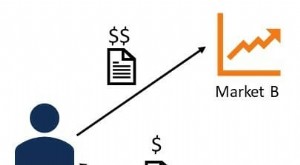
Arbitrage Explained: Understanding and Capitalizing on Price Differences
Arbitrage is the strategy of taking advantage of price differences in different markets for the same assetTypes of AssetsCommon types of assets include current, non-current, physical, intangible, oper
-

Understanding Auction Markets: How Prices Are Determined
An auction market is a market where the price is determined by the highest price the buyer is willing to pay (bids), and the lowest price the seller is willing to take (offers). Bids and offers are ma
invest
- PC Banking: A Comprehensive Guide to Online Banking Security & Features
- IRA CDs: Secure Retirement Savings with FDIC Insurance
- Understanding the DU: Your Mortgage Approval Explained
- Understanding Correlation: A Statistical Guide
- Negative Correlation Explained: Understanding Inverse Relationships
- Intermarket Analysis: Understanding Asset Class Relationships | [Your Brand]
- Understanding Serial Correlation: Definition & Applications
- Understanding Cryptocurrency: A Beginner's Guide to Digital Currency
- Correlation Trading: Strategies & Examples | [Your Brand Name]
-
 Anchoring Bias: Understanding How First Impressions Influence Decisions
Anchoring bias occurs when people rely too much on pre-existing information or the first information they find when making decisions. For example, if you first see a T-shirt that costs $1,200 – ...
-
 Annuities Explained: A Simple Guide to Retirement Income
So you're wondering what is an annuity? There are dozens of different flavours of annuities that perform different functions and pay their holders out in different ways, but for our purposes let’...