
Stock Halt Explained: Causes, Reasons & What It Means for Investors
A stock halt, often referred to as a trading halt, is a temporary halt in the trading of a securityPublic SecuritiesPublic securities, or marketable securities, are investments that are openly or easily traded in a market. The securities are either equity or debt-based.. Usually, the halt is imposed for regulatory reasons, the anticipation of significant news, or to correct a situation in which there are excess of buy or sell orders for a specific security.

Common Reasons for a Stock Halt
The most common reasons for a stock’s trading being halted are as follows:
- Major corporate transactions (such as a merger or acquisitionMergers Acquisitions M&A ProcessThis guide takes you through all the steps in the M&A process. Learn how mergers and acquisitions and deals are completed. In this guide, we'll outline the acquisition process from start to finish, the various types of acquirers (strategic vs. financial buys), the importance of synergies, and transaction costs, restructuring, etc.) or news
- Significant information (negative or positive) about the company’s products or services
- Regulatory developments that may affect the company’s ability to do business
- Significant changes to the financial health of the company.
Advantages of Halting Trading
Undoubtedly, investors in a stock that is halted would get anxious. However, stock halts are actually used to protect investors and level the playing field between investors who are informed and reactive, and those who are simply not up to date on the news. The advantages of temporarily halting trading include:
- Allowing all market participantsKey Players in the Capital MarketsIn this article, we provide a general overview of the key players and their respective roles in the capital markets. The capital markets consist of two types of markets: primary and secondary. This guide will provide an overview of all the major companies and careers across the capital markets. to be informed about any news
- Removing arbitrage opportunities and potential illegal transactions
- Giving other markets the opportunity to receive the news and halt trading of that stock on their own exchanges
The NASDAQ and Stock Halts
Whenever a stock is halted on the NASDAQ, as on other exchanges, the NASDAQ uses several halt code identifiers to specify in detail why the stock was halted.
For example:
- T1: Halt – News Pending: Trading is halted pending the release of significant (or material) news.
- T2: Halt – News Released: Trading is halted to allow for investors to assimilate news released.
- T5: Single Stock Trading Pause in Effect: Trading is halted due to a 10% or more price change in a security within a five-minute period.
- H10: Halt – SEC Trading Suspension: Trading is halted by the SEC (Securities and Exchange Commission).
The full list of NASDAQ trade halt codes can be found here.
Examples of a Stock Trading Halt
Company A, a real estate investment trust (REIT)Real Estate Investment Trust (REIT)A real estate investment trust (REIT) is an investment fund or security that invests in income-generating real estate properties. The fund is operated and owned by a company of shareholders who contribute money to invest in commercial properties, such as office and apartment buildings, warehouses, hospitals, shopping centers, student housing, hotels, recently completed an acquisition of major properties in Canada. The company, without notifying the exchange that it trades on, releases the information to the public. With material news on Company A released, the exchange that Company A trades on halts its stock to allow investors to take in and digest the new information.
1. NASDAQ: DRYS
In 2016, DryShips Inc., the owner of dry-bulk carriers and offshore vessels, saw a significant price surge. The stock was trading in the low single digits in the past few months but saw a price surge of 1,500% over the course of a week. The stock closed at $120 per share from its price of $5.10 prior days ago. The NASDAQ decided to halt the stock with a T12 code – halted pending additional information from the company.
2. ASX: SDL
In 2010, in a tragic accident, six Australian mining executives went missing on a flight in Africa. Among those who were reported missing were the company’s CEO and the Chairman. Sundance Resources Ltd immediately requested that their stock be halted from trading on the Australian Stock Exchange to make sure that the news was properly circulated to market participants.
3. TSE: NVU.UN
In June 2018, the stock of Northview Apartment Real Estate Investment Trust was halted due to the release of material news – the trust’s acquisition of a 623-unit portfolio of six apartment properties.
Related Readings
CFI offers the Financial Modeling & Valuation Analyst (FMVA)™Become a Certified Financial Modeling & Valuation Analyst (FMVA)®CFI's Financial Modeling and Valuation Analyst (FMVA)® certification will help you gain the confidence you need in your finance career. Enroll today! certification program for those looking to take their careers to the next level. To keep learning and advancing your career, the following resources will be helpful:
- Momentum InvestingMomentum InvestingMomentum investing is an investment strategy aimed at purchasing securities that have been showing an upward price trend or short-selling securities that
- Over-the-Counter (OTC)Over-the-Counter (OTC)Over-the-counter (OTC) is the trading of securities between two counter-parties executed outside of formal exchanges and without the supervision of an exchange regulator. OTC trading is done in over-the-counter markets (a decentralized place with no physical location), through dealer networks.
- Restricted Trading ListRestricted Trading ListSecurities are placed on a bank's restricted list when the bank is engaged with the company on non-public activity, such as mergers and acquisitions work, affiliate ownership, or underwriting activities or other distribution of the issuer's (the company's) securities.
- Investing: A Beginner’s GuideInvesting: A Beginner's GuideCFI's Investing for Beginners guide will teach you the basics of investing and how to get started. Learn about different strategies and techniques for trading
-

Understanding Trading Sessions: Hours & Global Markets
A trading session refers to the active trading hours of an asset or a given locale. Usually, different markets follow different trading hours, and a single trading day of a market is the trading sessi
-

Trading Software: A Comprehensive Guide for Traders
Trading software are computer programs that traders use to trade and analyze financial products such as currencies, stocks, bonds, and derivatives over a network with a financial intermediaryFinancial
invest
- Trading Halts: Understanding Temporary Stock Market Suspensions
- CFD Trading Explained: A Comprehensive Guide for Investors
- Day Trading Explained: Strategies, Risks & How It Works
- Understanding Downtrends: Definition, Identification & Reversal
- Understanding Non-Assessable Stock: Limited Liability Explained
- Understanding Stock Tickers: A Comprehensive Guide
- Understanding Trading Halts: Causes & Implications
- Trend Trading: A Comprehensive Guide for Investors
- Extended Trading Explained: Strategies & Opportunities
-
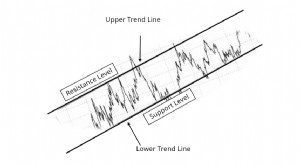 Trading Channels: Understanding Uptrends & Downtrends
A trading channel is a chart pattern highlighted by two parallel lines bordering resistance and support within which a security trades during a period. Within a valid uptrend trading channel, an oppor...
-
 Trading Plan: A Comprehensive Guide to Successful Trading
A trading plan refers to a systematic approach used to identify and trade securities based on several variables, such as investment objectives, risks, and time. A trading plan lays out procedures and ...