
Visible Supply: Definition, Importance & Examples
Visible supply refers to the number of goods available to be bought or sold. In the context of finance, visible supply typically refers to the number of commodities available for trading. It can include commodities that are held in storage, loading docks, or transit.
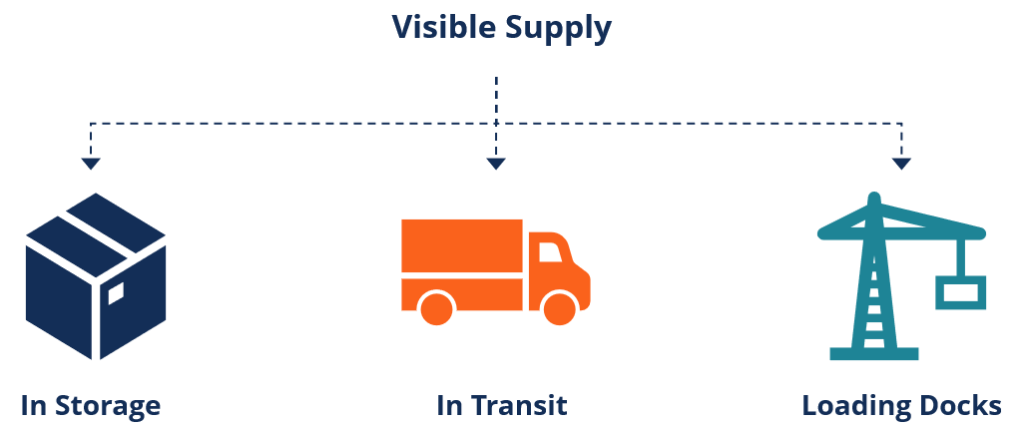
For example, when corn is harvested and ready for sale, the visible supply increases. When consumers purchase the corn for use, the visible supply decreases. Analyzing the supply information can provide indications of future shortages or surpluses, which can affect the future price. Therefore, visible supply provides a supply-side view of the total volume of a good available in the market.
Summary
- Visible supply refers to the number of goods available to be bought or sold.
- In the context of commodities, visible supply includes commodities that are held in storage, loading docks, or transit.
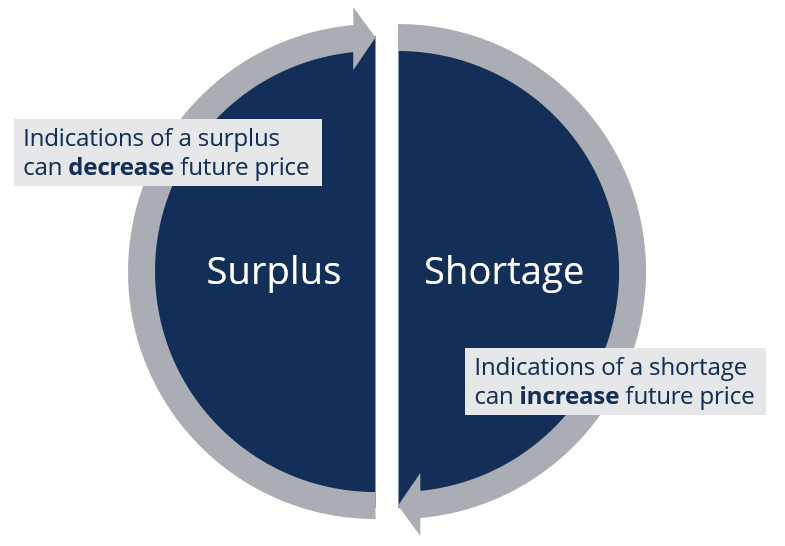
- Visible supply reports can indicate future shortages or surpluses, which affect the future price.
Understanding Visible Supply
Visible supply refers to the number of goods available to be bought and sold in the market. In the context of finance, it typically refers to the supply of commoditiesCommoditiesCommodities are another class of assets just like stocks and bonds. Most commodities are products that come from the earth that possess that can be traded but can also refer to the volume of municipal bonds in the market.
For commodities, such as corn or wheat, visible supply includes bushels that are held in storage, in transit, or stored in loading docks. Note that the visible supply only includes goods that can be purchased or sold.
For example, wheat that remains on the farm would not be included as part of the visible supply, but it becomes part of the visible supply once it is in transit. Once the wheat is purchased by a consumer, it is no longer part of the visible supply.
Therefore, visible supply comes with important implications in the context of futures contractsFutures ContractA futures contract is an agreement to buy or sell an underlying asset at a later date for a predetermined price. It’s also known as a derivative because future contracts derive their value from an underlying asset. Investors may purchase the right to buy or sell the underlying asset at a later date for a predetermined price., as they are agreements to buy or sell a good at a predetermined time in the future.
The contracts can only exist if there is enough supply of an item to ensure the contract will be fulfilled. Hence, the visible supply provides market participants with an indication of the total quantity of goods available within a period.
Impact of Visible Supply
Visible supply is also heavily connected to the supply chains involved in the production of goods. It is especially prevalent in agricultural commodities, as the cycle of production and consumption affects the visible supply available in the market. The visible supply increases as agricultural commodities are moved from the farm into transit and decrease as consumers purchase them for usage.
The visible supply can also affect prices through a system of supply and demandSupply and DemandThe laws of supply and demand are microeconomic concepts that state that in efficient markets, the quantity supplied of a good and quantity. When demand for a commodity goes up relative to supply, prices will increase. In contrast, when the supply of a commodity increases relative to demand, prices will decrease. Therefore, commodity traders carefully monitor the supply of commodities as part of their trading strategies.
For agricultural commodities, visible supply reports provide valuable information on the future supply of a commodity. If indications of a shortage are present, it can result in increases in future prices. When the visible supply report indicates a surplus, it can indicate that future prices are likely to fall.
Commodity traders can use changes in the visible supply to try and predict trends in the future price of commodities. If they can do so successfully, they can buy and sell futures contracts to profit off future price changes.
30-Day Visible Supply
The 30-day visible supply refers to the supply of municipal bondsMunicipal BondA municipal bond refers to a bond or fixed income security that is issued by a government municipality, township, or state to finance its governmental, which are bonds issued by governments rather than corporations. The 30-day visible supply is the total volume of all underwritten bonds that will reach the market within 30 days.
If we think of municipal bonds as goods, the 30-day visible supply is simply the number of goods available for purchase over the next 30 days. The only difference is that municipal bonds are underwritten by a municipality and available for purchase for investment purposes.
Analyzing the 30-day visible supply provides an overview of the health of the bond market, as well as the supply-side volume. As the supply increases, overall prices tend to decrease, and interest rates will increase. If the 30-day visible supply decreases, overall prices are likely to increase, and bond rates will fall.
Related Readings
CFI offers the Commercial Banking & Credit Analyst (CBCA)™Program Page - CBCAGet CFI's CBCA™ certification and become a Commercial Banking & Credit Analyst. Enroll and advance your career with our certification programs and courses. certification program for those looking to take their careers to the next level. To keep learning and developing your knowledge base, please explore the additional relevant resources below:
- Commodity Trading SecretsGuide to Commodity Trading SecretsSuccessful commodity traders know the commodity trading secrets and distinguish between trading different types of financial markets. Trading commodities is different from trading stocks.
- Freight on Board (FOB)Freight on Board (FOB)Freight on Board (FOB), also referred to as Free on Board, is an international commercial law term published by the International Chamber of Commerce (ICC).
- Product MixProduct MixProduct mix, also known as product assortment or product portfolio, refers to the complete set of products and/or services offered by a company. A mix
- Supply ChainSupply ChainSupply chain is the entire system of producing and delivering a product or service, from the very beginning stage of sourcing the raw materials to the final
-

Anchoring Bias: Understanding How First Impressions Influence Decisions
Anchoring bias occurs when people rely too much on pre-existing information or the first information they find when making decisions. For example, if you first see a T-shirt that costs $1,200 –
-
Visible Supply: Definition, Importance & Examples
Visible supply refers to the number of goods available to be bought or sold. In the context of finance, visible supply typically refers to the number of commodities available for trading. It can inclu
invest
- PC Banking: A Comprehensive Guide to Online Banking Security & Features
- Understanding Long-Run Supply: Definition & Market Dynamics
- Understanding Short-Run Supply: Fixed Assets & Production
- External Analysis: Understanding Your Industry & Market
- Supply Chain Management: Definition, Process & Key Components
- Understanding Cryptocurrency: A Beginner's Guide to Digital Currency
- Bitcoin Halving Explained: Understanding Supply & Value
- Understanding Bitcoin Price: Factors Influencing Value
- Understanding Gasoline Prices: Key Factors & Trends
-
 0x: A Comprehensive Guide to Decentralized Ethereum Trading
What Is 0x? 0x is a decentralized exchange for trading ERC 20 tokens. (See also: What Is ERC 20 And What Does It Mean For Ethereum?). It is among the most high-profile examples of decentra...
-
Annuities Explained: A Simple Guide to Retirement Income
So you're wondering what is an annuity? There are dozens of different flavours of annuities that perform different functions and pay their holders out in different ways, but for our purposes let’...