
Vice Fund: Understanding Investments in Controversial Industries
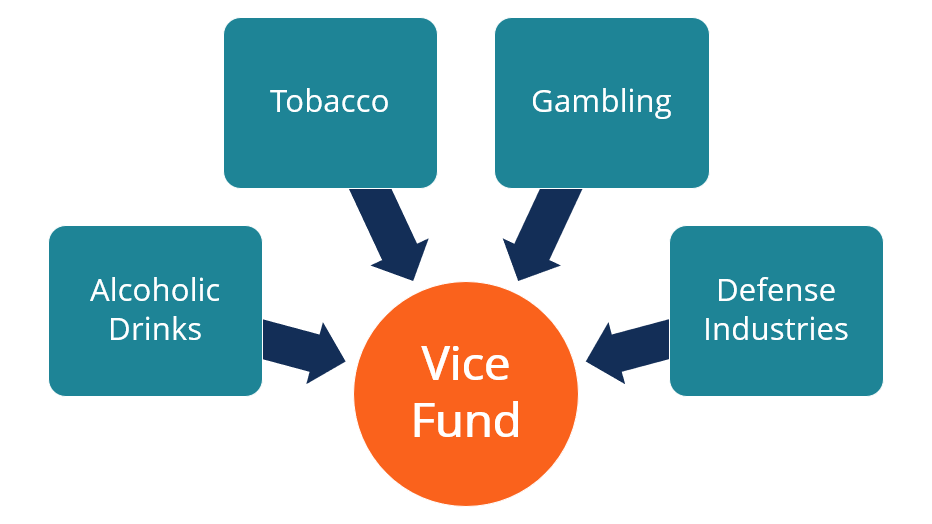
The Vice Fund, managed by USA Mutuals, is a mutual fundMutual FundsA mutual fund is a pool of money collected from many investors for the purpose of investing in stocks, bonds, or other securities. Mutual funds are owned by a group of investors and managed by professionals. Learn about the various types of fund, how they work, and benefits and tradeoffs of investing in them that invests in alcoholic drinks, tobacco, gambling, and defense industries. The word vice means immoral and wicked behavior, indicating the somewhat questionable investment strategy adopted by the Vice Fund.
Origins and Philosophy of the Vice Fund
In 2001, the Vice Fund was created to provide long-term, risk-adjusted returns for investors. The fund targeted alcoholic drinks, tobacco, gambling, and defense industries because of the more predictable consumer behavior and barriers to entry into the industries. Because of the substantial barriers to entryBarriers to EntryBarriers to entry are the obstacles or hindrances that make it difficult for new companies to enter a given market. These may include, the Vice Fund was also known as the Barrier Fund.
Furthermore, technology tends to exert little to no effect on the industries. It is unlikely that technological advancements would revolutionize the whole alcohol or tobacco industries than to the other traditional industries such as food and clothing.
The characteristics of the industries, in return, make the Vice Fund a relatively safer investment decision.
Fund Performance
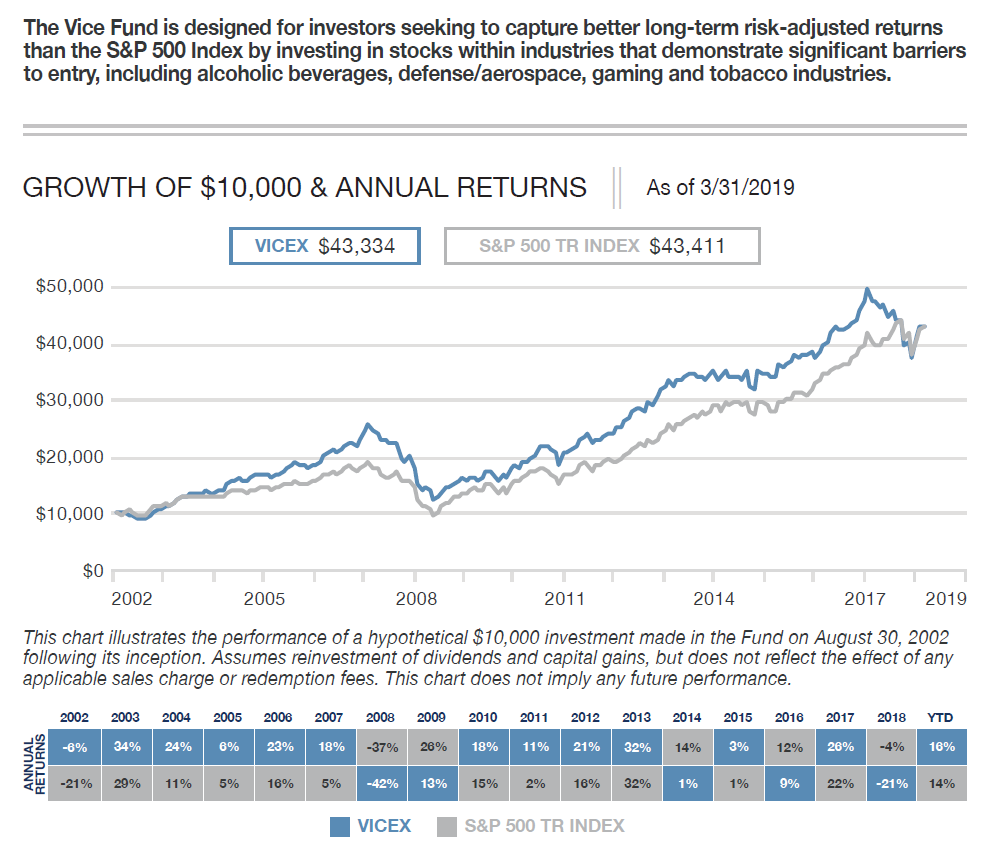
In spite of being controversial, the Vice Fund’s performed well since it started in 2002. The fund performs better than the S&P 500 not only during the good times but also during a recessionRecessionRecession is a term used to signify a slowdown in general economic activity. In macroeconomics, recessions are officially recognized after two consecutive quarters of negative GDP growth rates.. The information suggests that investing in vice offers profitability and steady growth.
Based on the performance, the Vice Fund is considered, by some investors or mutual fund managers, as an alternatively steady investment option.
Fund Outlook
The Vice Fund was founded to align with the best interest of investors. However, investors seek more than monetary profits for return. Many studies suggest that shareholders favor social and environmental performances as well.
As a result, some ethically conscious investors choose to invest in the Virtue Fund, which is a fund that focuses on socially responsible and ethical businessesBusiness EthicsTo keep it simple, business ethics are the moral principles that act as guidelines for the way a business conducts itself and its transactions. Some people argue that the Virtue Fund does not come with a cost and pays at least as much as the Vice Fund.
Social, environmental, and ethical changes can profoundly change the way people consume different products. The vice industries may change, as society is moving toward a more ethical economic development in the long-term. Correspondingly, the Vice Fund will need to adopt its investing philosophy and strategy.
Undeniably, there is a huge gray area between the Vice Fund, the Virtue Fund, and many other funds. There is no universal agreement in determining morally or immoral business activities and investment decisions. The investors themselves have the sole right to choose the actions and investments that best align with their interests.
Related Readings
CFI is the official provider of the Commercial Banking & Credit Analyst (CBCA)™Program Page - CBCAGet CFI's CBCA™ certification and become a Commercial Banking & Credit Analyst. Enroll and advance your career with our certification programs and courses. certification program, designed to transform anyone into a world-class financial analyst.
To keep learning and developing your knowledge of financial analysis, we highly recommend the additional resources below:
- ESG (Environmental, Social, and Governance)ESG (Environmental, Social and Governance)ESG is the acronym for Environmental, Social, and Governance, the three broad categories of interest for what is termed socially responsible investors.
- Sustainable InvestingSustainable InvestingSustainable investing is investing practices or methods that focus on socially responsible and ethical strategies to ensure that the companies being
- Threat of New EntrantsThreat of New EntrantsThe Threat of New Entrants refers to the threat that new competitors pose to current players within an industry. It is one of the forces that shape the
- Open-end vs Closed-end FundsOpen-end vs Closed-end Mutual FundsMany investors consider open-end vs. closed-end mutual funds similar due to both mutual funds allowing them a low-cost way to pool capital together and
-

Sinking Funds: Definition, Purpose & How They Work
A sinking fund is a type of fund that is created and set up purposely for repaying debt. The owner of the account sets aside a certain amount of money regularly and uses it only for a specific purpose
-

Sinking Funds: Definition, How They Work & Benefits
A sinking fund is a type of fund that is set up by a business in order to retire debt. A company will put money into the sinking fund and then periodically use it to pay off certain debts of the
invest
- Brazil's Sovereign Wealth Fund: Purpose, Objectives & History
- Calmar Ratio: Measuring Risk-Adjusted Investment Performance
- Dow 30 Explained: Understanding the Dow Jones Industrial Average
- Endowment Funds: A Comprehensive Guide for Investors & Donors
- Hedge Funds Explained: Strategies, Risks & Investment
- Understanding Morningstar Risk Ratings: A Comprehensive Guide
- NFO Explained: Understanding New Fund Offers & Investment
- Special Revenue Funds: Definition & Purpose for Government Entities
- Understanding Vice Funds: A Guide to Controversial Investments
-
 Emergency Fund: What It Is & Why You Need One
An emergency fund is spare cash that is used during personal financial distress. Events such as the loss of a job, an illness, or a recession are examples of when many individuals would need to use th...
-
 Reserve Funds: A Comprehensive Guide for Businesses & Individuals
A reserve fund refers to a savings account or highly liquid assets set aside to meet unexpected costs or financial obligations. Businesses, individuals, and condominium homeowners’ associations ...