
Volatility Quote Trading: A Deep Dive for Investors
Volatility quote trading is a form of investment that focuses on the volatility that a security is estimated to experience in the future. Unlike a regular investment, volatility quote trading does not consider the price or intrinsic valueIntrinsic ValueThe intrinsic value of a business (or any investment security) is the present value of all expected future cash flows, discounted at the appropriate discount rate. Unlike relative forms of valuation that look at comparable companies, intrinsic valuation looks only at the inherent value of a business on its own. of the investment; instead, it looks at the likelihood of volatility. In other words, if the value of the contract is likely to increase or decrease in price over time based on volatility.
To preface, volatility quote trading is very advanced and usually only used by highly experienced traders. It takes complex mathematical calculations and vast knowledge of the market to successfully use the strategy.
Summary
- Volatility quote trading makes investment decisions based on the volatility of a specific security or market.
- Volatility can be used in options markets based on the predicted volatility of the contract. The volatility quote trading strategy is an alternative to the general trading styles that uses the bid and ask price to find optimal investments.
- Generally, volatility quote trading is considered more advanced and only used by experienced traders.
Short Overview of Options
An option is much different from just buying or selling stock. When purchasing an option, you are essentially purchasing a contract. The option/contract conveys its owner the right to buy/sell the underlying assetUnderlying AssetUnderlying asset is an investment term that refers to the real financial asset or security that a financial derivative is based on. Thus, the at a preferred price (strike price) or date; however, they are not obliged to.
- A call option can be used to buy a security at a specific price and within a specific timeframe.
- A put optionPut OptionA put option is an option contract that gives the buyer the right, but not the obligation, to sell the underlying security at a specified price (also known as strike price) before or at a predetermined expiration date. It is one of the two main types of options, the other type being a call option. can be used to sell a security at a specific price and within a specific timeframe.
They are financial derivatives based on underlying security value. A call option and a put option include a bearish buyer and a bullish buyer on either side of the transaction. The buyer will always pay a premium to be given the contract in hopes of a positive return. Although options can have very positive returns, it is still important to carefully analyze their risks.
Understanding Volatility Quote Trading
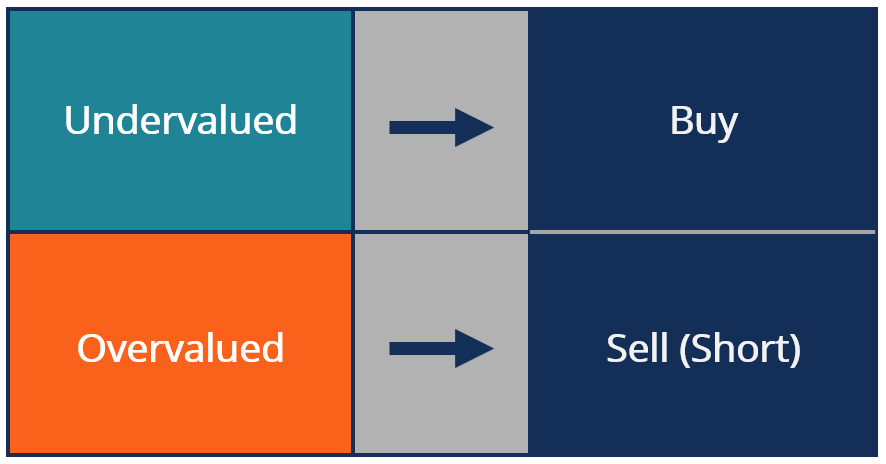
Investors will most often consider how the current price of a stock matches its intrinsic value or the future estimated cost of the stock. If it seems to be underpriced or overpriced, traders will have an arbitrage opportunity that they can take advantage of.
However, in volatility quote trading, traders are more focused on a security’s volatility over a period and what its volatility is expected to be in the future. In this style of trading, volatility is often the primary statistic trades are made on.
Options will have a higher value if the underlying security has high volatility. Larger swings will make the asset more desirable in this strategy and more likely to be “in-the-money” (ITM). In-the-money refers to an option with a strike priceStrike PriceThe strike price is the price at which the holder of the option can exercise the option to buy or sell an underlying security, depending on that’s seen as profitable relative to the security and overall market price. Two favorable ITM opportunities include:
- A put option when the strike price is above the market price
- A call option when the strike price is below the market price
In volatility trading, investors will take the arbitrage opportunities above and insert volatility into their calculations. Stockbrokers who believe a stock’s volatility is low can sell an option seeking profits from the sale. Conversely, if a trader thinks a stock’s volatility is high, they can buy the option. Both scenarios can be considered arbitrage opportunities using volatility trading strategies.
With that being said, it is essential to keep in mind that there will always be other factors to consider before making a trade. It is not wise to invest solely based on one ratio or strategy; instead, the investor should look at many trading strategies or financial ratios to find the optimal investments.
What is Volatility?
Volatility comes from the statistical measure to address the variation of a security’s or a market’s price. Volatility is closely related to risk; hence, usually, the higher the volatility, the higher the risk of that individual security or market index. There are many ways to measure volatility, some of which include beta coefficients, average true range (ATR), and standard deviations or variances.
To further explain, a securities value would be considered volatile if its price can change drastically over a short period of time. What is considered “drastic” can vary from industry to industry, but a volatile market is usually anything over a 1% spread in 24 hours. Volatility is presented as a percentage and shows the dispersion of return over a period of time.
Example of Volatility Quote Trading
Tim is an investor who is looking at taking advantage of an arbitrage opportunity through volatility quote trading. He analyzes the market and is interested in buying a call option for six months from now. After his calculations, he finds the volatility of a security to be just over 19%, which he thinks is drastically low.
If the implied volatility is low, Tim can be somewhat confident that the volatility will grow in the future and believes it is a good investment opportunity. He decides to go ahead and purchase the call option.
John is quite risk-averse, so he uses the buy-and-hold strategy. In this strategy, the security is held with the hopes the underlying security will grow in value above the strike price when he will exercise the option for a profit.
More Resources
CFI is the official provider of the global Capital Markets & Securities Analyst (CMSA)™Program Page - CMSAEnroll in CFI's CMSA® program and become a certified Capital Markets &Securities Analyst. Advance your career with our certification programs and courses. certification program, designed to help anyone become a world-class financial analyst. To keep advancing your career, the additional CFI resources below will be useful:
- Average True Range (ATR)Average True RangeThe average true range (ATR) is a price volatility indicator showing the average price variation of assets within a given time period.
- Beta CoefficientBeta CoefficientThe Beta coefficient is a measure of sensitivity or correlation of a security or an investment portfolio to movements in the overall market.
- Implied Volatility (IV)Implied Volatility (IV)Implied volatility – or simply IV – uses the price of an option to calculate what the market is saying about the future volatility of the
- Six Essential Skills of Master TradersSix Essential Skills of Master TradersJust about anyone can become a trader, but to be one of the master traders takes more than investment capital and a three-piece suit. Keep in mind: there is a sea of individuals looking to join the ranks of master traders and bring home the kind of money that goes with that title.
-
Understanding Slippage in Trading: Causes & Impact
Slippage occurs when the execution price of a trade is different from its requested price. It occurs when the market orders could not be matched at preferred prices – usually in highly volatile
-

Spread Trading: A Comprehensive Guide to Relative Value Trading
Spread trading – also known as relative value trading – is a method of trading that involves an investor simultaneously buying one security and selling a related security. The securities b
invest
- Algorithmic Trading: A Comprehensive Guide
- Understanding Algorithms: A Guide to Algorithmic Trading
- CFD Trading Explained: A Comprehensive Guide for Investors
- Understanding Daily Trading Limits: A Comprehensive Guide
- Quote Stuffing: Understanding Market Manipulation Tactics
- Understanding Stock Quotes: A Comprehensive Guide
- Trading Ranges Explained: How to Identify and Trade Them
- Understanding Volatility: A Key Indicator of Investment Risk
- Options Trading Explained: Risks & Rewards for Investors
-
 Proprietary Trading: A Comprehensive Guide for Investors
Proprietary Trading (Prop Trading) occurs when a bank or firm trades stocksStockWhat is a stock? An individual who owns stock in a company is called a shareholder and is eligible to claim part of...
-
 Quantitative Trading: A Deep Dive into Models & Analysis
Quantitative trading is a type of trading that uses quantitative analysisQuantitative AnalysisQuantitative analysis is the process of collecting and evaluating measurable and verifiable data to unders...