
Understanding Volatility: A Key Indicator of Investment Risk
Volatility is a measure of the rate of fluctuations in the price of a securityMarketable SecuritiesMarketable securities are unrestricted short-term financial instruments that are issued either for equity securities or for debt securities of a publicly listed company. The issuing company creates these instruments for the express purpose of raising funds to further finance business activities and expansion. over time. It indicates the level of risk associated with the price changes of a security. Investors and tradersSix Essential Skills of Master TradersJust about anyone can become a trader, but to be one of the master traders takes more than investment capital and a three-piece suit. Keep in mind: there is a sea of individuals looking to join the ranks of master traders and bring home the kind of money that goes with that title. calculate the volatility of a security to assess past variations in the prices to predict their future movements.

Volatility is determined either by using the standard deviation or betaBetaThe beta (β) of an investment security (i.e. a stock) is a measurement of its volatility of returns relative to the entire market. It is used as a measure of risk and is an integral part of the Capital Asset Pricing Model (CAPM). A company with a higher beta has greater risk and also greater expected returns.. Standard deviation measures the amount of dispersion in a security’s prices. Beta determines a security’s volatility relative to that of the overall market. Beta can be calculated using regression analysis.
Types of Volatility
1. Historical Volatility
This measures the fluctuations in the security’s prices in the past. It is used to predict the future movements of prices based on previous trends. However, it does not provide insights regarding the future trend or direction of the security’s price.
2. Implied Volatility
This refers to the volatility of the underlying asset, which will return the theoretical value of an optionOptions: Calls and PutsAn option is a derivative contract that gives the holder the right, but not the obligation, to buy or sell an asset by a certain date at a specified price. equal to the option’s current market price. Implied volatility is a key parameter in option pricing. It provides a forward-looking aspect on possible future price fluctuations.
Calculating Vol
The simplest approach to determine the volatility of a security is to calculate the standard deviationStandard DeviationFrom a statistics standpoint, the standard deviation of a data set is a measure of the magnitude of deviations between values of the observations contained of its prices over a period of time. This can be done by using the following steps:
- Gather the security’s past prices.
- Calculate the average price (mean) of the security’s past prices.
- Determine the difference between each price in the set and the average price.
- Square the differences from the previous step.
- Sum the squared differences.
- Divide the squared differences by the total number of prices in the set (find variance).
- Calculate the square root of the number obtained in the previous step.
Sample calculation
You want to find out the volatility of the stock of ABC Corp. for the past four days. The stock prices are given below:
- Day 1 – $10
- Day 2 – $12
- Day 3 – $9
- Day 4 – $14
To calculate the volatility of the prices, we need to:
- Find the average price:
$10 + $12 + $9 + $14 / 4 = $11.25 - Calculate the difference between each price and the average price:
Day 1: 10 – 11.25 = -1.25
Day 2: 12 – 11.25 = 0.75
Day 3: 9 – 11.25 = -2.25
Day 4: 14 – 11.25 = 2.75 - Square the difference from the previous step:
Day 1: (-1.25)2 = 1.56
Day 2: (0.75)2 = 0.56
Day 3: (-2.25)2 = 5.06
Day 4: (2.75)2 = 7.56
- Sum the squared differences:
1.56 + 0.56 + 5.06 + 7.56 = 14.75 - Find the variance:
Variance = 14.75 / 4 = 3.69 - Find the standard deviation:
Standard deviation = 1.92 (square root of 3.69)
The standard deviation indicates that the stock price of ABC Corp. usually deviates from its average stock price by $1.92.
Additional resources
Thank you for reading CFI’s explanation of volatility. CFI is the official provider of the Financial Modeling & Valuation Analyst (FMVA)™Become a Certified Financial Modeling & Valuation Analyst (FMVA)®CFI's Financial Modeling and Valuation Analyst (FMVA)® certification will help you gain the confidence you need in your finance career. Enroll today! designation for financial analysts. To continue learning and advancing your career, these additional resources will be helpful:
- Guide to Beta in FinanceBetaThe beta (β) of an investment security (i.e. a stock) is a measurement of its volatility of returns relative to the entire market. It is used as a measure of risk and is an integral part of the Capital Asset Pricing Model (CAPM). A company with a higher beta has greater risk and also greater expected returns.
- Market Risk PremiumMarket Risk PremiumThe market risk premium is the additional return an investor expects from holding a risky market portfolio instead of risk-free assets.
- Value at Risk (VAR)Value at Risk (VaR)Value at Risk (VaR) estimates the risk of an investment. VaR measures the potential loss that could happen in an investment portfolio over a period of time.
- VIXVIXThe Chicago Board Options Exchange (CBOE) created the VIX (CBOE Volatility Index) to measure the 30-day expected volatility of the US stock market, sometimes called the "fear index". The VIX is based on the prices of options on the S&P 500 Index
-

Understanding Call Prices: Callable Bonds & Preferred Stocks
A call price refers to the price that a preferred stock or bond issuer would pay to buyers if they chose to redeem the callable security before the maturity date. The price is set during the issuance
-

Call Warrants: Understanding Rights & Investment Potential
A call warrant gives the holder of the investment the right, not the obligation, to purchase the underlying financial securities at a specific price on or before a certain date.If the holder does not
invest
- Understanding Divergence in Technical Analysis: A Guide
- Understanding Forward Prices: Definition & How They Work
- Understanding Hedging Strategies: A Comprehensive Guide
- Understanding Historical Volatility (HV): A Comprehensive Guide
- Understanding Implied Volatility (IV): A Comprehensive Guide
- Understanding Slippage in Trading: Causes & Impact
- Understanding Strangle Options: A Comprehensive Guide
- Volatility Quote Trading: A Deep Dive for Investors
- Volatility Ratio: Understanding Price Changes for Trading & Investing
-
 Understanding Ascending Channels: A Technical Analysis Guide
An ascending channel occurs when visually analyzing an overall uptrend in the asset price of a stockStockWhat is a stock? An individual who owns stock in a company is called a shareholder and is eligi...
-
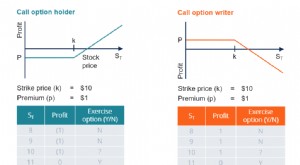 Call Options: A Comprehensive Guide for Investors
A call option, commonly referred to as a “call,” is a form of a derivatives contract that gives the call option buyer the right, but not the obligation, to buy a stockStockWhat is a stock?...