
Understanding Daily Trading Limits: A Comprehensive Guide
The daily trading limit refers to the maximum amount by which the price of a stockStockWhat is a stock? An individual who owns stock in a company is called a shareholder and is eligible to claim part of the company’s residual assets and earnings (should the company ever be dissolved). The terms "stock", "shares", and "equity" are used interchangeably. or other exchange-traded security can rise or fall during a trading session. The limits are decided by the exchange in an attempt to avoid extreme volatility or manipulation in the markets. Once a daily limit price is reached, trading cannot push the price beyond the limit level during the current trading session, but trading may continue to occur at the daily limit price. A market that reaches its daily trading limit is often called a “locked market”. Other terminologies used to describe this condition are “limit up” and “limit down” depending on whether the upper or lower daily price change limit is reached, respectively.
In futures markets, daily trading limits are often eliminated during the expiration month of the contract since prices are subject to a high level of volatility. Traders tend to avoid transactions during these times, as volatility becomes quite notable.
Not every trading market imposes daily trading limits. Each exchange gives prior specifications regarding the presence of daily trading limits, along with the specific daily trading limits for all securities traded on the exchange.
The use of limits is popular in currency marketsForex Trading - How to Trade the Forex MarketForex trading allows users to capitalize on appreciation and depreciation of different currencies. Forex trading involves buying and selling currency pairs based on each currency's relative value to the other currency that makes up the pair. as well. In this case, the central bankFederal Reserve (The Fed)The Federal Reserve is the central bank of the United States and is the financial authority behind the world’s largest free market economy. is in charge of imposing limits to control the volatility in the market for its currency. Central banks defend these limits by altering the make-up of their currency reserves. Even though these efforts prevent volatility and manipulation in the market, some argue that it leads to price imbalances.
Daily trading limits can affect asset valuations. There may be certain fundamental factors that influence the actual value of a futures contract, currency, or other asset. However, the inability to reach that particular price during a given trading session can create a mispriced asset. For example, a sudden freeze might substantially increase the fair market value of wheat futures from $3 a bushel to $4 a bushel. However, the daily limit of 40 cents up or down for wheat futures contracts will not allow the market to reach that $4 a bushel price in a single trading session.
Daily Trading Limit-Up
Limit-up refers to the maximum amount an exchange allows the price of a stock, commodity futures or options contract, or other exchange-traded asset to increase in one trading day. Some exchanges even suspend trading when the limit price is reached. For example, stock trading on the New York Stock Exchange is suspended if major stock indexes decline by a specified percentage during a single trading session. Such regulations are designed to prevent panic selling that may lead to a market crash.
Daily Trading Limit-Down
Limit-down refers to the maximum amount the price of a stock, commodity futures or options contract, or other exchange-traded asset is allowed by an exchange to fall in one trading day. In other words, it is the maximum decline in price permitted before trading is curbed.
Example of Daily Trading Limit
Let’s say the daily trading limit imposed on the price of a derivative is $5 with the previous day’s settlement at $20. Now, the derivative cannot be traded at a price below $15 or above $25 during the current trading session. Once the price reaches any one of the limits, the market will be called a “locked market”, meaning that price cannot extend any further in that direction.
Purpose of Trading Limits
The reason for imposing trading limits is to reduce the impact of extreme volatility or possible manipulation that may take place in the market. Exchanges impose limits to reduce the potential impact caused by the occurrence of certain unexpected events in the market. Adverse events may push or drag prices to levels of irrational valuation.
Criticisms Against Trading Limits
Some traders and market analysts believe that there should be no restrictions on the trading prices of securities. Their argument comes from the belief in free markets and that there shouldn’t be any curbs on market participants who are engaged in the crucial task of price discovery. Another reason highlighted is that such restrictions can be used by some participants to accomplish one of the very things that trading limits are designed to prevent – market manipulation. Often, the simpler an exchange-trading mechanism becomes, the easier it is to manipulate the market.
Daily Trading Limit Conclusion
Daily trading limits play an important role in the trading of securities. Market participants should maintain an informative understanding of the markets’ daily limits, or lack thereof, in order to trade wisely and limit their trading risk. Trading limits act as a helpful tool to curb potential volatility in less liquid markets, and in derivative markets which are characterized by high levels of leverage. Daily trading limits are comparable to circuit breakers for trading, designed to contain price movement that becomes “overheated”.
Other Resources
- Types of Markets – Dealers, Brokers, ExchangesTypes of Markets - Dealers, Brokers, ExchangesMarkets include brokers, dealers, and exchange markets. Each market operates under different trading mechanisms, which affect liquidity and control. The different types of markets allow for different trading characteristics, outlined in this guide
- Trading MechanismsTrading MechanismsTrading mechanisms refer to the different methods by which assets are traded. The two main types of trading mechanisms are quote driven and order driven trading mechanisms
- AlgorithmsAlgorithms (Algos)Algorithms (Algos) are a set of instructions that are introduced to perform a task. They automate trading to generate profits at a frequency impossible to a human trader.
- SpeculationSpeculationSpeculation is the buying of an asset or financial instrument with the hope that the price of the asset or financial instrument will increase in the future.
-

Trading Authorization: Empowering Your Broker & Account Security
Trade authorization is the level of power or authority extended to a broker or an agent by a client to execute all transactions, thereby establishing accountability of the trading accountsTrading Acco
-
Trading Channels: Understanding Uptrends & Downtrends
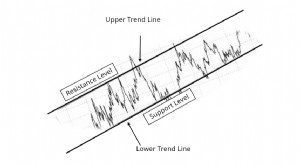
A trading channel is a chart pattern highlighted by two parallel lines bordering resistance and support within which a security trades during a period. Within a valid uptrend trading channel, an oppor
invest
- Understanding Daily Trading Limits: Circuit Breakers & Price Fluctuations
- Algorithmic Trading: A Comprehensive Guide
- Understanding Algorithms: A Guide to Algorithmic Trading
- CFD Trading Explained: A Comprehensive Guide for Investors
- Day Trading Explained: Strategies, Risks & How It Works
- Trading Ranges Explained: How to Identify and Trade Them
- Understanding Variable Price Limits in Futures Contracts
- Volatility Quote Trading: A Deep Dive for Investors
- Options Trading Explained: Risks & Rewards for Investors
-
 Spread Trading: A Comprehensive Guide to Relative Value Trading
Spread trading – also known as relative value trading – is a method of trading that involves an investor simultaneously buying one security and selling a related security. The securities b...
-
 Understanding Strangle Options: A Comprehensive Guide
Strangle is an investment methodInvestment MethodsThis guide and overview of investment methods outlines they main ways investors try to make money and manage risk in capital markets. An investment is...