
Understanding Non-Competitive Treasury Tenders: A Comprehensive Guide
Non-competitive tenders are a way of purchasing U.S. Treasury securities through non-competitive bids that do not state a particular price or yield for the security. Instead, investors rely on competitive bidders to set an average “market” price and offer to purchase a specific amount of Treasury securities at that price.

The types of securities that can be purchased through non-competitive tenders include:
- Treasury billsTreasury Bills (T-Bills)Treasury Bills (or T-Bills for short) are a short-term financial instrument issued by the US Treasury with maturity periods from a few days up to 52 weeks.
- Treasury bonds
- Treasury notes10-Year US Treasury NoteThe 10-year US Treasury Note is a debt obligation that is issued by the US Treasury Department and comes with a maturity of 10 years.
- Treasury Inflation-Protected Securities (TIPS)
How Non-Competitive Tenders Work
While discussing non-competitive tenders, it is important to distinguish them from competitive tenders.
Governments typically offer two ways for investors to purchase securities – through competitive tenders and bidding at auctionsAuctionAn auction is a system of buying and selling goods or services by offering them for bidding, allowing people to bid, and selling to the highest bidder. The bidders compete against each other and through non-competitive tenders.
Competitive bidding rewards the highest bidder with the security, whereas non-competitive bidding allows investors to purchase securities at a price that is decided by competitive bidding, which tends to be the fair market price of the security.
When interest rates increase to points that are higher than the market rates offered by commercial banksCommercial BankA commercial bank is a financial institution that grants loans, accepts deposits, and offers basic financial products such as savings accounts. and savings accounts, the demand for U.S. Treasury securities increases and the number of non-competitive bids for securities also increase along with the number of competitive bids. It is because the higher return offered by such securities and bonds is attractive to investors.
Which Investors Invest in Non-Competitive Tenders?
The following infographic from the U.S. Department of the Treasury shows that the highest number of non-competitive bids are submitted by individual investors, followed by commercial banks, corporations, brokers, dealers, and pension funds. Although individuals play a large role in the number of bids submitted, the dollar volume of bids is equally high from corporations and commercial banks who tend to submit bids with large denominations.
Therefore, the range of investors submitting non-competitive tenders is diverse in size, as well as type. Larger bids play a major role in determining the dollar volume of bids, and institutional or corporate investors are more likely to make such bids.
One of the primary reasons that a large number of individual investors prefer to invest in non-competitive bids is the idea that the prices and bids are determined by the competitive side of the market, so investors are protected from the risk of paying higher-than-market prices. The minimum price of a non-competitive tender is $10,000, and the maximum is $500,000.
Advantages of Non-Competitive Tenders
1. Less complicated trading
One of the most prominent advantages of non-competitive tenders is that investors do not need to spend time calculating and strategizing for a price to bid, as the price is decided by the market.
2. Higher interest rates
The attractiveness of non-competitive tenders stems from the higher interest rates offered by the Treasury securities combined with the convenience of non-competitive bidding.
3. Lower brokerage and advisory fees
Individual investors can avoid paying traditional brokerage and advisory fees by submitting tenders directly to the federal Treasury Department through Treasury DirectTreasury DirectTreasury Direct is the online platform through which investors can purchase U.S. government securities directly from the U.S. Treasury.. It reduces transactional costs related to trading and investing in securities by eliminating the need for a third-party broker.
4. More accessible
Competitive tenders are usually employed by large institutions and corporations that submit high-dollar volume bids. Investors that do not meet the criteria for competitive bidding are allowed to invest in securities through non-competitive bidding.
Investing in securities through non-competitive bids allows investors to participate in secondary markets for the Treasury securities as distributors, where they can sell the securities at a premium and make a profit.
The largest secondary money market in the U.S. is the market for Treasury bills, implying that there are ample opportunities for investors to participate in such markets.
Related Readings
CFI is the official provider of the global Commercial Banking & Credit Analyst (CBCA)™Program Page - CBCAGet CFI's CBCA™ certification and become a Commercial Banking & Credit Analyst. Enroll and advance your career with our certification programs and courses. certification program, designed to help anyone become a world-class financial analyst. To keep advancing your career, the additional resources below will be useful:
- Negotiated Dealing System (NDS)Negotiated Dealing System (NDS)The Negotiated Dealing System (NDS) is a fully electronic trading platform that is instituted and operated by the Reserve Bank of India (RBI) with the
- Secondary MarketSecondary MarketThe secondary market is where investors buy and sell securities from other investors. Examples: New York Stock Exchange (NYSE), London Stock Exchange (LSE).
- Institutional InvestorInstitutional InvestorAn institutional investor is a legal entity that accumulates the funds of numerous investors (which may be private investors or other legal entities) to
- Trading SecuritiesTrading SecuritiesTrading securities are securities purchased by a company for the purpose of realizing a short-term profit. The securities are issued within the company's industry,
-
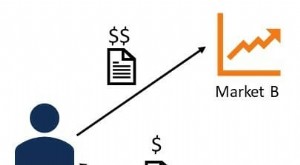
Arbitrage Explained: Understanding and Capitalizing on Price Differences
Arbitrage is the strategy of taking advantage of price differences in different markets for the same assetTypes of AssetsCommon types of assets include current, non-current, physical, intangible, oper
-

Understanding Auction Markets: How Prices Are Determined
An auction market is a market where the price is determined by the highest price the buyer is willing to pay (bids), and the lowest price the seller is willing to take (offers). Bids and offers are ma
invest
- Understanding Tender Fees: Costs in Corporate Takeovers
- Understanding U.S. Treasury Instruments: A Guide for Retirement Planning
- Treasury Stock: Definition, Purpose & Impact on Share Count
- Treasury Stock: Definition, Purpose & Implications
- Understanding the 10-Year US Treasury Note: Definition & Key Features
- Bond Tender Offers: Definition, Process & Corporate Finance
- Understanding Off-the-Run US Treasury Bonds: A Comprehensive Guide
- Treasury Bonds: A Comprehensive Guide to U.S. Government Debt
- Treasury Direct: Your Direct Access to U.S. Treasury Securities
-
 Anchoring Bias: Understanding How First Impressions Influence Decisions
Anchoring bias occurs when people rely too much on pre-existing information or the first information they find when making decisions. For example, if you first see a T-shirt that costs $1,200 – ...
-
 Understanding Non-Competitive Treasury Tenders: A Comprehensive Guide
Non-competitive tenders are a way of purchasing U.S. Treasury securities through non-competitive bids that do not state a particular price or yield for the security. Instead, investors rely on competi...