
Cash Equities Trading: A Comprehensive Guide for Investors

The term "cash equities" refers to a type of trading executed primarily by large, institutional investors. These companies trade equities for themselves and on behalf of customers. An individual working as a Wall Street trader may be trading for his company's cash equities desk.
Equities Trading
Equities is the stock market. Stock shares represent ownership or equity in the issuing corporation. Stocks can be purchased as long-term investments or traded for short-term profits. Cash equities trading by a Wall Street investment firm will be focused on short-term trading to generate quick and hopefully large profits from changing stock market prices. Traders back the trades with their firms' capital rather than with borrowed money.
Computerized Trading
A large part of the institutional cash equities trading is computerized trading programs. The Wall Street firms use computers to buy and sell large blocks of stocks in fractions of a second. When news reports discuss electronic or computerized stock trading, the reports are referring to the cash equities trading market. The large volume of stock market trading on the large exchanges and the ability of the financial firms to generate profits from very small share price changes have turned computerized trading into a large portion of the daily stock market volume.
Customer Equities Trading
Cash equity trading from Wall Street financial firms also includes making trades for customers. Trades may include large block trades, special off-exchange trades and trading with customer funds. These trading services are for customers with very large amounts of money to put in the hands of professional stock market traders. These stock trading desks have access to trading tools much more advanced than those available to individual traders.
Other Types of Trading
Wall Street financial companies conduct trading activities in several types of securities markets besides equities trading. Credit trading is the trading of bonds, including government bonds, investment grade corporate bonds and high-yield bonds. Futures trading is the counterpoint to cash equity and credit trading. Futures are used for derivative trading of stocks and bonds as well as commodities. Derivatives trading provides a different set of risks and rewards from those of cash equities trading.
-

Trading Authorization: Empowering Your Broker & Account Security
Trade authorization is the level of power or authority extended to a broker or an agent by a client to execute all transactions, thereby establishing accountability of the trading accountsTrading Acco
-
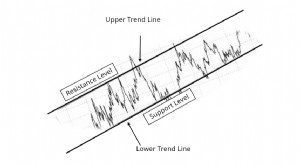
Trading Channels: Understanding Uptrends & Downtrends
A trading channel is a chart pattern highlighted by two parallel lines bordering resistance and support within which a security trades during a period. Within a valid uptrend trading channel, an oppor
investing
- Bitcoin Cash (BCH): A Comprehensive Overview - Features, History & Future
- Understanding Cash Consideration in Mergers & Acquisitions
- Understanding Cash Flow: A Comprehensive Guide
- Cash Management: A Comprehensive Guide to Financial Stability
- Cash-on-Cash Return: Definition, Calculation & Importance
- Cash Ratio: Understanding Your Company's Short-Term Liquidity
- Cash Sweep: Reduce Debt & Maximize Earnings | [Your Company Name]
- Understanding Trading Below Cash: What It Means & Implications
- Cash Trading Explained: Buying & Selling with Available Funds
-
 Spread Trading: A Comprehensive Guide to Relative Value Trading
Spread trading – also known as relative value trading – is a method of trading that involves an investor simultaneously buying one security and selling a related security. The securities b...
-
 Synthetic Cash: Understanding Simulated Financial Instruments
Synthetic cash is a financial instrument that is created to function like other financial instruments, but certain characteristics of the simulated financial instrument are altered. The simulated inst...