
Understanding Additional Paid-In Capital (APIC): Definition & Significance
Additional Paid In Capital (APIC) is the value of share capital above its stated par value and is an accounting item under Shareholders’ Equity on the balance sheet. APIC can be created whenever a company issues new shares and can be reduced when a company repurchases its shares. APIC is also commonly referred to as Contributed SurplusContributed SurplusContributed surplus is an account in the shareholders’ equity section of the balance sheet that reflects excess amounts collected from the or Contrbuted Capital in Excess of Par.
How Additional Paid In Capital is Created
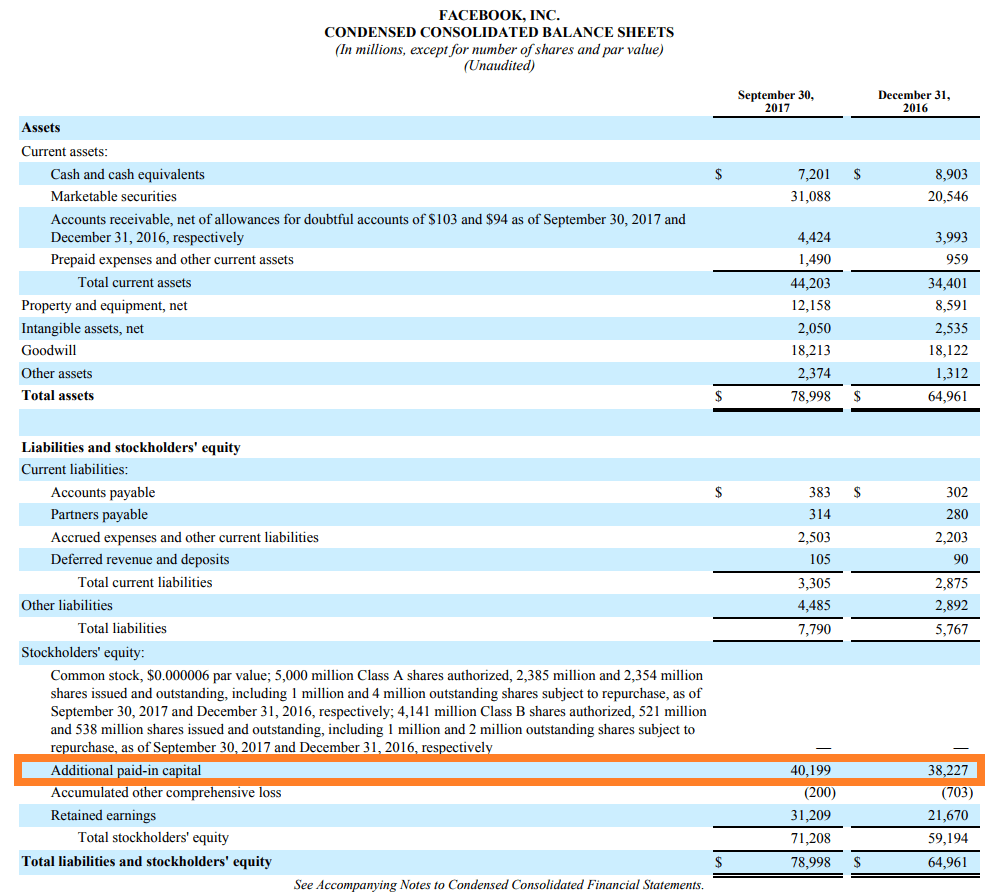
As you can see with Facebook, in the example above, Additional Paid In Capital is created as a result of issuing shares at a price higher than their par value.
As of September 30, 2017, Facebook has issued $40.199 billion of share capital, all of which is listed as APIC on its balance sheet. Since the par value of its common stock is only $0.000006 per share, the total is less than $1 million (which is the units it reports in) so it shows as zero on the balance sheet.
Additional Paid In Capital is only dependent on the issue price of equity, not the current market value. Once a company’s shares start trading on a public exchange, their price movements don’t impact the APIC account on the balance sheet.
Sample Calculation
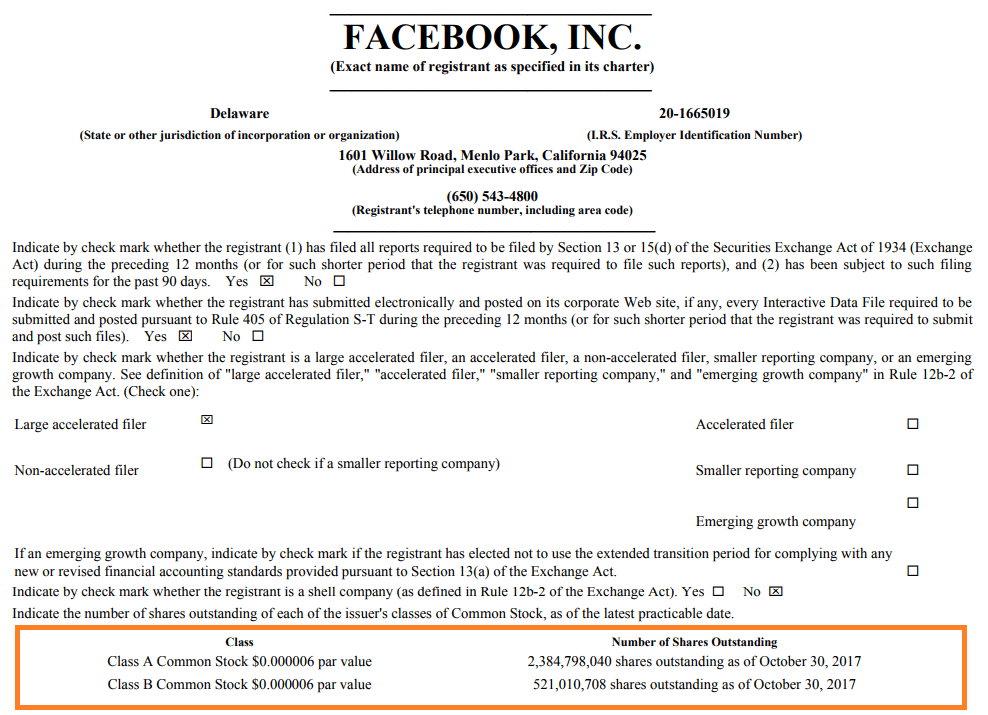
Let us break down the above example into some basic steps to see how the additional paid-in capital is calculated. Here is some more detail from the front page of the company’s 10-Q quarterly report.
Step 1
Take the total Class A common shares outstanding of 2.38 billion and multiply them by $0.000006 par value per share.
= $14,309
Step 2
Take the Class B common shares of 500 million and multiply them by $0.000006 par value.
= $3,000
Step 3
Add the Class A and Class B totals together to get $17,309.
Step 4
Divide $17,309 by 1 million to get the appropriate units on the balance sheet, which rounds to $0.0 million.
Download the Free Template
Enter your name and email in the form below and download the free template now!
Applications in Financial Modeling
When performing financial modeling in Excel, it’s important to properly account for a company’s share capital and total shareholders’ equity.
A separate schedule in the model can be created to track the par value, issue price, and any new issuance or repurchase of shares.
The issuance of equity impacts the cash flow statementCash Flow StatementA cash flow Statement contains information on how much cash a company generated and used during a given period. (financing cash flow), as well as the balance sheet, as shown below:
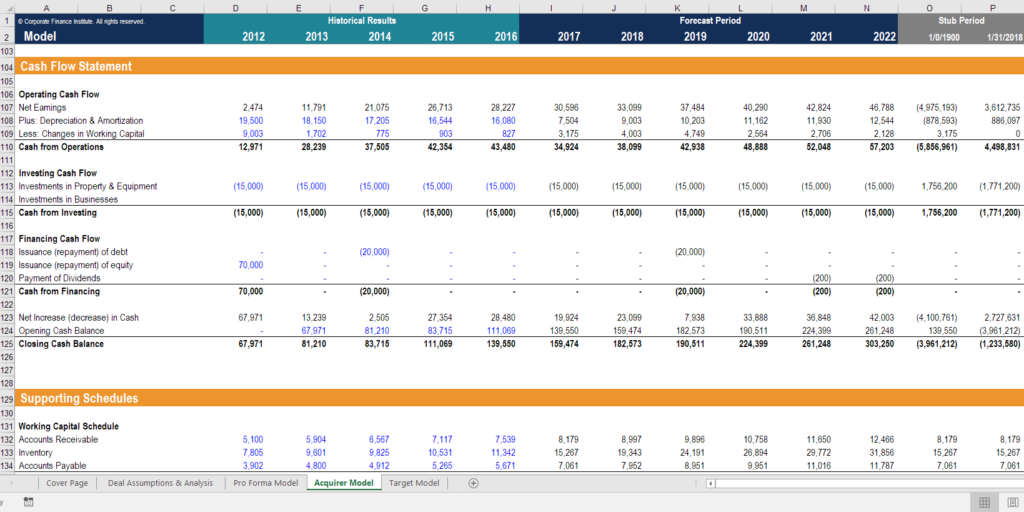
Screenshot from CFI’s financial modeling courses.
Additional Resources
CFI is the official provider of the global Financial Modeling & Valuation Analyst (FMVA)®Become a Certified Financial Modeling & Valuation Analyst (FMVA)®CFI's Financial Modeling and Valuation Analyst (FMVA)® certification will help you gain the confidence you need in your finance career. Enroll today! certification program, designed to help anyone become a world-class financial analyst.
To keep advancing your career, the additional resources below will be useful:
- Equity ValueEquity ValueEquity value can be defined as the total value of the company that is attributable to shareholders. To calculate equity value follow, this guide from CFI.
- Contributed SurplusContributed SurplusContributed surplus is an account in the shareholders’ equity section of the balance sheet that reflects excess amounts collected from the
- Financial Modeling GuidesFinancial ModelingFree financial modeling resources and guides to learn the most important concepts at your own pace. These articles will teach you financial modeling best practices with hundreds of examples, templates, guides, articles, and more. Learn what financial modeling is, how to build a model, Excel skills, tips and tricks
- Financial Modeling Best PracticesFinancial Modeling Best PracticesThis article is to provide readers information on financial modeling best practices and an easy to follow, step-by-step guide to building a financial model.
-

Financial Statement Manipulation: Definition & Examples
Financial statement manipulation refers to the practice of using creative accounting tricks to make a company’s financial statements reflect what the company wants its performance to look like r
-

Understanding Financial Statements: A Comprehensive Guide
Financial statements are the records of a company’s financial condition and activities during a period of time. Financial statements show the financial performance and strength of a companyCorpo
Accounting
- Net Working Capital (NWC): Definition, Calculation & Importance
- Understanding the Role of an Accountant: Key Responsibilities & Importance
- Accounting Explained: Understanding Financial Records & Reporting
- Accounting Conservatism: Definition, Examples & Importance
- Additional Paid-In Capital vs. Contributed Capital: Key Differences Explained
- Understanding Additional Paid-In Capital (APIC): Definition & Significance
- Asset Disposal: Definition, Types & Financial Statement Impact
- Understanding Financial Audits: A Comprehensive Guide
- Understanding Finance: A Comprehensive Overview
-
 Understanding Audit Evidence: A Comprehensive Guide
Evidence in an audit is information that is collected and required in the review of an entity’s financial transactions, balances, and internal controls to certify the financial statements as bei...
-
 Understanding Financial Assets: Definitions & Types
Financial assets refer to assets that arise from contractual agreements on future cash flowsCash Flow StatementA cash flow Statement contains information on how much cash a company generated an...