
Additional Paid-In Capital vs. Contributed Capital: Key Differences Explained
The shareholders’ equity section of the balance sheet contains related amounts called additional paid-in capital and contributed capital. The key difference between additional paid-in capital vs. contributed capital is that the latter is referred to as the total value of cash and assets that shareholders provided to a company in exchange for the company’s shares. Additional paid-in capital refers to the value of cash or assets that the shareholders provided over and above the par value of the company’s shares.

Additional paid-in capital and contributed capital are also reported differently on the balance sheet under the shareholders’ equityStockholders EquityStockholders Equity (also known as Shareholders Equity) is an account on a company's balance sheet that consists of share capital plus section. The additional paid-in capital is reported in a separate account. Whereas, contributed capital is combined and is the sum of the common stock and additional paid-in capital accounts.
What is Additional Paid-in Capital?
Additional paid-in capital is the amount paid for share capital above its par value. It is also commonly known as the “contributed capital in excess of “par” or “share premium.” Essentially, the additional paid-in capital reveals how much money investors paid for the shares above their nominal value.
Remember that the par valuePar ValuePar Value is the nominal or face value of a bond, or stock, or coupon as indicated on a bond or stock certificate. It is a static value of a stock is usually a small amount (e.g., $0.10 or $0.01) that appears on stock certificates. In some cases, the par value can even be lower than $0.01. The par value must not be confused with the market value of shares. Par value indicates the minimum value at which a company may sell its shares to investors. On the other hand, the market value of shares is determined by the transactions occurring in the market.
Additional paid-in capital is recorded on a company’s balance sheet under the stockholders’ equity section. The account for the additional paid-in capital is created every time when a company issues new shares to or repurchases its shares from shareholders. Note that the transactions with the company’s shares in the secondary marketSecondary MarketThe secondary market is where investors buy and sell securities from other investors. Examples: New York Stock Exchange (NYSE), London Stock Exchange (LSE). do not affect the company’s paid-in capital since it does not receive any cash for the transactions.
What is Contributed Capital?
Contributed capital (also known as the paid-in capital) is the total value of a company’s equity purchased by investors directly from a company. In other words, it indicates the total amount of money that the shareholders paid to a company to acquire their stakes in it. A company’s contributed capital includes the value paid for equity through initial public offerings (IPOs)Initial Public Offering (IPO)An Initial Public Offering (IPO) is the first sale of stocks issued by a company to the public. Prior to an IPO, a company is considered a private company, usually with a small number of investors (founders, friends, family, and business investors such as venture capitalists or angel investors). Learn what an IPO is, direct public offerings, and public listings. Essentially, contributed capital includes both the par value of share capital (common stock) and the value above par value (additional paid-in capital).
Contributed capital is reported on the balance sheet under the shareholders’ equity section. On the balance sheet, the contributed capital contains two separate accounts: common stock account and additional paid-in capital.
Related Readings
CFI is the official provider of the Financial Modeling & Valuation Analyst (FMVA)Become a Certified Financial Modeling & Valuation Analyst (FMVA)®CFI's Financial Modeling and Valuation Analyst (FMVA)® certification will help you gain the confidence you need in your finance career. Enroll today!®Become a Certified Financial Modeling & Valuation Analyst (FMVA)®CFI's Financial Modeling and Valuation Analyst (FMVA)® certification will help you gain the confidence you need in your finance career. Enroll today! certification program, designed to transform anyone into a world-class financial analyst.
To keep learning and developing your knowledge of financial analysis, we highly recommend the additional resources below:
- Capital StructureCapital StructureCapital structure refers to the amount of debt and/or equity employed by a firm to fund its operations and finance its assets. A firm's capital structure
- IFRS vs US GAAPIFRS vs. US GAAPThe IFRS vs US GAAP refers to two accounting standards and principles adhered to by countries in the world in relation to financial reporting
- Projecting Balance Sheet Line ItemsProjecting Balance Sheet Line ItemsProjecting balance sheet line items involves analyzing working capital, PP&E, debt share capital and net income. This guide breaks down how to calculate
- Stakeholder vs ShareholderStakeholder vs. ShareholderThe terms “stakeholder” and “shareholder” are often used interchangeably in the business environment. Looking closely at the meanings of stakeholder vs shareholder, there are key differences in usage. Generally, a shareholder is a stakeholder of the company while a stakeholder is not necessarily a shareholder.
-
Basel I: Understanding Core Banking Regulations & Capital Requirements
Basel I refers to a set of international banking regulations created by the Basel Committee on Bank Supervision (BCBS), which is based in Basel, Switzerland. The committee defines the minimum capital
-

Understanding Value Reporting Forms for Businesses
A value reporting form is an insurance report used to monitor the coverage level of commercial businesses with changing inventory values over time. The constant changes in inventory are a result of ch
Accounting
- Understanding Paid-In Capital: Causes & Impact on Your Balance Sheet
- Understanding and Calculating Additional Paid-In Capital
- Contributed Capital: Definition & Understanding | [Your Company Name]
- Corporate Finance: Definition, Importance & Key Concepts
- Understanding Additional Paid-In Capital (APIC): Definition & Significance
- Understanding Additional Paid-In Capital (APIC): Definition & Significance
- Contributed Surplus Explained: Understanding Stockholders' Equity
- Par Value Explained: Understanding Bonds & Stocks
- Understanding Additional Paid-In Capital (APIC): Definition & Significance
-
 Understanding Salvage Value: Definition & Importance
Salvage value is the amount that an asset is estimated to be worth at the end of its useful life. It is also known as scrap value or residual value, and is used when determining the annual depreciatio...
-
 Share Capital: Definition, Types & Importance for Businesses
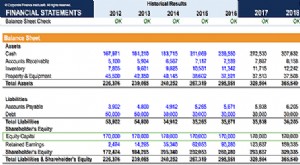
Share capital (shareholders’ capital, equity capital, contributed capital,Contributed SurplusContributed surplus is an account in the shareholders’ equity section of the balance sheet that...