
Understanding Days Payable Outstanding (DPO): A Key Metric
Days Payable Outstanding (DPO) refers to the average number of days it takes a company to pay back its accounts payableAccounts PayableAccounts payable is a liability incurred when an organization receives goods or services from its suppliers on credit. Accounts payables are. Therefore, days payable outstanding measures how well a company is managing its accounts payable. A DPO of 20 means that, on average, it takes a company 20 days to pay back its suppliers.

Days Payable Outstanding Formula
The formula for DPO is as follows:
Days Payable Outstanding = (Average Accounts Payable / Cost of Goods Sold) x Number of Days in Accounting Period
Or
Days Payable Outstanding = Average Accounts Payable / (Cost of Sales / Number of Days in Accounting Period)
Where:
Cost of Sales = Beginning Inventory + Purchases – Ending Inventory
Interpreting Days Payable Outstanding
Let us consider the implications of a high and low DPO:
High DPO
A high DPO is generally advantageous for a company. If a company takes longer to pay its creditors, the excess cash on handCash SweepA cash sweep is any deliberately chosen and automated transfer of a portion of a company's or an individual's cash flow to be used for a specific purpose. could be used for short-term investing activities. However, taking too long to pay creditors may result in unhappy creditors and their refusal to extend further credit or offer favorable credit terms. Also, if the DPO is too high, it may indicate that the company is struggling to find the cash to pay its creditors.
Therefore, a higher DPO than the industry average would suggest:
- Better credit terms than competitors; or
- Inability to pay creditors on time
Low DPO
A company with a low DPO may indicate that the company is not fully utilizing its credit period offered by creditors. Alternatively, it is possible that the company only has short-term credit arrangements with its creditors.
Therefore, a lower DPO than the industry average would suggest:
- Worse credit terms than competitors; or
- Not fully utilizing the credit period offered by creditors.
Example of Days Payable Outstanding
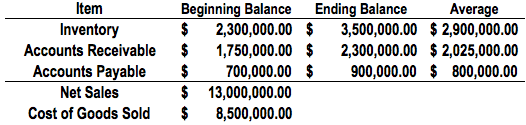
Calculating the DPO with the beginning and end of year balances provided above:
- Average accounts payable: $800,000
- Cost of goods soldCost of Goods Sold (COGS)Cost of Goods Sold (COGS) measures the “direct cost” incurred in the production of any goods or services. It includes material cost, direct: $8,500,000
- Number of days: 365
DPO: ($800,000 / $8,500,000) x 365 = 34.35. Therefore, this company takes an average of 34 days to pay back its accounts payable.
The Importance of Days Payable Outstanding
Days payable outstanding is an important efficiency ratio that measures the average number of days it takes a company to pay back suppliers. This metric is used in cash cycle analysis. A high or low DPO (compared to the industry average) affects a company in different ways. For example, a high DPO may cause suppliers to label the company as a “bad client” and impose credit restrictions. On the other hand, a low DPO may indicate that the company is not fully utilizing its cash position and may indicate an inefficiently operating company.
There is no clear-cut number on what constitutes a healthy days payable outstanding, as the DPO varies significantly by industry, competitive positioning of the company, and its bargaining power. For example, Walmart is a huge company in the retail industry. With such a significant market share, the retailer can negotiate deals with suppliers that heavily favor them. As of July 2017, the DPO of Walmart stands at around 42.
Applications in Financial Modeling and Analysis
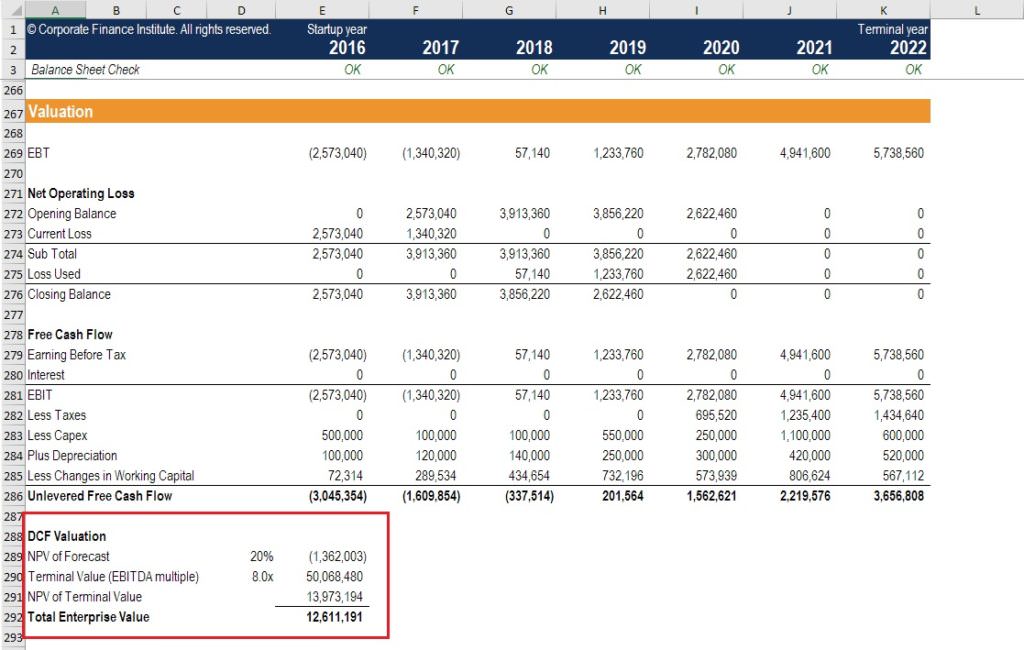
DPO and the average number of days it takes a company to pay its bills are important concepts in financial modelingWhat is Financial ModelingFinancial modeling is performed in Excel to forecast a company's financial performance. Overview of what is financial modeling, how & why to build a model.. When calculating a company’s free cash flow to the firmValuationFree valuation guides to learn the most important concepts at your own pace. These articles will teach you business valuation best practices and how to value a company using comparable company analysis, discounted cash flow (DCF) modeling, and precedent transactions, as used in investment banking, equity research, (FCFF), changes in net working capitalNet Working CapitalNet Working Capital (NWC) is the difference between a company's current assets (net of cash) and current liabilities (net of debt) on its balance sheet. impact cash flow, and, thus, the average number of days they take to pay bills can have an impact on valuation (especially in the short run).
Below is a screenshot of a DCF model in CFI’s Financial Analyst Training ProgramBecome a Certified Financial Modeling & Valuation Analyst (FMVA)®CFI's Financial Modeling and Valuation Analyst (FMVA)® certification will help you gain the confidence you need in your finance career. Enroll today!.
 Become a Certified Financial Modeling & Valuation Analyst (FMVA)®CFI's Financial Modeling and Valuation Analyst (FMVA)® certification will help you gain the confidence you need in your finance career. Enroll today!
Download the Free Template
Enter your name and email in the form below and download the free template now!
Other Resources
CFI offers the Commercial Banking & Credit Analyst (CBCA)™Program Page - CBCAGet CFI's CBCA™ certification and become a Commercial Banking & Credit Analyst. Enroll and advance your career with our certification programs and courses. certification program for those looking to take their careers to the next level. To keep learning and developing your knowledge base, please explore the additional relevant resources below:
- Accounts ReceivableAccounts ReceivableAccounts Receivable (AR) represents the credit sales of a business, which have not yet been collected from its customers. Companies allow
- Day Sales OutstandingDays Sales Outstanding (DSO)Days Sales Outstanding (DSO) represents the average number of days it takes credit sales to be converted into cash, or how long it takes a
- Day Sales in InventoryDays Sales in Inventory (DSI)Days Sales in Inventory (DSI), sometimes known as inventory days or days in inventory, is a measurement of the average number of days or time
- Financial Accounting TheoryFinancial Accounting TheoryFinancial Accounting Theory explains the why behind accounting - the reasons why transactions are reported in certain ways. This guide will
-

LIFO Reserve Explained: Understanding Inventory Valuation
A LIFO reserve acts as a contra account, meaning it’s a ledger account used for inventoryInventoryInventory is a current asset account found on the balance sheet, consisting of all raw mate
-

Understanding Notes Payable: A Comprehensive Guide
Notes payable are written agreements (promissory notes) in which one party agrees to pay the other party a certain amount of cash. Alternatively put, a note payable is a loan between two parties.A not
Accounting
- Accounts Payable (AP): Definition, Function & Importance
- Cash Conversion Cycle (CCC): Definition & Analysis
- Understanding Days Deduction Outstanding (DDO) & Its Impact
- Days Inventory Outstanding (DIO): Calculation & Significance
- Days Sales Outstanding (DSO): Definition & Calculation
- EBITA Explained: Understanding Earnings Before Interest, Taxes, and Amortization
- Understanding Expenditures: Definition and Types
- Goodwill in Accounting: Definition & Value
- Days Payable Outstanding (DPO): Definition & Analysis
-
 Differential Cost Analysis: A Guide for Business Decisions
Differential cost refers to the difference between the cost of two alternative decisions. The cost occurs when a business faces several similar options, and a choice must be made by picking one option...
-
 Understanding Extraordinary Items in Financial Statements
An extraordinary item is an accounting term that refers to an abnormal gain or loss that is not generated from the ordinary business operations of a company, is infrequent in nature, and is unlikely t...