
Days Sales Outstanding (DSO): Definition & Calculation
Days Sales Outstanding (DSO) represents the average number of days it takes credit sales to be converted into cash or how long it takes a company to collect its account receivablesAccounts ReceivableAccounts Receivable (AR) represents the credit sales of a business, which have not yet been collected from its customers. Companies allow. DSO can be calculated by dividing the total accounts receivable during a certain time frame by the total net credit sales. This number is then multiplied by the number of days in the period of time.

The period of time used to measure DSO can be monthly, quarterly, or annually. If the result is a low DSO, it means that the business takes a few days to collect its receivables. On the other hand, a high DSO means it takes more days to collect receivables. A high DSO may lead to cash flow problems in the long run. DSO is one of the three primary metrics used to calculate a company’s cash conversion cycle.
What is the Formula for Days Sales Outstanding?
To determine how many days it takes, on average, for a company’s accounts receivable to be realized as cash, the following formula is used:
DSO = Accounts Receivables / Net Credit Sales X Number of Days
Example Calculation
George Michael International Limited reported a sales revenue for November 2016 amounting to $2.5 million, out of which $1.5 million are credit sales, and the remaining $1 million is cash sales. The accounts receivable balance as of month-end closing is $800,000.
Given the above data, the DSO totaled 16, meaning it takes an average of 16 days before receivables are collected. Generally, a DSO below 45 is considered low, but what qualifies as high or low also depends on the type of business. Different industries have markedly different average DSOs. Also, cash sales are not included in the computation because they are considered a zero DSO – representing no time waiting from the sale date to receipt of cash.
Download the Free Template
Enter your name and email in the form below and download the free template now!
What are the Indications of a High or Low DSO?
A high DSO value illustrates a company is experiencing a hard time when converting credit sales to cash. But, depending on the type of business and the financial structure it maintains, a company with a large capitalization may not view a DSO of 60 as a serious issue.
However, for a small scale business, a high DSO is a concerning matter because it may cause cash flow problems. Smaller businesses typically rely on the quick collection of receivables to make payments for operational expenses, such as salariesCFA® Salary GuideThe median CFA® salary is approximately $180,000 in the United States while average total compensation over $300,000. Learn more about salaries, compensation, and what your expectations should be as a financial analyst in equity research, FP&A, portfolio management, and other areas, utilities, and other inherent expenses. They may struggle for cash to pay these expenses from time to time if the DSO continues to be at a high value.
To solve high DSO issues, a company must determine what factors are affecting sales and collection. The situation may suggest the following various reasons:
- Credit issues with customers with a negative credit standing
- Sales teams are offering longer payment terms for customers to pump up sales
- Company is encouraging customers to purchase on credit, so they buy more products and services
- Company is inefficient or ineffective in its collection process
On the other hand, a low DSO is more favorable to a company’s collection process. Customers are either paying on time to avail of discounts, or the company is very strict on its credit policy, which may negatively affect sales performance. However, having a low DSO for small to medium-sized businesses generally carries considerable benefits. Fast credit collectability decreases problems related to paying operational expenses, and any excess money that is collected can be reinvested right away to increase future earningsNet Profit MarginNet Profit Margin (also known as "Profit Margin" or "Net Profit Margin Ratio") is a financial ratio used to calculate the percentage of profit a company produces from its total revenue. It measures the amount of net profit a company obtains per dollar of revenue gained..
How Important is Days Sales Outstanding in Business Operations?
Determining the days sales outstanding is an important tool for measuring the liquidity of a company’s current assets. Due to the high importance of cash in operating a business, it is in the company’s best interests to collect receivable balances as quickly as possible. Managers, investors, and creditors see how effective the company is in collecting cash from customers. A lower DSO value reflects high liquidity and cash flow measurements.
The DSO is also an important assumption that is used in building financial models.
Learn More
CFI is the official provider of the global Commercial Banking & Credit Analyst (CBCA)™Program Page - CBCAGet CFI's CBCA™ certification and become a Commercial Banking & Credit Analyst. Enroll and advance your career with our certification programs and courses. certification program, designed to help anyone become a world-class financial analyst. To keep advancing your career, the additional CFI resources below will be useful:
- Inventory TurnoverInventory TurnoverInventory turnover, or the inventory turnover ratio, is the number of times a business sells and replaces its stock of goods during a given period. It considers the cost of goods sold, relative to its average inventory for a year or in any a set period of time.
- Accounts ReceivablesAccounts ReceivableAccounts Receivable (AR) represents the credit sales of a business, which have not yet been collected from its customers. Companies allow
- Current LiabilitiesCurrent LiabilitiesCurrent liabilities are financial obligations of a business entity that are due and payable within a year. A company shows these on the
- Financial Modeling GuideFree Financial Modeling GuideThis financial modeling guide covers Excel tips and best practices on assumptions, drivers, forecasting, linking the three statements, DCF analysis, more
-
![Total Sales Revenue: Definition & Importance | [Your Company Name]](https://www.etffin.com/article/uploadfiles/202110/2021100811445605_S.jpg)
Total Sales Revenue: Definition & Importance | [Your Company Name]
Total sales revenue, also known as gross sales, is the combined value of goods and services a business delivers to its customers during a specific reporting period. What Is Tota
-

Outstanding Shares: Definition & Importance for Investors
Outstanding shares represent the number of a company’s shares that are traded on the secondary market and, therefore, available to investors. Outstanding shares include all restricted sharesRest
Accounting
- Understanding Credit Sales: Definition & Benefits | CFI
- Understanding Days Deduction Outstanding (DDO) & Its Impact
- Days Inventory Outstanding (DIO): Calculation & Significance
- Understanding Days Payable Outstanding (DPO): A Key Metric
- Gross Profit Explained: Definition, Calculation & Importance
- Understanding Same-Store Sales: A Key Retail Performance Indicator
- Understanding Days Sales Outstanding (DSO): A Key Metric for Cash Flow
- Days Sales Outstanding (DSO): Definition & Calculation
- Days Sales Outstanding (DSO): Calculation & Importance
-
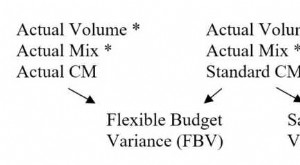 Revenue Variance Analysis: Understanding Sales Performance & Forecasting
Revenue Variance Analysis is used to measure differences between actual sales and expected sales, based on sales volumeDays Sales in Inventory (DSI)Days Sales in Inventory (DSI), sometimes known as in...
-
 Sales Per Square Foot: Definition, Calculation & Importance
Sales per square foot is a metric commonly used by retail companies to determine the amount of revenueSales RevenueSales revenue is the income received by a company from its sales of goods or the prov...